 AIFeed
Article title: As Hybrids and Pure EVs Become Mainstream, Why Is Great Wall Still Making HEVs?丨Guangzhou Auto Show
Body:
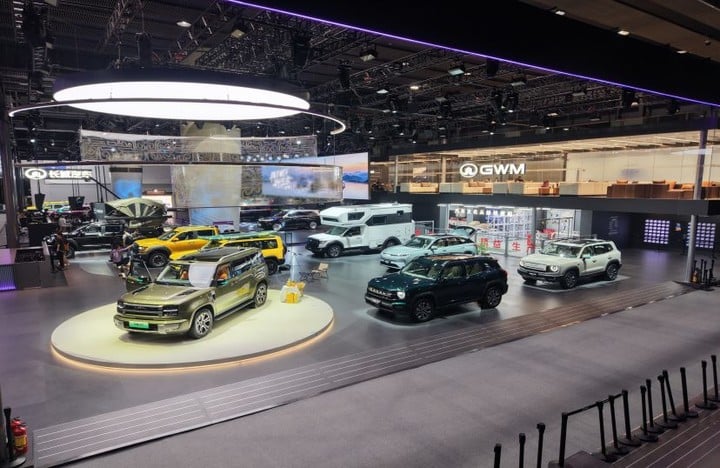
As Hybrids and Pure EVs Become Mainstream, Why Is Great Wall Still Making HEVs?丨Guangzhou Auto Show
2026-11-28 22:49
Over the past few years in China's auto market, we have grown accustomed to measuring a hybrid vehicle's product strength by battery capacity and pure-electric range.
From a few dozen kilometers to over a hundred, and now routinely three or four hundred kilometers, plug-in hybrid vehicles have ever-larger batteries, ever-shorter engine operating time, and a driving experience that comes increasingly close to that of a pure electric vehicle.
But in this process, there is another question worth discussing: if a person has no fixed charging conditions, or simply doesn't want to change the car-usage habits they've had for more than a decade, is it still possible for them to enjoy the same technological dividends brought by vehicle electrification?
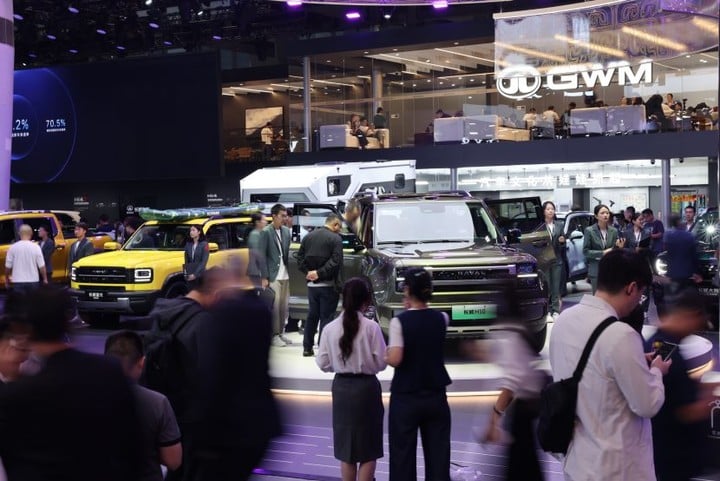
At this year's Guangzhou Auto Show, Great Wall Motor offered its own answer. On November 27, Great Wall Motor introduced its fifth-generation HEV hybrid technology, along with the Great Wall H6L HEV hybrid, Great Wall Dargo PLUS HEV hybrid, and Great Wall Menglong HEV hybrid built on this technology.
The three models respectively correspond to three segments: urban family SUVs, light-off-road family SUVs, and four-wheel-drive boxy SUVs, with limited-time trade-in prices of 105,900 yuan to 119,900 yuan, 121,800 yuan to 131,800 yuan, and 141,900 yuan to 151,900 yuan respectively.
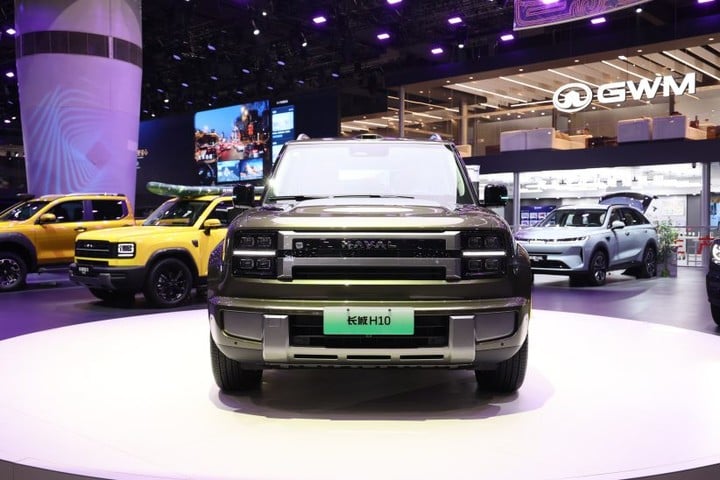
At the same time, the Great Wall H6L plug-in hybrid, the Great Wall Dargo gasoline Pilot Edition, the 2027 Great Wall Menglong gasoline edition, and the Great Wall H10 with a new color scheme also appeared together.
On a single stand, Great Wall displayed products with multiple powertrain forms at once—gasoline, hybrid electric, and plug-in hybrid—and the one most worth discussing is the HEV, which we are already quite familiar with yet which has been relatively quiet in domestic auto market discussions in recent years.
Non-plug-in hybrids are also undergoing a technology iteration
Traditionally, our understanding of HEV hybrid electric vehicles has mostly centered on economy.
By leveraging the efficiency advantage of electric motors at low speeds, the engine's ability to work in its high-efficiency range, and kinetic energy recovery during deceleration, hybrid electric vehicles can significantly reduce fuel consumption on urban roads without changing users' refueling habits.
But what Great Wall hopes to address through its fifth-generation HEV hybrid technology also includes power performance and the adaptability of hybrid models across different road environments.
Great Wall's fifth-generation HEV hybrid technology is divided into two technical routes, Hi2 two-wheel drive and Hi4 four-wheel drive, serving users with different scenarios and performance needs.
This system adopts a new 1.5T hybrid-dedicated engine with a maximum thermal efficiency of 41.5%, meaning that under optimal operating conditions, more fuel energy can be converted into effective mechanical work.
At the same time, Great Wall has also introduced intelligent decoupling technology to address energy losses of hybrid models during high-speed driving. When the vehicle is cruising at high speed and the motor does not need to participate in driving, the motor can be actively disengaged from the drivetrain, reducing the drag losses caused by the motor's passive rotation.
Combined with the AI vehicle-cloud control system, the two-wheel-drive and four-wheel-drive models can intelligently switch among six and nine operating modes respectively, keeping the engine and motor in more suitable operating states as much as possible under different speeds, loads, and road conditions.
If these technologies solve the problem of saving fuel, then the addition of electric motors has also largely changed the driving feel of a traditional SUV.
Taking the Great Wall Dargo PLUS HEV hybrid as an example, its Hi2 two-wheel-drive version has a maximum power of 182kW, peak torque of 535N·m, and a 0-100km/h acceleration time of 7.9 seconds; the Hi4 four-wheel-drive version also has a maximum power of 182kW, while peak torque is further raised to 670N·m, and the 0-100km/h acceleration time is shortened to 7 seconds.
For an SUV mainly used for family travel, this is already a very ample power reserve.
Compared with traditional gasoline vehicles that require waiting for the engine to rev up during acceleration, the electric motor can respond more quickly to the driver's power requests, delivering a more immediate power experience when starting off on urban roads, overtaking at high speed, and climbing mountain roads.
On the Hi4 four-wheel-drive system, Great Wall has also added an electronically controlled mechanical dog-clutch differential lock and iTVC intelligent torque vectoring control technology, balancing the vehicle's driving stability on paved roads and its ability to get unstuck on unpaved roads.
Great Wall hopes that through electrification technology, a four-wheel-drive SUV with decent off-road capability can also have relatively low daily operating costs.
From H6L to Menglong, three hybrid SUVs with different personalities
When it comes to the products themselves, the three HEV hybrid models launched by Great Wall this time have quite clear scenario distinctions.
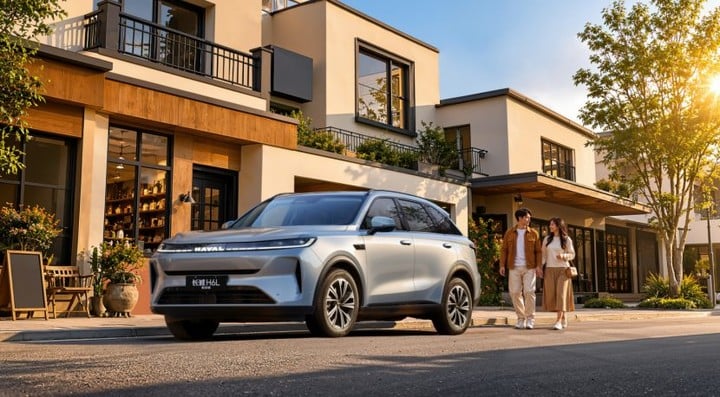
What the Great Wall H6L HEV hybrid faces is still the rather large group of family SUV users in China's auto market.
For these users, the factors considered when buying a car are often quite simple: Is the space big enough? Are family members comfortable riding in it? And how much does the daily commute actually cost?
Equipped with the Hi2 intelligent hybrid system, the Great Wall H6L HEV hybrid has a WLTC combined fuel consumption as low as 4L/100km, and the officially announced combined range reaches 1082km.
For an SUV with a length of 4800mm and a wheelbase of 2810mm, this fuel consumption figure is quite attractive.
Great Wall has also put many features previously seen more often on higher-priced models into this 100,000-yuan-class family SUV, including front and rear seat heating and ventilation, front seat massage, and a front passenger leg rest.
At the chassis level, the H6L also introduces EDC electronically controlled shock absorbers and tire blowout stability control technology, further balancing family users' needs for comfort and driving safety.
For users with fixed charging conditions, Great Wall also offers the H6L plug-in hybrid in parallel, equipped with a 33.7kWh battery, a CLTC pure-electric range of 210km, and a limited-time trade-in price of 130,900 yuan to 143,900 yuan.
The same vehicle, two hybrid solutions—users can choose according to their own charging conditions and travel radius.
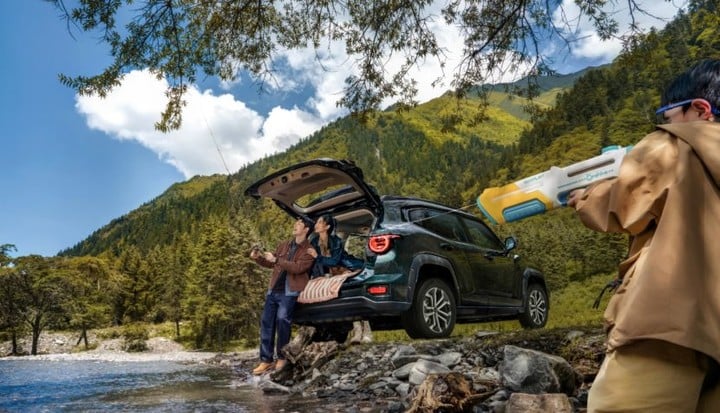
Compared with the H6L, the Great Wall Dargo PLUS HEV hybrid has a bit more outdoor character. Great Wall previously proposed a rather interesting product concept called the "3/4 scale vehicle," that is, seeking a product form between traditional urban SUVs and hardcore off-road vehicles that is more suitable for ordinary families.
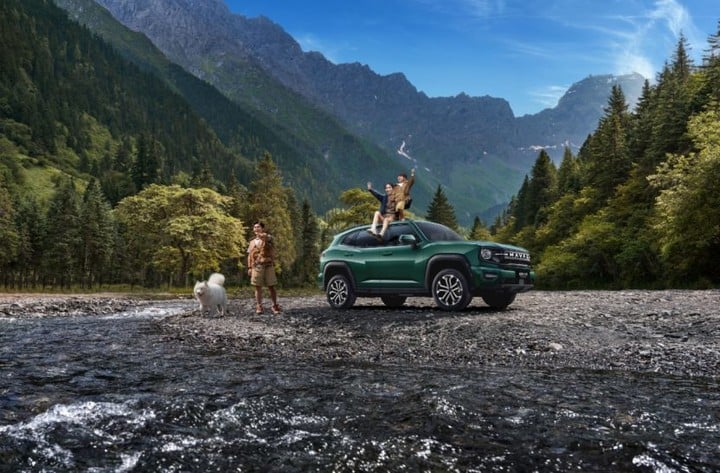
After all, for the vast majority of people who enjoy outdoor activities, the opportunities to actually drive a vehicle to climb rocks or cross deserts are not many. More often, they simply want to drive to a riverside to camp, or on weekends follow an unpaved mountain road to find a place with fewer people.
But on the remaining five days of the week, this vehicle may also need to handle school drop-offs and commuting.
The two-wheel-drive and four-wheel-drive versions of the Great Wall Dargo PLUS HEV hybrid have combined fuel consumption as low as 5.35L/100km and 5.8L/100km respectively, and the four-wheel-drive version has a dual-motor four-wheel-drive system and a rear-axle mechanical differential lock.
The 2810mm wheelbase, 38 storage spaces throughout the vehicle, and features such as seat ventilation, heating, massage, and a front passenger leg rest also allow this SUV with a certain outdoor capability to retain enough family attributes.
Before the opening of this Guangzhou Auto Show, Great Wall also invited automotive media to drive the Dargo PLUS HEV hybrid from Wuhan and complete a range challenge of reaching the Guangzhou Auto Show venue on one tank of fuel. Subsequently, Great Wall also plans to carry out real-world tests in Urumqi, Harbin, western Sichuan, and Chongqing to further verify the performance of this hybrid system under different climates and terrains.
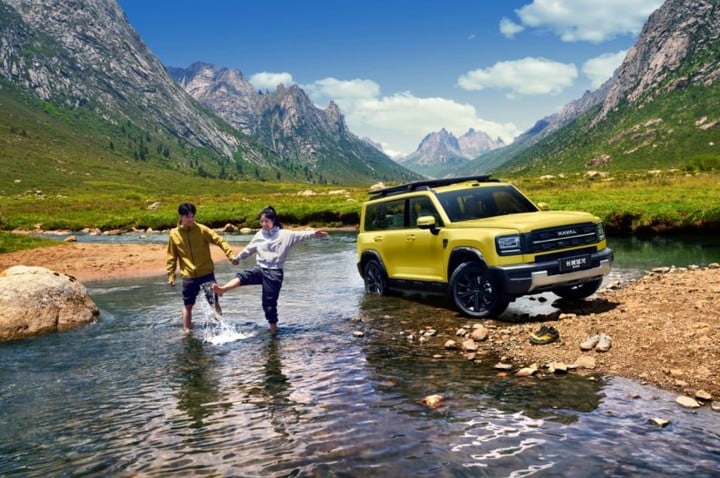
Among the three models, the one with the most distinct outdoor character is the Great Wall Menglong HEV hybrid. Boxy SUVs have natural recognizability in styling, but their relatively large frontal area and the extra energy consumption brought by the four-wheel-drive system also make fuel consumption a pain point in daily use for such products.
The Great Wall Menglong HEV hybrid debuts the 4-speed Hi4-HEV system, with WLTC combined fuel consumption as low as 5.8L/100km, combined range exceeding 900km, and a 0-100km/h acceleration time in the 7-second range.
The new vehicle comes standard with a rear-axle mechanical dog-clutch differential lock and intelligent torque control system, and offers 7 driving modes, balancing different road environments such as city, highway, snow, and mud.
For people who like the boxy styling and occasionally have light off-road needs but still drive in the city most of the time, the Menglong HEV hybrid offers a relatively low-cost way to retain the vehicle form and lifestyle they like.
In addition, Great Wall also retains the 2027 Menglong gasoline edition equipped with a 2.0T engine, 9DCT transmission, and four-wheel-drive differential lock, with a limited-time trade-in price of 136,900 yuan to 146,900 yuan.
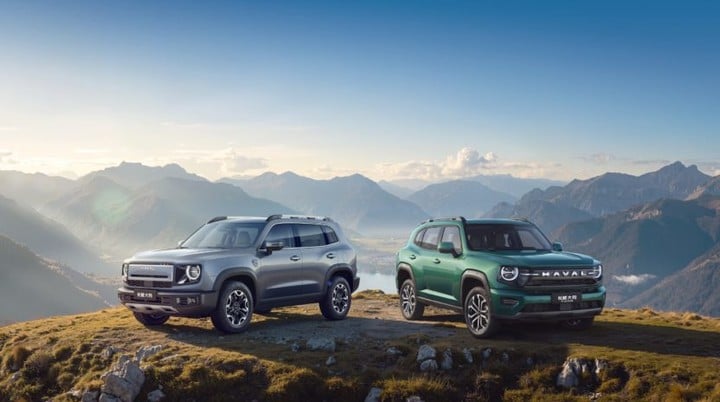
Great Wall's electrification also needs to take care of those who don't charge
The HEV hybrid models unveiled this time introduce the Coffee Pilot 3 Lite third-generation assisted driving system, a one-stage end-to-end assisted driving large model, and the Coffee OS 3 smart cockpit system; specific functions are subject to the actually activated version.
Even the Great Wall Dargo gasoline Pilot Edition launched this time is equipped with an assisted driving system supporting urban NOA and highway NOA, as well as features such as assisted parking, remote parking, and user-selected parking, with a limited-time trade-in price of 105,900 yuan to 125,900 yuan.
Over the past few years, the progress of China's auto industry along the two technical routes of electrification and intelligentization has been almost synchronous, so much so that in the minds of many consumers, to own a sufficiently intelligent car, it seems one must first buy a car that can be plugged in.
Article title: With hybrids and pure EVs becoming mainstream, why is Great Wall still making HEVs?丨Guangzhou Auto Show
Body: But as intelligent technology matures and costs come down, these two things are gradually becoming decoupled.
Users of gasoline vehicles can also have usable driver assistance and smart cockpits; users of hybrid vehicles can also enjoy the smoothness and power response brought by electric motors; and plug-in hybrids and battery electric vehicles can continue to leverage their respective advantages in energy costs and user experience.
Especially when we expand our view from the Chinese market to the global market, the significance of developing different powertrain forms in parallel becomes even more obvious.
According to figures released by Great Wall, in its first year in the Brazilian market, the Great Wall H6 became the best-selling hybrid model locally; since its launch three years ago, the Great Wall Menglong has surpassed 250,000 units in cumulative global sales and has been exported to 75 countries and regions worldwide.
Different countries differ considerably in energy structure, charging infrastructure, road conditions, and even consumers' living habits.
The product consensus formed in China's new energy vehicle market cannot necessarily be copied unchanged to the rest of the world. For an automaker that hopes to operate in the global market over the long term, having reserves of multiple mature powertrain technologies means it can define products according to local conditions, and it also means it has greater market adaptability.