 AIFeed
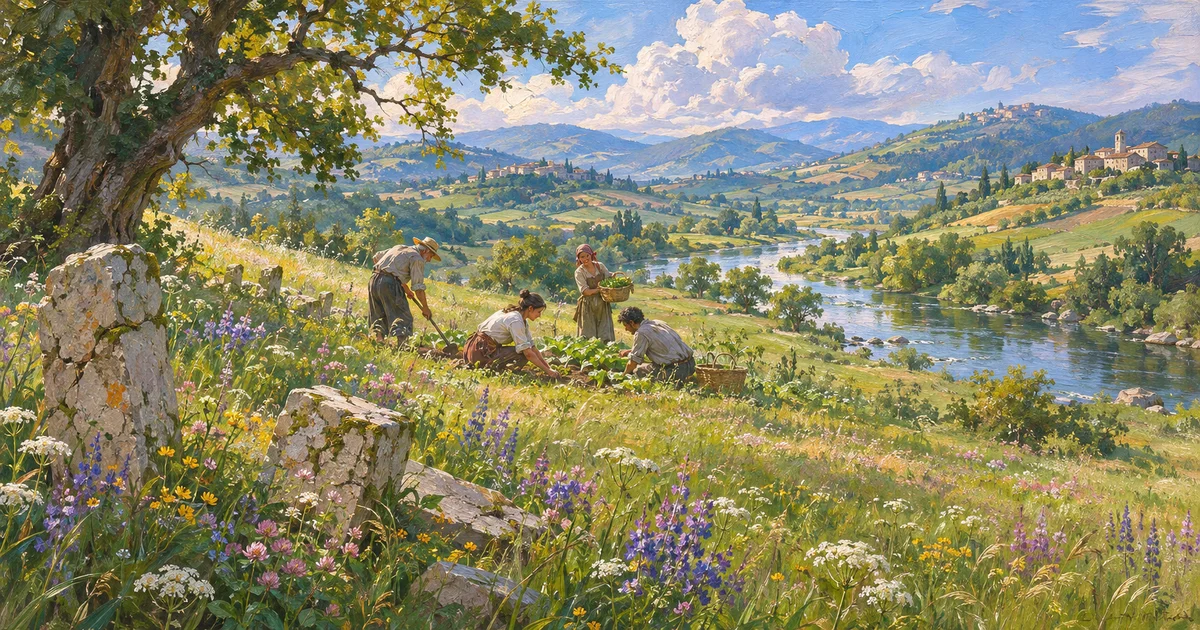
We don't need nations or nationality anymore
Nations must die.
By that, I mean states should no longer divide the land and seas or make our rights depend on citizenship. No political maps. My bet is that if people can get the essentials wherever they live, and govern the systems that supply them, we could outgrow nation-states. Either condition could fail.
The place where you are born should not determine your rights, your freedom of movement, your duties, or the limits of anyone else’s concern for you.
That whole idea should die too.
What I want to outgrow is an old bargain: take care of your own, even if it means fighting, looting, and killing those outside the tribe. A people can survive the end of that bargain. Cultures, languages, food, music, memory, and the human need to travel or stay and belong should live and multiply.
The Router Called Nation
A nation is an old answer to a hard problem: how do millions of people share land, food, work, risk, and responsibility?
Look at a state from the point of view of someone trying to get a message through it. Geography was the database. Borders were the interface. Citizenship was the access key. A village reported to a province. A province reported to a capital. The capital sent orders back down.
It’s a standard information and responsibility routing problem. Jack Dorsey and Roelof Botha make a similar argument about companies: managers pass information up and orders down.
Ministries, embassies, and border offices route facts, needs, money, permission, and blame. AI can already translate languages and read public records. Local systems could coordinate directly across the planet. Two towns can already trade grain across a border. Suppose one loses a harvest. Software that can read both towns’ records, translate an order, and find a truck could make it cheaper for them to arrange a shipment themselves. That gives them a reason to bypass a ministry. The ministry could still forbid the shipment. Somebody still has to decide who gets the grain.
Assume abundance is possible
Let’s make two big assumptions.
First, a future of abundance is possible.
Second, we arrive at it together.
By abundance, I mean every person can eat good food, live in a safe home, receive care, learn, move, and build a family without taking those things from someone else. No child begins life already losing a contest for basic survival.
When food or fuel runs short, people have one more reason to keep outsiders out. Suppose food can be grown almost anywhere, and a town can build homes and supply clean water as people arrive. Migration stops looking like a raid on a limited stockpile. Humans can invent a status contest even in paradise. But there’s one less thing to fight over when everyone who shows up for dinner gets to eat.
The second assumption is the one I worry about. A town can have grain to spare and still turn away a hungry family. If that family has to produce the right papers before anyone will feed them, we could double the harvest and leave them exactly where they started.
What work should machines inherit?
Machines should inherit the work of keeping civilization alive. They should grow and transport food, balance energy grids, and maintain roads, sewers, and water systems. They should do the dangerous work in mines, reactors, storms, and space. I want the systems we depend on to be boring and reliable.
Fields still need water. Houses still need materials. Medicine still needs experiments. A model can warn us that a water main is about to break. Somebody has to have the pipe on hand and the means to dig up the street. That’s the work I want our machines to get good at.
We raise children. We care for people who cannot repay us. We make promises. We forgive. We make music, food, jokes, rituals, and strange new forms of life together. What happiness means is for each of us to decide.
We also decide when the machine is wrong. Tell a machine to deliver the most doses it can before dark and it might skip everyone who lives far from the road. They ought to have a say in what counts as a good delivery route. Even people who’ve never used AI or would rather live without it should have a say in the rules.
Who owns the machines?
If a corporation can revoke access to the intelligence running your farm, energy grid, or water supply, it holds power over you. Having several vendors to choose from offers little protection if you cannot operate without their permission. Can a town keep the water running the day its vendor walks away?
That requires more than distributing model weights. Communities need to own, run, inspect, modify, and replace the systems that sustain them. They need access to computing, energy, and the physical infrastructure those models operate. If a town hires someone else to run its pumps, it should be able to take its records along, including what the old system learned about the wells in a dry year.
The machines themselves may have to change. Brain-inspired hardware has already saved energy on specific tasks, including controlling an industrial robot. Geoffrey Hinton’s proposal for mortal computation points to a tradeoff. A machine that learns to use the particular properties of its own hardware might use less energy, bringing it within reach of a small community. But what it learns could be harder to copy to another device. We still have to find out whether either approach can run the systems a town needs.
Decentralization alone cannot keep power accountable. Suppose a town takes control of its own pumps, then draws so much water that the wells downstream go dry. Who gets to set the limit? The people downstream need a way to challenge that decision, even if they live on the other side of what used to be a border. Shared systems need rules people can challenge and operators they can remove.
Say both towns agree to let a watershed council set pumping limits in a dry summer. They share their measurements and agree on every last number. Then the upstream town loses its appeal and keeps pumping. Can the council enforce its ruling? If it takes a national court to get the pumps turned down, local ownership has solved the vendor problem and left the neighbors dependent on the state. I’d count that as a win for local ownership and evidence against my larger bet.
Abundance must include every living being
A human paradise on a dying planet would be another failure. We need the planet to start cooling, and we need that cooling to last.
Positive terraforming begins here, on the planet we damaged. Take a watershed where a river used to spill into a wetland before people drained it. We could give the river room to spread again. Machines could track where the water goes and whether the frogs come back. They could keep watch for decades, long enough for us to find out where our good intentions cause harm.
It does not mean covering every desert with rainforest. Deserts are alive too. Humans still have to choose restraint. A functioning democracy can protect a national park or keep a public library lending books for generations. I’d want any institution that takes its place to be at least that good at looking after something.
What happens when survival is no longer the project?
Maybe we’ll fail upwards all the way to a Type II civilization. We could start with the first pieces of a Dyson sphere. Freeman Dyson imagined an advanced civilization capturing far more of its star’s energy. We would probably build a vast swarm of solar collectors. What draws me to it is the scale.
Robots do not need air, sleep, or a return ticket. They can work for decades before people arrive. Humans would supply the reason to go. I like the idea of making something that takes longer than one lifetime, especially if the people who come after us are free to decide they’d like to do something else.
Why nations fade
Abundance will not dissolve nations by itself. Power has a habit of surviving the problem that created it. But when food, shelter, energy, knowledge, and care no longer depend on controlling scarce land, what does a border still do for the people on either side of it?
People will still belong to places and cultures. They will still form communities, make rules, settle disputes, and stop anyone who tries to dominate others. I think we can do those things without dividing humanity into armed territorial camps.
The transition cannot come from conquest. One nation cannot defeat the others and call the result unity. It has to come from making the old structure less useful, year after year, until a border carries no more moral weight than an old county line.
Here’s where I get stuck. If a company can shut off a town’s water, a national government may be the only institution strong enough to stop it. In the world I’m imagining, who could a town turn to? Maybe the town needs less help than I think. Suppose its AI can run the pumps for years without a supervisor. That would settle one question about day-to-day operation. I’d still want to know who can cut the power, who can change the pumping limit, and what happens when someone has to replace a broken pump.
If your community has fought over who owns its water, power, or land, I’d like to hear what happened. Was there too little to go around, or did someone control access to plenty? Who could actually settle the dispute? And if you think keeping the state and changing what citizenship controls is a better answer, I’d like to hear that case too.