 AIFeed
Conversation with NIO's William Li: Traditional Auto Industry Is Like Drumming, Smart EV Industry Is Like a Symphony | Guangzhou Auto Show
2026-11-28 22:13
In a symphony, different instruments have different ways of playing. A violin bow can glide continuously across the strings, piano keys have clear rises and falls, and a drummer may wait through a long stretch before striking a heavy blow. Each has its own rhythm, and together they complete the same piece.
At NIO's media briefing at this year's Guangzhou Auto Show, William Li, NIO's founder, chairman and CEO, brought up again a metaphor he had used ten years ago:
The traditional auto industry is like drumming in primitive society. In the smart EV era, it's a symphony. Some still have drums, some play the violin—software is more like playing the violin, constantly iterating; some are like playing the piano; some chips iterate every year or two.
So the logic of today's smart EVs and the logic of traditional cars are fundamentally different.
Ten years ago, in 2016, new energy vehicles were still a new concept, and buying a car that needed charging required considerable courage and means, so this metaphor was more a vision of the future from an emerging car company. Ten years later, smart EVs have gradually become the protagonist of China's auto market.
In the first ten months of this year, the sales gap between battery electric vehicles and fuel vehicles was only about 100,000 units, and it is expected that by the end of November, BEVs will have overtaken fuel vehicles.
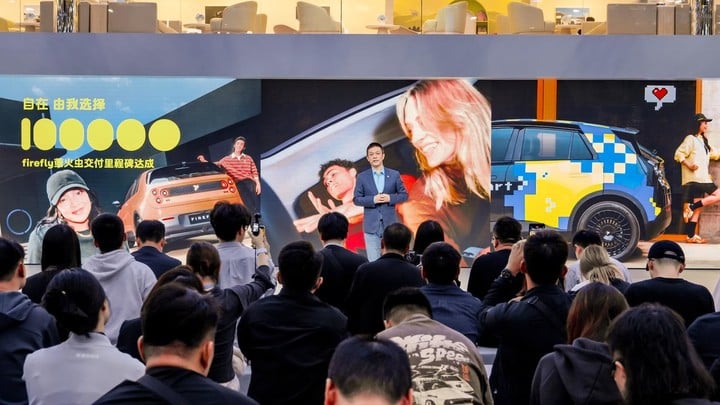
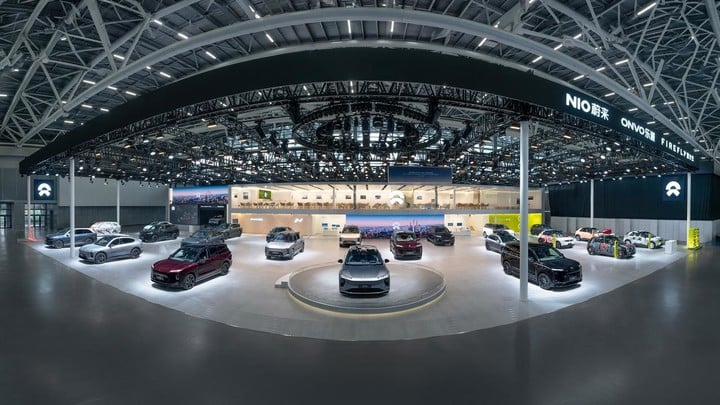
At the Guangzhou Auto Show, NIO, ONVO and firefly sat together in such a relatively mature posture for the first time. Cumulative deliveries of the all-new ES8 reached 170,000 units, ONVO delivered 200,000 cars in just over two years, and firefly also welcomed the delivery of its 100,000th car.
And barring surprises, firefly will also complete its first milestone of over 10,000 deliveries in a single month in November.
As a result, NIO now has more product samples and operating experience to validate those ideas from ten years ago.
At this briefing, which revolved around new cars, sales and business conditions, William Li repeatedly expressed a somewhat abstract view: our understanding of the auto industry today is still largely shaped by the traditional auto industry, and even constrained by the word "car" itself.
Some things regarded as common sense in the auto industry over the past century or so are changing in the smart EV era.
The old rules of the auto industry are changing
In the traditional auto industry, a car's engine, transmission, chassis and body often have relatively stable technology iteration cycles, and these technology updates mostly accompany the replacement of car models. In other words, mechanical things always belong to the mechanical realm, and the iteration rhythms of mechanical structures tend to converge.
But today, the software of a smart EV may update every few weeks, the evolution of intelligent driving assistance models is measured in months, cockpit chips see new technology every year or two, and a mature electric drive system can serve models of quite different positioning for a considerable period.
William Li gave an example: some SUVs in the NIO system and the executive flagship sedan ET9 can use the same electric drive system. This kind of reuse of a core power component across multiple product positions was far more difficult in the era of traditional fuel vehicles—the engine of a Mercedes-Benz S-Class and that of a Mercedes-Benz C-Class must have a considerable horsepower gap.
When we discuss the development cycle of a smart EV, we are actually discussing a complex system composed of multiple different technology cycles.
This is also William Li's response to recent industry discussions about "rushed cars":
The first-generation ES8 underwent more than 3 million kilometers of validation. In today's era, we still need to be cautious about slapping on labels. "Rushed cars" I think is a stigmatization of the innovation China's auto industry has achieved over so many years.
Development speed and the adequacy of validation are two issues that need to be discussed separately. Reuse of mature technologies, modular development, and the decoupling of software and hardware can all shorten the development cycle of a new car, but these changes cannot replace the necessary whole-vehicle testing.
For today's car companies, how to let different technologies evolve at their own rhythms while achieving coordination in a single product has become a new basic skill.
And beyond R&D, another classic rule of the auto industry has also met new challenges—economies of scale.
From Ford's assembly line to Toyota's lean production, the auto industry has over the past century or so continuously diluted R&D, manufacturing and procurement costs through scaled production, which is also an important reason why cars went from a luxury for the few to a mass consumer good.
But William Li mentioned a somewhat counterintuitive phenomenon:
The components that truly have economies of scale are few. Especially today, there are diseconomies of scale—memory chips, for example. The more you need, the more expensive they may be.
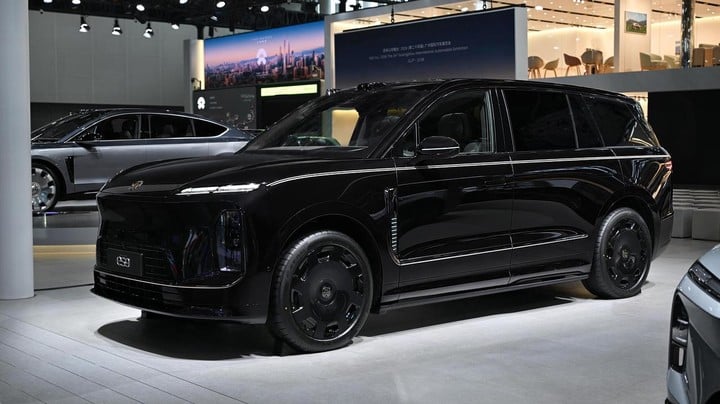
The NIO ES9 has a memory capacity of 164GB in a single car. Combined with a volume of around 100,000 units a year, that is already a considerable demand for memory chips for a car company. But within the entire AI industry, car companies are just one of many buyers of memory chips.
William Li has a rather vivid description of this: the auto industry today is somewhat "getting hammered by our AI peers."
In the past, the core supply chains of auto companies mostly revolved around the auto industry's own needs, but today, from memory chips and computing chips to lithium carbonate and copper, the large amount of resources needed by smart EVs happens to be the same resources needed by other emerging industries.
The growth of a model's sales can still dilute R&D costs and may also bring stronger procurement bargaining power, but these gains may not fully offset rising prices of upstream raw materials and core components.
This also brings new risks to the price-for-volume strategy that auto companies have been keen on in recent years.
However, while the cost side is changing, smart EVs are also building new advantages on the experience side.
William Li used another rather interesting term to describe this change: the "scissors gap."
The experience gains users get from BEVs are growing... On the other hand, the charging and battery swap network is becoming more developed, the charging and swapping experience is getting better, and the loss in the experience of using a BEV is getting smaller and smaller. This is a huge scissors gap: one side is getting better and better, the other side is that the cost is getting lower and lower, the gains are getting bigger and bigger, and it has even become a net positive.
Early BEV consumers had to make quite a few compromises: the improved experience in power and quietness often came with reduced convenience of recharging.
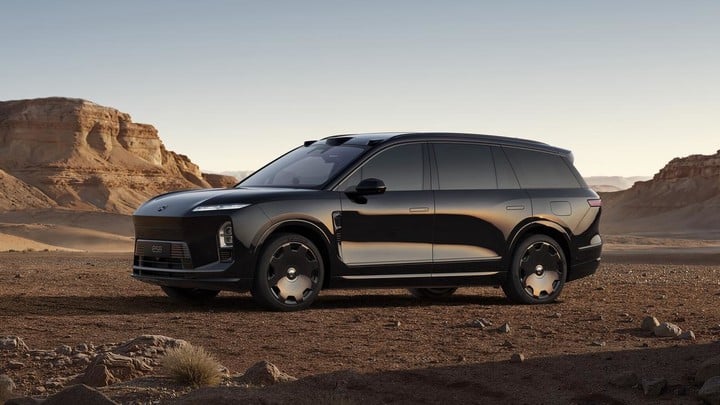
But with the evolution of the BEV technology architecture, the gains brought by electrification have gradually extended to space, cockpit layout, chassis and handling, among other aspects. William Li said that the "6 people, 12 suitcases" achieved by the all-new ES8 is the space benefit unleashed by the BEV architecture in a large SUV.
At the same time, NIO's battery swap stations have exceeded 4,300, and the entire industry is also continuously building public charging networks.
On one side, consumers can get more and more from BEVs; on the other side, the extra cost of using a BEV is getting smaller and smaller.
The distance between these two curves is the reason William Li remains optimistic about the BEV market.
As one of the few domestic automakers that only follows the pure electric route, the future of BEVs is bright, and so is NIO, a BEV company. In his judgment, by 2030, the penetration rate of new energy vehicles in China will reach 90%, of which the share of BEVs will also reach 90%.
And given the market trends this year, he even thinks his previous forecast was somewhat conservative.
The car may be today's most valuable embodied intelligence
As mentioned earlier, the relationship between car companies and AI companies is becoming somewhat delicate.
On one hand, car companies have to compete with pure AI companies for resources such as chips, computing power and talent; on the other hand, car companies themselves are gradually becoming another kind of AI company.
For some time, William Li has been thinking about a question related to the naming of cars. Many of the cars we buy today no longer have engines, no longer need gasoline, and no longer have exhaust pipes. Inside the car there are large numbers of sensors, computing chips and AI models, and it can also complete a series of complex tasks in the physical world through its own actuators.
If we set aside the name that has been used for over a century and describe such a product anew, it actually has a high degree of overlap with the embodied intelligence that the tech industry is so keen to discuss today. William Li said:
The word "car" covers too much. Cars that aren't intelligent and cars that aren't electric are also included in it.
So many times we are defined by this word, and this word makes us draw a circle around ourselves. In essence, it is the most valuable AI.
Compared with many embodied intelligence products that are still looking for large-scale commercialization scenarios today, smart EVs already have quite clear application scenarios, a mature consumer market and a considerable scale of hardware delivery.
The driving assistance system in a car is perceiving, understanding and making decisions about the physical world every day, and through the vehicle's steering, acceleration and braking actuators, it turns the decisions of AI models into actions in the real world.
NIO also has an interesting product called NOMI, which tries to solve another kind of intelligence problem: beyond driving, how does AI understand human emotions and intentions, and how does it build a more natural interactive relationship with people.
The former helps humans save the effort required for driving, while the latter tries to make machines a companion in human life.
Both types of AI have concrete hardware carriers and user needs, and they also constitute NIO's main AI investment at the product level today.
However, the development of AI technology is not cheap.
When talking about the R&D of NIO World Model 3.0, William Li mentioned DeepSeek:
We don't have that much money to buy computing power either. In this situation, the only option is to make the system smarter. You can also see that sometimes when your resources are limited, it forces you to pursue underlying innovation.
How to use fewer computing resources to complete model training and inference is an important technical proposition behind NIO World Model 3.0.
This proposition also applies to cars that have already been sold. Unlike smartphones, car users often hold the same hardware product for many years, while AI models evolve far faster than cars are replaced, which means car companies will need to maintain multiple hardware platforms with different levels of computing power at the same time in the future.
Playing a symphony in a single car is already complex enough, and car companies also need to keep playing it for the different versions of cars sold over the past few years.
Article title: In Conversation with William Li of NIO: Traditional Auto Industry Is Like Drumming, the Smart EV Industry Is Like a Symphony | Guangzhou Auto Show
Body: This is a rather challenging engineering problem in the era of smart cars, and also a long-term responsibility an automaker bears toward its users.
Another change AI has brought to NIO happens outside the car.
At this year's Guangzhou Auto Show, NIO unveiled an AI-native organizational structure. For an automaker with numerous business links spanning R&D, production, supply chain, sales, and service, AI offers a very broad space for efficiency gains. Li Bin mentioned that NIO has set a 15% efficiency improvement as a goal to pursue, and believes that operational mechanism reforms represented by CBU have played a fairly important role in improving business performance over the past few quarters. He said:
Ultimately all AI has to create value—where else is there a bigger mine to dig than in the auto industry... Our company had 57.7 billion in revenue in the first half of the year; if we can't even improve energy efficiency by 5%, are we even worthy of calling it AI?
The auto industry itself is an industrial system vast and complex enough that even if AI brings only a few percentage points of efficiency gains in some of its links, the corresponding business value is already considerable.
When technology trends toward homogenization, how can car brands stay different?
One manifestation of the Chinese auto industry's extreme involution is that the time required for a new technology or feature—from first appearing on a flagship model to being popularized across other brands and even lower-priced models—is getting shorter and shorter.
The shelf life of "what others don't have, I have" is getting shorter and shorter, while capturing minds with "what others have, I do better" requires more resources.
A mature supply chain helps Chinese automakers rapidly realize product innovation while also helping their competitors rapidly catch up.
On this point, Li Bin has a fairly clear understanding:
Being able to lead for two years is already very difficult; leading for a year or half a year is also very difficult. So once products begin to homogenize, I think the role of the brand will become increasingly important.
When cars from different brands have similar assisted driving capabilities, similar chassis configurations, and similar range and charging/swap performance, why would consumers still choose one of them?
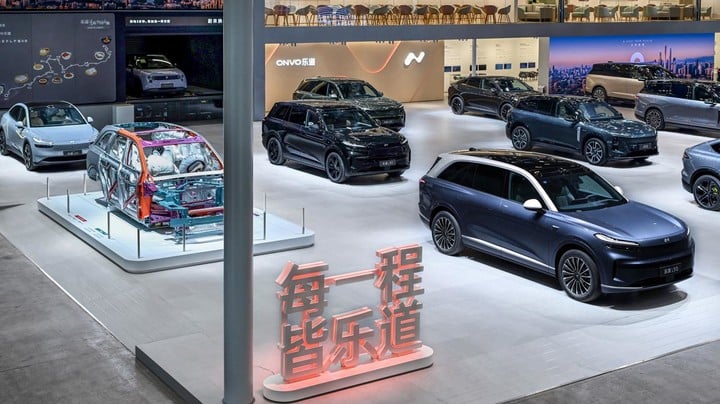
Part of NIO's answer lies in some seemingly inconspicuous product decisions. Next year, NIO will launch an all-new generation ET5T; the new car will advance from the current mid-size wagon to a mid-large wagon, but the ET5, which shares many technical commonalities with it, will not get a redesign next year.
Li Bin said he actually quite likes the body size of the firefly, and the car he drives most often is also the firefly, but the ET5T has a product positioning that balances personal use with a small family, and an appropriately enlarged size can better meet the needs of this group of users.
Actually, why isn't the ET5 getting a redesign? Because users like its current size, and like the very perfect body proportions at this size. Many of our ET5 users care quite a lot about looks.
Generally speaking, an enlarged body size, a longer wheelbase, and more spacious rear seating can all serve as fairly intuitive product selling points when a car model is redesigned.
But for some users who like the ET5, the existing size and body proportions are precisely the reason they bought this car. If these traits were compromised in pursuit of better space performance, the product upgrade might instead become a step backward.
Beyond a spec sheet, automotive products are also subject to another evaluation system.
At the end of the communication meeting, Li Bin talked about NIO's design principles and the generative AI tools that more and more designers are using today.
What is our design DNA? It comes from our values. We use our values to look at everything, including the booth, including the cars. Our ONVO and firefly both have their own design genes.
With the help of AI, the cost for designers to generate a rendering is dropping sharply, and many design proposals that once took a great deal of time can now be obtained in a short period.
But why does a company choose one of those proposals and abandon the others? Why does it consider one product good enough while another still needs revision?
These judgments still require a stable set of principles.
According to Li Bin, NIO evaluates several thousand brand touchpoints every year—from something as large as a car or a booth to something as small as a design detail on NOMI—all of which must return to the same set of design principles for scrutiny.
Similar thinking also appears in NIO's battery swap business.
Li Bin analogizes NIO's battery swap network to the cloud service businesses of Amazon, Tencent, Alibaba, and Google: first build your own infrastructure, run your own business on it, and once the capabilities mature, open these infrastructures to external partners.
But compared with NIO's statements in past years when it actively promoted the battery swap alliance, Li Bin this time added a new qualifier to "open"—"limited":
We are now pursuing a limited opening; it's not that anyone who comes to us can be brought in... We need to ensure that all users, including users who join this battery swap network, have a good overall experience.
The utilization efficiency of infrastructure and the experience of a brand's users can sometimes conflict. Connecting more vehicles can improve the utilization rate of battery swap stations, but if station capacity and battery reserves cannot keep pace, it may also increase waiting times for existing users.
Over the past few years, the Chinese auto industry has demonstrated strong evolutionary capability amid the wave of electrification and intelligentization, and has thereby established a competitive system known for technological innovation and R&D efficiency.
But as technology spreads, this system is also changing the value of innovation itself. A technology that a company spends several years developing may have a lead window of only half a year; AI can help designers at different brands quickly generate a large number of works, and a mature supply chain can help them quickly turn these works into reality.
In such an era, persistently deciding what to do—and what not to do—will become increasingly important.