 AIFeed
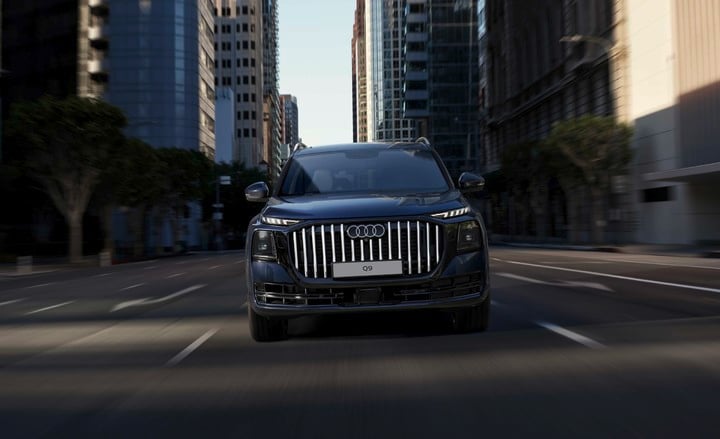
Germany's Largest SUV Has Arrived! Audi Q9 Makes Its Domestic Debut, Over 5.3 Meters Long, Plus a Big V6丨Guangzhou Auto Show
2026-11-28 13:01
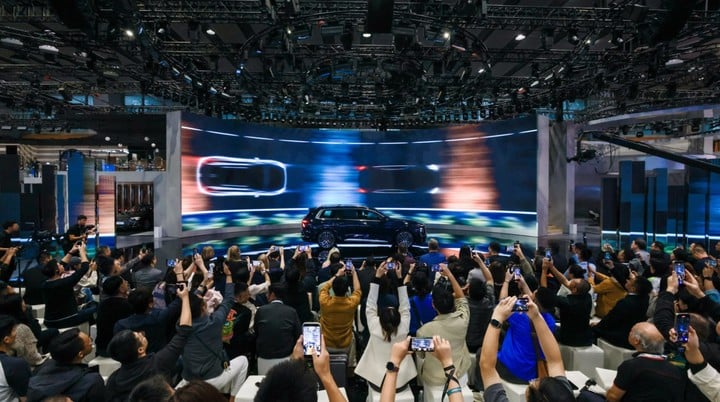
At today's Guangzhou Auto Show, the FAW Audi Audi Q9 made its domestic debut.
This is the first model in Audi's history to be named with the numeral "9," and also the largest vehicle they have built to date—even the largest German SUV currently in existence. It is built on the PPC premium combustion intelligent platform and is scheduled to arrive in stores gradually in the first quarter of next year.
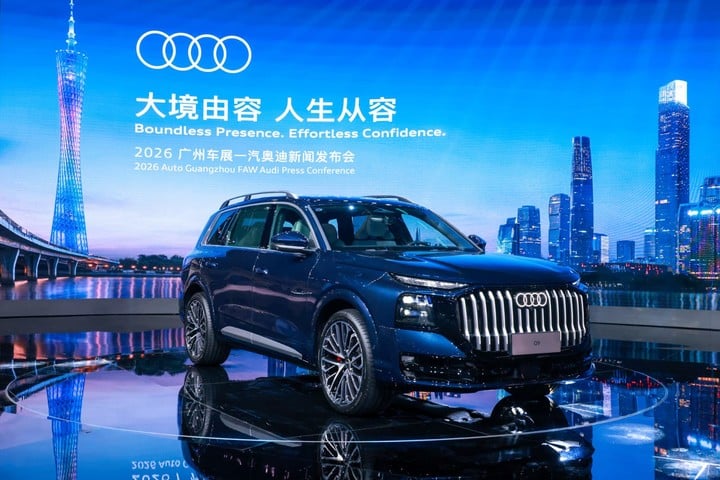
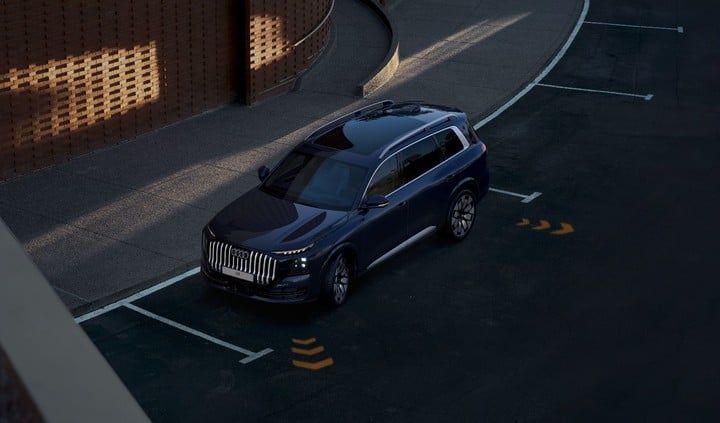
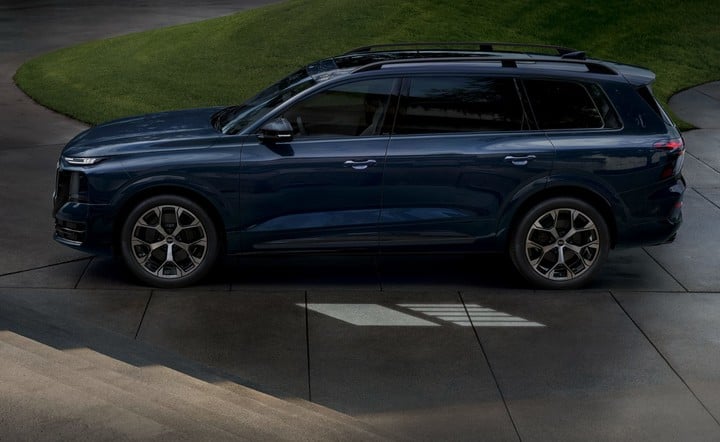
First, the dimensions: the Audi Q9 is 5309 mm long, 2010 mm wide, and 1797 mm tall, with a wheelbase of 3138 mm. Naturally, its exterior follows a tall, upright, and boxy approach.
The Q9's front fascia features a tall, wide vertical-slat grille integrated with the illuminated four-ring logo and split daytime running lights; the side retains the flared quattro shoulder line, while the rear gets a full-width LED light band.
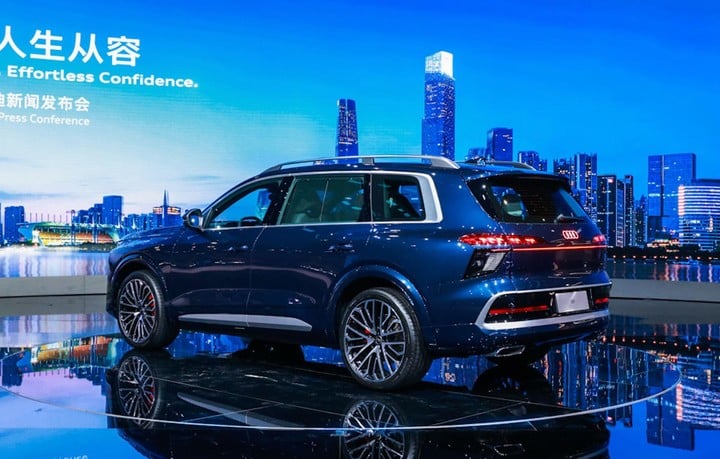
Lighting remains Audi's headline act. The Audi Q9 is equipped with the world's first curved digital OLED taillights, using 0.1 mm ultra-thin glass conformed to the rear contour, with six panels packing 512 light-emitting units and offering 8 digital light effects.
In addition, this taillight setup supports active light communication—when there is an accident, vehicle breakdown, or door-opening risk, it displays warning symbols to alert vehicles and pedestrians behind.
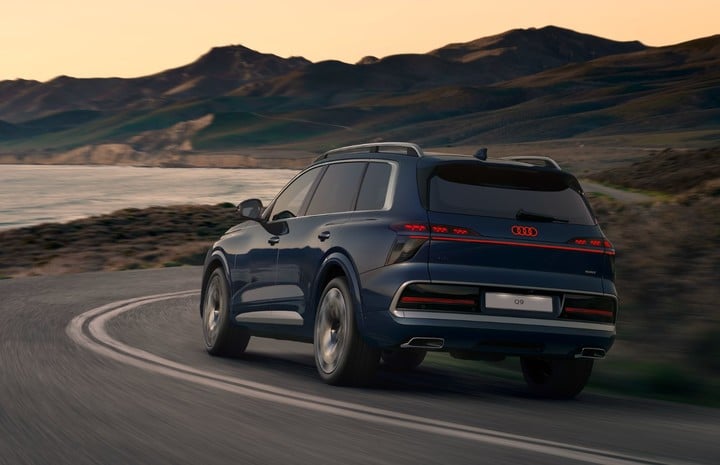
The front features digital matrix LED headlights, integrating 25,600 microLEDs on a 13 mm chip; besides anti-glare high beams and lane lighting, they also support ice-crystal projection for icing warnings. Furthermore, the Q9 debuts the world's first ground-projected turn signals—when the vehicle turns, changes lanes, or activates hazard lights, it projects the corresponding pattern onto the road surface.
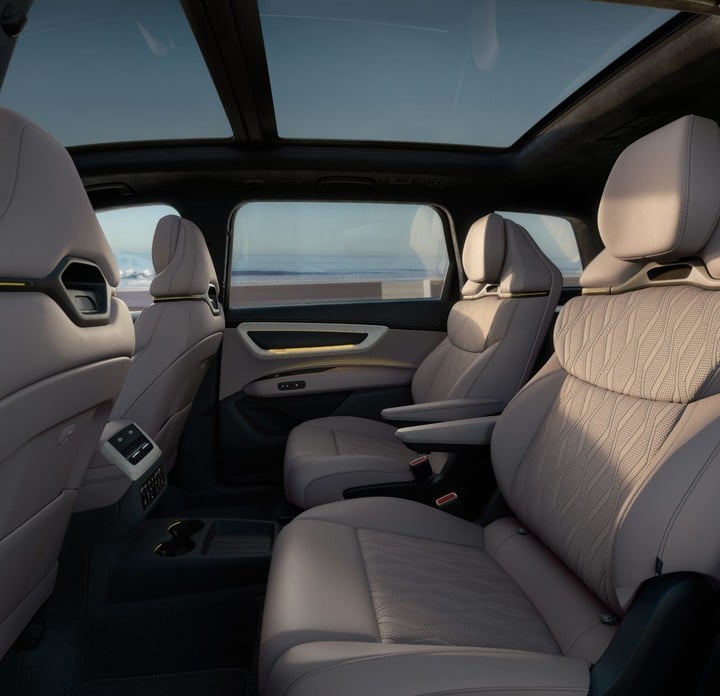
After opening the electric doors, you can see that the Audi Q9 adopts a 2+2+2 six-seat layout. Its seat configuration is high-end enough: all three rows support power adjustment and heating, and even the door armrests and center armrest are heated; ventilation and massage are available only to occupants in the first two rows.
On the roof is the largest openable panoramic sunroof ever, with an area exceeding 1.5 square meters. The interior also offers five-zone independent climate control, and the audio system is a 22-speaker Bang & Olufsen 4D system.
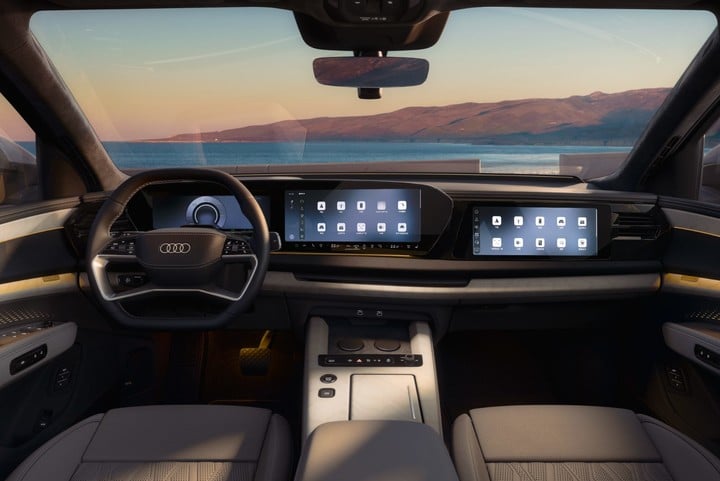
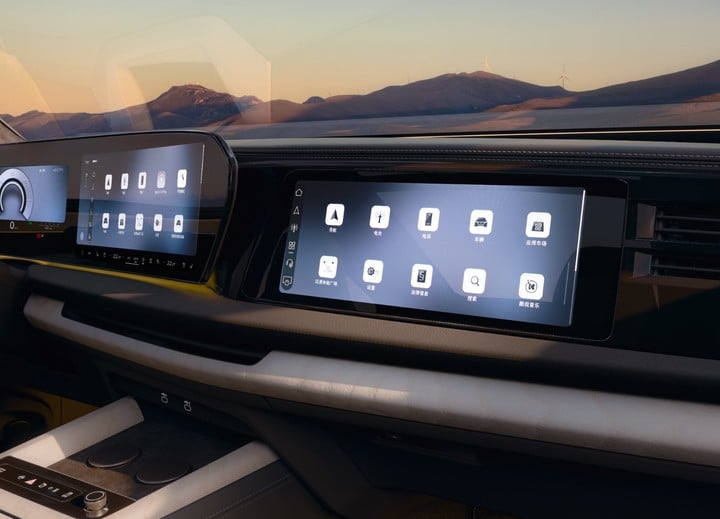
Like other Audis launched this year, the Q9 uses the all-new E3 1.2 electronic and electrical architecture, with an 11.9-inch instrument cluster, a 14.5-inch central control screen, and a 12.3-inch passenger screen—three curved OLED displays—on the center console, supporting five-screen interaction and Amap lane-level navigation, with over 75 built-in apps.
For power, the Audi Q9 is equipped with the new-generation EA839 3.0T V6 engine, producing a maximum of 362 horsepower and peak torque of 550 N·m, matched to an 8-speed Tiptronic transmission, with a 0-100 km/h time of 5.8 seconds.
Worth noting is that this V6 engine features a VTG variable-geometry turbo, specifically to mitigate low-speed lag, and is also paired with a P0+P3 full-domain hybrid system; the P3 motor can output an additional 18 kW and 230 N·m of torque, allowing pure electric driving at low speeds.
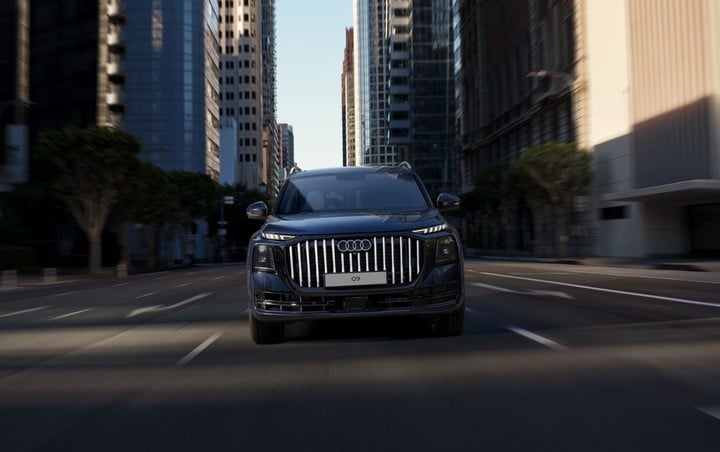
On the chassis side, the Q9 comes standard with quattro permanent all-wheel drive across the range, still using the latest-generation Torsen C-type purely mechanical center differential, with torque between the front and rear axles distributed with zero delay between 70:30 and 15:85; adaptive air suspension is also standard, with a body height adjustment range of 90 mm.
Despite being over 5.3 meters long, thanks to ±5° all-wheel steering, the Audi Q9's turning radius is kept at 6.1 meters. At the same time, it also comes standard with progressive steering, 400 mm front composite brake discs, and red six-piston fixed calipers.
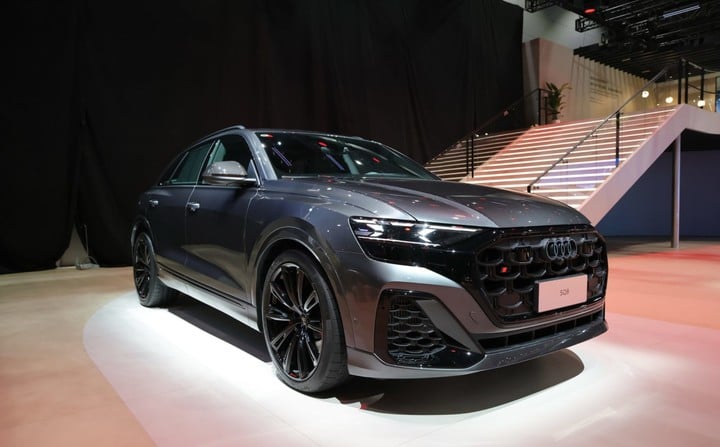
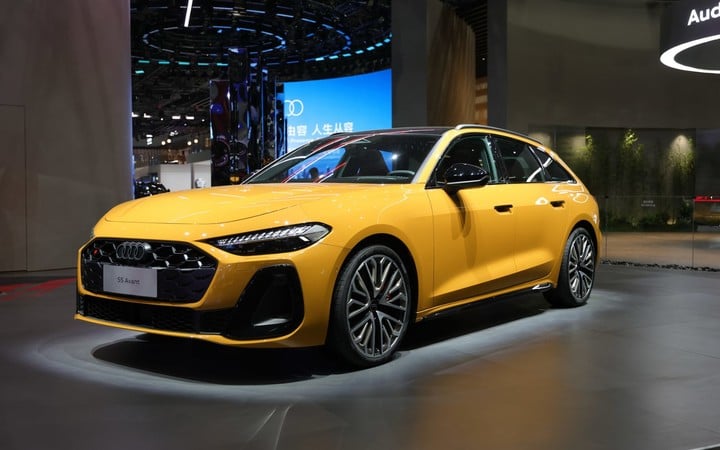
Besides the Q9, two performance cars introduced to China this year—the Audi SQ8 and the all-new Audi S5 Avant—also appeared on the stand.
Among them, the Audi SQ8 is equipped with a 4.0T V8 twin-turbocharged engine, producing a maximum of 500 horsepower and peak torque of 770 N·m; it also actively deactivates cylinders under low load, and at full tilt delivers a 0-100 km/h time of 4.1 seconds.
The all-new Audi S5 Avant is the successor to the previous S4 Avant, using the EA839 evo 3.0T V6 engine and P0+P3 full-domain hybrid system shared with the Q9, with a 0-100 km/h time of just 4.5 seconds and combined fuel consumption of only 7.68L per 100 km. However, if you really stomp on it, it becomes a bottomless pit.
Back to today's protagonist, the Audi Q9: in the full-size SUV segment, Audi has always lacked a flagship that could directly take on the BMW X7 and Mercedes-Benz GLS. Now the Q9 has finally filled this gap—except the rivals it faces are no longer limited to those two old German friends.
In the past two years, a slew of "9-series" full-size SUVs have sprung up in China, all taking the new-energy route; Audi launching the Q9 on a combustion platform at this point is indeed half a beat late.
Fortunately, even while sticking to the combustion route, Audi also knows what today's users want.