 AIFeed
Code-driven AI illustrations are more useful than images from dedicated image models
28th November 2026
An interesting trend in frontier LLMs released in the second half of 2026 is that they tend to be much better at visual reasoning and creative “design” than their predecessors. If you ask these text-output models to create a 2D image (or a 3D model, as discussed here previously), you’re very likely to get a useful result, and you may even get one that’s aesthetically impressive. Most importantly, because these images are defined using code you (or the model) can make further edits to them without any of the weirdness that comes from iterating with a text-input, image-output model.
Poster design with Gemini 4 Neon
Gemini 4 Neon is getting some buzz for its 2D design skills, so I decided to try it out in AI Studio starting with the prompt:
Create an SVG poster promoting the Kakapo recovery project, research details first, make the poster look really cool and give it a 1970s graphic design
It took some iteration, partly because AI Studio doesn’t render SVGs, so the models there can’t spot visual mistakes without assistance.
Make the kakapo a bit more realistic, especially the face (image search for references)
[IMAGE] The text here doesn't fit the pill, fix it
[IMAGE 2], [IMAGE 3] Also these
Here’s the full transcript, exported from AI Studio as Markdown because I couldn’t find a way to share a session that didn’t require a Google login to view.
The end result is pretty solid:
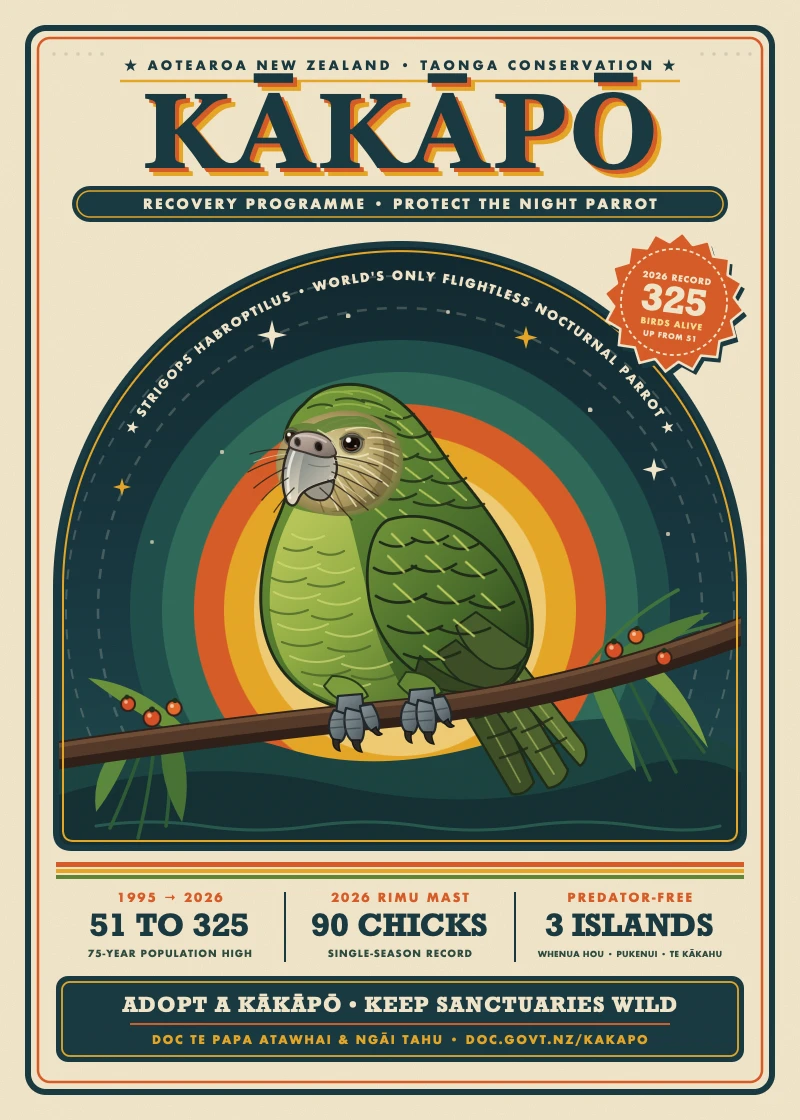
AI Studio ran Google searches to find those numbers—I’ve checked and they are all correct. I like that it included red rimu tree fruit on the branch, since those are essential for the breeding season.
Whether or not you like the poster, the key thing about it is that everything is editable. You can directly edit the text in the SVG, or you can open it in Inkscape or Adobe Illustrator or Boxy SVG and edit it visually.
It’s not just SVG
I have a well documented fondness for SVG generation, but it’s not the only game in town.
A model hooked up to a coding agent environment can execute code to generate images. This opens up a whole realm of possibilities—generated image files, HTML and CSS, 2D HTML Canvas elements, Blender scripts, WebGPU shaders, PDF... any image mechanism that can be represented by a file on disk or the output of a script can be targeted by a model with a coding agent.
One of the reasons vibe game development has exploded recently is that models like Claude Opus 5.5 and GPT-6 Astra and Gemini 4 Neon are capable of creating good-enough quality game assets—3D models, textures, sprites, etc—entirely through writing code.
Building them with code means that tweaking, reusing, and remixing them is a case of the model writing even more code.
In comparison to image models
Most AI image generation tools use models that directly output bitmap graphics. Stable Diffusion, DALL-E, and Midjourney were early leaders in that space. The past ~15 months have seen the emergence of LLM-driven variants of this like Google’s Nano Banana and OpenAI’s ChatGPT Images. These have become competent at editing existing images and preserving details, which means you can iterate on a design over multiple conversation turns without it devolving into a mess.
They still have their limitations. They can produce weird glitches which become apparent when you zoom in on the details. They output text shapes directly from the model, which means you don’t get the same guaranteed consistency that you would have with a real font-based typography system.
They are also inherently flat. You can describe changes you want in text, or draw annotations on an image to describe what you want, but you can’t take control of an individual element or layer and directly manipulate it to get exactly what you want.
Images created through generated code solve all of those problems.
If you are generating photorealistic images then dedicated image models still have their place. For most of what I care about—explanatory diagrams, editable poster designs, UI components, visualizations, assets for games—code-driven images feel to me like a better bet.
I thought Anthropic was at a disadvantage
After Nano Banana and ChatGPT Images I thought Anthropic had a serious product gap on their hands.
OpenAI and Google both had excellent image generation models as part of their product suites. They even had generative video models—Google still does with Veo and now Omni, OpenAI sunset Sora.
The business world still runs on PowerPoint, so if you’re selling an enterprise contract having a great image generation model seemed to me like it would be an expected feature for many customers.
These days Claude can quite happily churn out visually compelling presentations and website designs, and Claude Design provides a full design system platform. All built around code-driven images!
This feels like another variant of the bitter lesson: I was convinced a specialist image model was necessary to serve customers with design problems. It turns out the text-output LLMs just kept getting more capable until they could handle visual design by writing code.
More recent articles
- Three LLM inflection points in twelve months - 24th November 2026
- Ladybird's first alpha release - 23rd November 2026
- Running the full server-side Datasette Python app in the browser with service workers and Pyodide - 17th November 2026
- Locating the source of a mysterious beep with Claude - 9th November 2026