 AIFeed
Restaurant owners are battling a horde of AI bots and returning to using the telephone instead of online booking as new virtual assistants launch in the UK – but sometimes even that isn’t enough to stop them.
This week, Mark Zuckerberg’s Meta launched its Muse AI assistant in the UK and is encouraging users to let it shop and make restaurant reservations. The bot is given access to the user’s email if they give it permission, and it can make restaurant bookings and go shopping on the user’s behalf.
Muse has been downloaded millions of times in the US, but it has caused chaos for restaurants. The online booking platform Resy has banned bots after restaurants on the platform were swarmed with agents that can refresh the page thousands of times and snap up all the reservations. Now, AI agents are plaguing venues in the UK.
Dave Strauss, the co-owner of Bouchon Racine, which was recently crowned UK restaurant of the year, said he had already had an argument with a would-be diner’s AI bot.
He answers the phones in his French restaurant every day from 11am to take reservation requests and said recently he received an unnerving call: “The other day I answered the phone to an AI bot that sounded very realistic. There was something a bit wrong about it – it sounded exactly like a human being, but something was off. I asked if it was a bot and it said: ‘Yes this is an AI booking process.’”
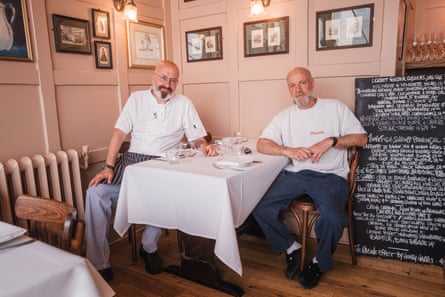
Strauss added: “I had an argument with the AI bot and told it to never call me again. But that wasn’t very satisfying as it didn’t argue back.”
Kimberley Coke, a high-end restaurant concierge, is paid by celebrities to secure a good table at top dining spots. She said she was worried about the swarm of AI bots: “I think it is terrifying and it could cause absolute chaos.”
Coke, who makes all her bookings via WhatsApp or phone calls, added: “There is now so much information you can get online about the hottest restaurants and where to go, and it is really hard to get the tables and that is why people come to me as I have personal relationships with the restaurants. With the apps, you don’t know who the client is, you have no background on who is coming in, they still might not show up. There is nothing worse for a restaurant in December when they have empty tables.”
Meta has claimed that its product can make people’s lives easier, but that has not been the case for the restaurants on the receiving end of the calls, emails and reservation app bookings.
The problem has been pronounced in New York City, where hard-to-secure restaurant tables are a status symbol. One of the most popular is 4 Charles Prime Rib, which serves a famous double wagyu cheeseburger, often served topped with a fried egg. It has been a popular target for AI agents, with sources at Resy saying they were having to ban multiple accounts using bots to book reservations there.
Strauss said: “There has been a constant shift to make everything as automated as possible to save a bit of money. We believe here that doesn’t work. We get a lot of emails now saying we can outsource our bookings and phone calls to AI. That makes us more keen on doing it the way that we do it. If I could get rid of online booking, I would.”

Jeremy King, who owns Simpson’s in the Strand, Arlington and the Park, said that the move towards depersonalising interactions by using AI was making him go “more analogue” in his restaurants – diners will find it much easier to snag a prime table at one of his venues by picking up the phone.
He said: “I am very happy to embrace new technology but ultimately if it conspires against us we will have to return to managing without.”
Such agents are likely to become more common in the UK and Meta has deals with an array of British businesses – including Marks & Spencer, Currys, Sainsbury’s and easyJet – allowing Muse to navigate their websites more easily and to access their apps. If a company does not offer a “connector” app that Muse can visit, the agent will access its website instead.
The Information Commissioner’s Office and the Competition and Markets Authority said they had been in talks with Meta before Muse’s launch about its responsibility to comply with UK laws. The ICO, the UK’s data protection watchdog, said on Tuesday the tech company had committed to a “voluntary monitoring and reporting scheme”, while the CMA said talks had resulted in changes to make the app’s terms and conditions fairer
Meta has been contacted for comment.