 AIFeed
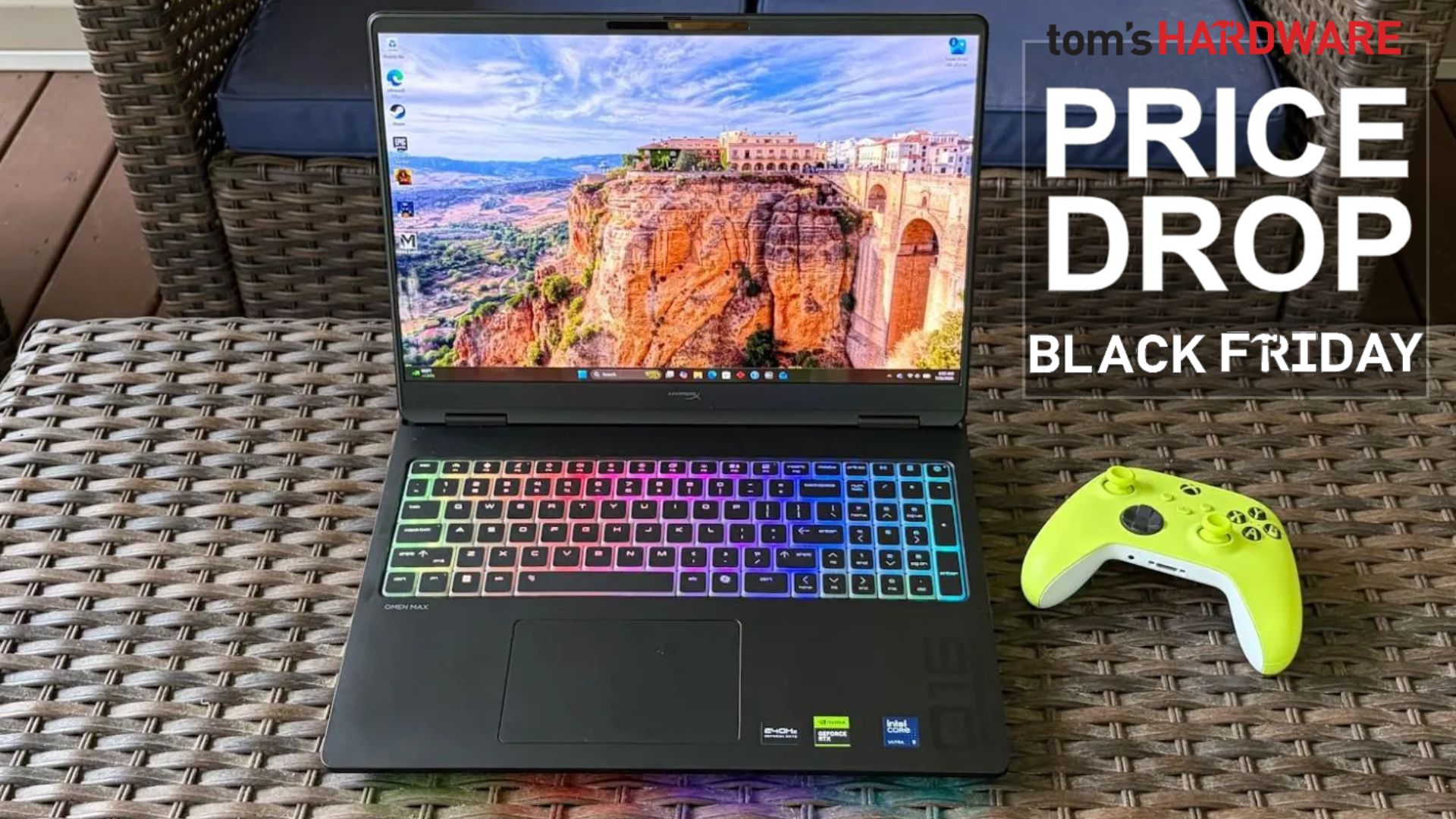
Getting a gaming laptop this Black Friday doesn't have to be a hassle. In case you're after the best deals that we've found thus far across a range of configurations, in addition to explanations of why these models in particular should be on your radar. Getting a gaming laptop is pretty tough — different systems can tout similar specs, but in reality, their performance can vary wildly. This is down to different power ratings across mobile GPUs, which can muddy the waters when you're looking on storefronts. It's often obfuscated in listings or omitted entirely.
So we're here to cut through the noise and nonsense to bring you our picks of the best deals we've found thus far. We also have our Black Friday Gaming Laptop Deals Live Blog in action, so check that out if you want more options.
Our top pick for most people: Asus ROG Strix G16 (RTX 5070 Ti, 115W)

The Asus ROG Strix G16 comes with a 16-inch screen, with an 1900 x 1200 pixel resolution, a 16:10 aspect ratio, and refresh and response rates of 165Hz and 3ms, respectively. Hardware inside this gaming laptop includes Nvidia's GeForce RTX 5070 Ti laptop GPU, an AMD Ryzen 9 8940HX processor, 16GB of DDR5 RAM, and a 1TB SSD for storage.
This Asus ROG Strix G16 gaming laptop offers a solid price-to-performance ratio and comes with AMD's Ryzen 9 8940HX CPU, sporting 16 cores and 32 threads. Packing in the gaming punch is the included RTX 5070 Ti 12GB, with GDDR7 memory and a total graphics power of 115W; this is the full-fat variant of the chip, and dynamic boost can also see this rise to up to 140W. When paired with a relatively modest screen resolution and display, it certainly bodes well for getting solid performance from modern titles. And you should be able to saturate the display's refresh rate when turning on features like Multi Frame Generation in single-player titles.
One thing to keep in mind here is that the laptop does sacrifice display quality, and its CPU isn't on the latest Zen 5 architecture; it's based on AMD's Zen 4 Dragon Range refresh chips. But it's still mighty fast and should suit both gaming and productivity workloads.
Alternative pick: MSI Vector 16 HX AI (RTX 5070 Ti, 115W)
Get a 16-inch gaming laptop with Intel Core Ultra 7 255HX, RTX 5070 Ti with 12GB of VRAM, 16GB of DDR5 RAM, and a 512GB SSD.
Coming in slightly cheaper than the above Asus ROG Strix system, this MSI Vector 16 HX AI laptop from Newegg offers much of the same specifications: right down to the TGP of the GPU. MSI's 5070 Ti mobile chip carries the same 115W TGP, in addition to the screen resolution. It also moves CPUs to Intel's 20-core, 20-thread Core Ultra 7 255HX, which is a newer architecture compared to the ROG Strix G16's Dragon Range offering. However, you get a lower screen refresh rate at 144Hz and half the storage included. It does trade blows effectively with the Asus model in many respects, though, including offering dual Thunderbolt 5 ports and a 2.5GbE port over the ROG Strix's 1GbE port. With the sizes of modern games, though, it's tough to outright tell you to run out and purchase a system with only 512 GB of storage, so this system remains our alternative pick for most people.
Budget pick: MSI Crosshair 16 (RTX 5060, 115W)

The MSI Crosshair sports a 16-inch, 240Hz display with a 2560 x 1600 resolution that's powered by an 115W max TGP Nvidia RTX 5060 graphics with 8GB of GDDR7 VRAM. Other specs include an AMD Ryzen 7 8840HX processor, 16GB of memory, and a 1TB SSD.
This MSI Crosshair 16 deal at Walmart sports a tricked-out 115W RTX 5060 GPU at its core, alongside a 12-core, 24-thread AMD Ryzen 7 8840HX Dragon Range CPU that can boost up to 5.1GHz. Sporting 1TB of NVMe storage and 16GB of DDR5 RAM, this more entry-level system can offer solid computing power while staying within a limited budget. Something that prospective buyers should watch out for is the display's resolution: you get a 16:10, 2560 x 1600 screen resolution and 240Hz refresh rate on this system, meaning that the laptop will likely struggle in modern titles, especially at high settings. Turning on upscaling tech like DLSS might help smooth things over somewhat, but given that you'll be doing things other than gaming on this laptop, it makes for a comfortable everyday system that offers a sharp display.
Alternative budget pick: Lenovo Legion 5i (RTX 5060, 115W)
Lenovo's Legion 5i sports a 15.3-inch, 3K display that's powered by an Intel Core 7 245HX processor, an Nvidia GeForce RTX 5060 graphics card, and 16GB of RAM. For storage, there's a 512GB SSD.
Our alternative budget pick here is the Lenovo Legion 5i gaming laptop, which is discounted by $700 at Best Buy. You get the same 115W RTX 5060 silicon as the MSI model above, but with an Intel Core 7 245HX, with 14 cores and 14 threads and a boost clock of up to 5.1GHz on the P-cores. You also get the same 16:10 aspect ratio and 2560 x 1600 resolution, but on a 165Hz OLED panel. If you care about getting the best contrast ratios and response time, this might be the pick for you, as saturating a 240Hz display with an RTX 5060 mobile variant will be a pretty tall task. However, this comes with the downside that you once again sacrifice the amount of storage available on the system here, with only 512GB available here.
High-end pick: HP Omen Max 16 (RTX 5080, 150W)
Get an HP Omen Max laptop with an RTX 5080 GPU, Ryzen 9 HX 375, a 1TB SSD, and 32GB of RAM, all packed into a 16-inch chassis with a 2560 x 1600 240Hz display.
If you're looking to spend in the high-end, then this RTX 5080-based system with a full-fat wattage of up to 175W (under dynamic boost), paired with an AMD Ryzen AI 9 HX 375, which offers 12 cores and 24 threads, with a max boost clock of up to 5.1GHz should be able to chew up most workloads you throw its way. The 2560 x 1600, 240Hz display makes much more sense here, and with full VRR support and 32GB of DDR5 in tow, this is a bona fide powerhouse, and you'll pay for the privilege at almost $3,000. With that said, you get 1TB of storage here, which is slightly disappointing, but given how NAND pricing is going, it's par for the course right now.
Alternative High-End Pick: Gigabyte Gaming A16 Pro (RTX 5080, 115W)
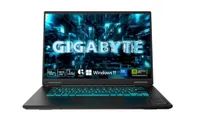
The hardware included inside the Gigabyte Gaming A16 Pro includes Nvidia's RTX 5080 laptop graphics card with 16GB of VRAM, an Intel Core 7 240H processor, 32GB of RAM, and a 1TB SSD.
Coming in at just over $2,000, the Gigabyte Gaming A16 Pro deal at Walmart offers a 10-core, 16-thread Core Ultra 7 240H CPU and an RTX 5080 GPU with 16GB of GDDR7 VRAM. The difference between the Omen 16 Max and this Gigabyte model is that this particular RTX 5080 has a lower TGP of 115W, but maintains the same amount of VRAM. In real-world terms, your framerates will undoubtedly be slower, and saturating its 16-inch, 2560 x 1600 display will be a lot more difficult. However, that neutered power limit also puts it in contention with the RTX 5070 Ti-based systems we've listed, but with more VRAM. If that 4GB difference matters to you, and you are willing to pay the difference, then this deal offers a solid amount of silicon for your cash.
Premium pick: HyperX Omen MAX 16 (RTX 5090 / 175W)

Get an HP Omen Max laptop with an RTX 5090 GPU, a Core Ultra 9 290HX Plus CPU, a 2TB SSD, and 32GB of RAM, all packed into a 16-inch chassis with a 2560 x 1600 240Hz OLED display.
If you're gunning for a gaming behemoth this Black Friday, this desktop-replacement-grade system is worth a look. Sporting an RTX 5090 GPU with 24GB of GDDR7 memory, paired with Intel's Core Ultra 290 HX Plus, with a total of 24 cores and 24 threads (8 P-Cores, 16 E-Cores), and a boost clock of up to 5.5GHz, this monstrous system is paired with 32GB of DDR5-6400 memory and 2TB of PCIe Gen 5 storage. You're also flush with connectivity options, including Wi-Fi 7 support, a pair of Thunderbolt 4 ports, and 2.5GB Ethernet. You also get a rapid 240Hz OLED display that gets plenty bright to boot. If you're spending north of $3,000 on a laptop, this should be it.
Alternative premium pick: Asus ROG Strix Scar (RTX 5090 / 175W)
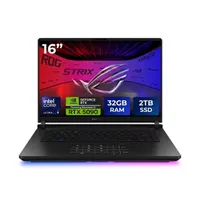
Get a great deal on this flagship-class ROG Strix Scar 16 gaming laptop from Amazon. You get the Core Ultra 9 275HX 8p/16e (24 threads) processor, 32GB dual-channel DDR5-5600 RAM, 2TB M.2 PCIe 4.0 x4 NVMe SSD, a 16-inch Mini-LED display (2560x1600) with a fast 240 Hz refresh rate, and the pièce de résistance: a dedicated RTX 5090 24GB laptop GPU. You'll be able to play most games at high frame rates or even run your own local AI models.
At MSRP pricing, the ROG Strix Scar is a better buy every other day. But given that it's black friday, the value offered by the HP Omen Max 16 slightly edges out this equally performant ROG Strix Scar 16 deal at Newegg. Expect the same RTX 5090 laptop GPU with 24GB of GDDR7 memory, but swap in an Intel Core Ultra 275HX with a total of 24 cores and 24 threads with 8 P-Cores and 16 E-Cores with boost clocks of up to 5.4GHz. Additionally, this system offers slower DDR5-5600 memory and slower storage, running at PCIe 4.0 speeds. However, you do get dual Thunderbolt 5 ports, here, and a matte finish on the display. It's still an incredible laptop by all rights, however HP's option edges things out on value, and spec-wise.
More Black Friday savings
Download the Tom's Hardware app for up-to-the-minute updates on iOS and Android.
For more Black Friday savings, check out our Best PC Hardware deals overall, or dive deeper into specialized SSD and Storage Deals, Hard Drive deals, Gaming Monitor deals, CPU deals, Gaming PC deals, RAM combo deals, 3D printer deals, RAM deals, Gaming laptop deals, Wi-Fi Router deals, GPU deals, and Gaming chair deals pages.
- The listed previous prices can vary based on retailer, as many use different metrics, like 90-day rolling averages or ‘estimated value’ due to ongoing shortages and price hikes.
Get Tom's Hardware's best news and in-depth reviews, straight to your inbox.

Sayem Ahmed is the Subscription Editor at Tom's Hardware. He covers a broad range of deep dives into hardware, both new and old, including the CPUs, GPUs, and everything else that uses a semiconductor. He has worked as a professional tech journalist since 2015 and has written for Gamespot, IGN, and Dexerto.