 AIFeed
Article title: Starting at 309,800 yuan! The new AITO M7 with an 800V system and triple-screen setup debuts at the Guangzhou Auto Show
Body:
Starting at 309,800 yuan! The new AITO M7 with an 800V system and triple-screen setup debuts at the Guangzhou Auto Show
2026-11-27 16:01
The 2026 Guangzhou Auto Show officially opened today, and AITO got a head start yesterday by announcing its new M7.
Just yesterday, November 26, the new AITO M7 began pre-sales ahead of schedule, with pre-sale prices starting at 309,800 yuan. It is expected to officially go on sale on December 15.
At the auto show, alongside the new AITO M7, AITO also brought its "vehicle-integrated L3 architecture." The newly unveiled AITO M7 is the latest member to carry forward this new architecture concept.
With its pre-sale starting price crossing the 300,000 yuan mark, this new M7 aims to take another step up in cabin design, the electric drive platform, and the vehicle's intelligent driving foundation.
A 300,000-yuan-class family SUV with a "new skeleton" inside
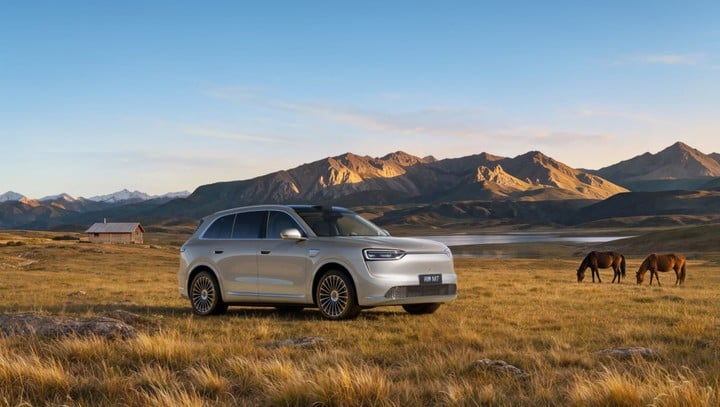
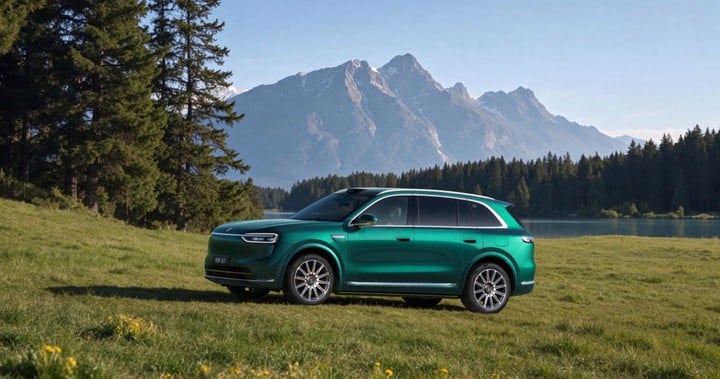
From the exterior, the changes to the new AITO M7 are not significant. Having already achieved sufficient recognizability, the new M7 largely retains its previous design philosophy.
Opening the door, the old M7's central control screen layout has been overturned and redone. The front row has been replaced with a new symmetrical three-screen design: a 12.3-inch full LCD instrument cluster, a centrally positioned floating central control screen, and a newly enlarged 16-inch passenger entertainment screen.
The driver's instrument cluster and the 16-inch passenger screen are symmetrically embedded into the entire central console trim panel, with only the central touchscreen protruding separately. Above, the signature star-ring scatter tweeter unit is still retained.
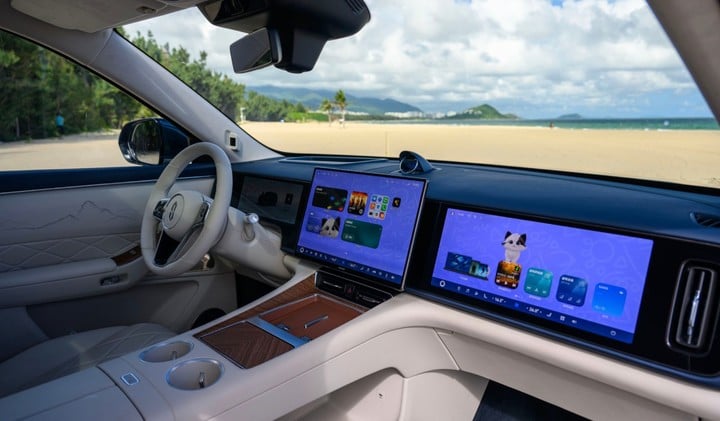
This adjustment lowers the visual center of gravity of the entire front central console and extends it to both sides. The passenger watching shows and the driver viewing driving information each occupy one end, and the overall sense of cohesion is much more orderly than in the old model.
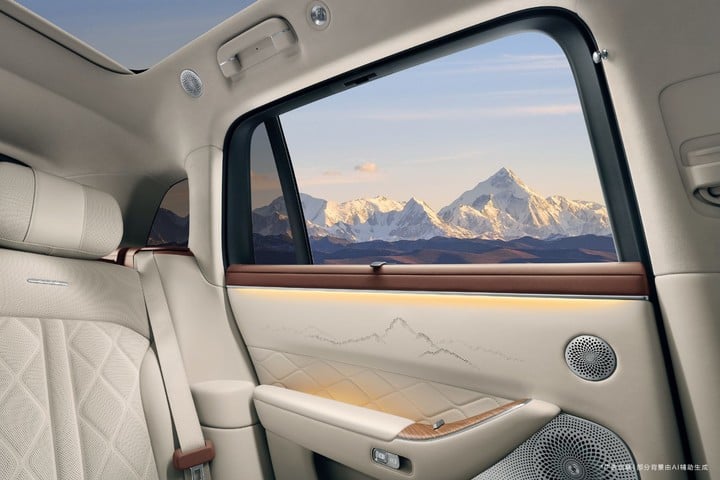
Beyond the screens, the cabin materials and details also align with flagship models. The new car offers three two-tone interior schemes: Truffle Brown, Gravel Brown, and Moonlight White. The door trim not only uses diamond-quilted perforated leather and wood-grain trim panels, but also adds a continuous mountain-range three-dimensional pattern called "Mountain Shadow Art Realm," and the headliner has also been upgraded to suede material.
Together with the 25-speaker HUAWEI SOUND Excellence series audio system, a new electric silent refrigerator, and support for a 3D vehicle control desktop and "point-and-control" directional voice commands, the new M7 aims to win over users through details.
The new AITO M7's body dimensions reach 5080/1999/1780mm, with a wheelbase of 3030mm. It continues to offer both 5-seat and 6-seat layouts, and also adds a 206L front trunk at the front. Two new exterior colors, "Florentine Green" and "Warm Sun Gold," have also been added.
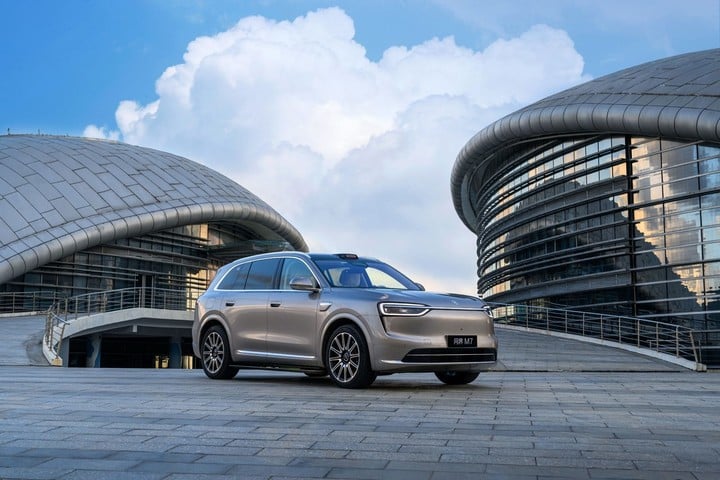
With the wheelbase exceeding 3 meters, the new AITO M7's front driver and passenger seats can be laid flat with one touch to enter zero-gravity mode, and both the seat cushion and backrest have been widened and lengthened.
The five-seat version's second row directly gains a "recliner" with ventilation, heating, and massage functions, while the six-seat version's third row is finally equipped with power backrest adjustment and one-touch folding.
For families with multiple children and pets, the new car also specifically includes a UWB living-being detection sensor to accurately monitor whether children or pets have been left behind in the cabin or trunk.
On the electric drive side, the new M7 bids farewell to the burden of the previous 400V platform and upgrades across the lineup to an 800V high-voltage architecture, paired with Huawei's Julang battery platform. Officially, a 30%–80% fast charge takes only 15 minutes.
In terms of power, the new M7 range-extender version is equipped with a large 56kWh battery, achieving a CLTC pure electric range of 330km. The five-seat four-wheel-drive version has a combined range of up to 1405km, while the six-seat four-wheel-drive version reaches 1230km.
The pure electric version is equipped with a 100kWh battery, with a maximum CLTC range of 715km for the two-wheel-drive version and 661km for the four-wheel-drive version.
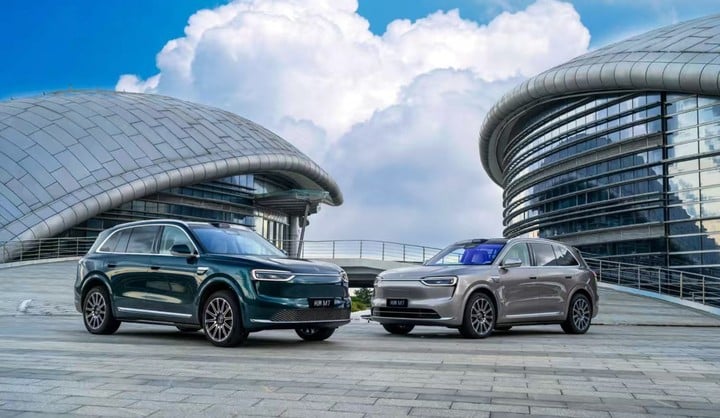
The chassis has also been upgraded to the all-new Huawei Tuling platform. With dual-chamber closed air suspension, CDC continuously variable damping shock absorbers, and tuning of the front and rear independent suspensions, the new M7's driving quality is also moving closer to the higher-positioned M8 and M9.
The new M7 is equipped with Huawei Qiankun ADS 5, which not only adopts an 896-line dual-optical-path image-level lidar, but also adds high-precision solid-state blind-spot-filling lidar at the fenders and newly adds side-rear perception cameras at the C-pillars.
After all, the new M7 is now a vehicle designed with a full-domain redundant architecture for L3 autonomous driving.
AITO's L3 begins to cast a wider net
In addition to the M7, at this morning's Guangzhou Auto Show technology sharing session, AITO Auto CTO Zhou Lin also officially released the "vehicle-integrated L3 architecture," splitting the entire system into three major modules: L3 full-domain perception, L3 decision-making collaborative control, and L3 exclusive scenario experience.
In addition to the all-new-generation M9 and new M8, which are already standard across the lineup, the just-unveiled new AITO M7 also adopts this architecture design.
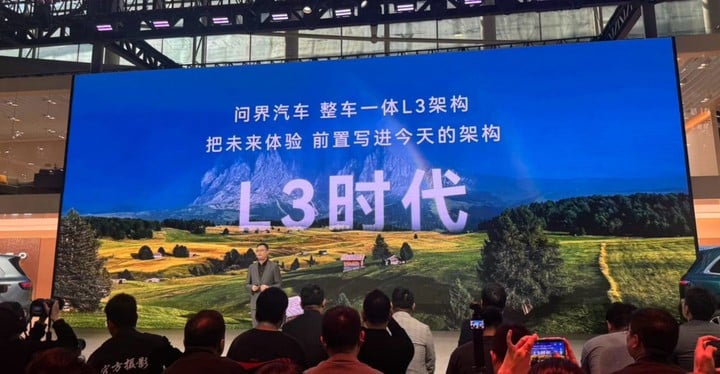
Entering L3 conditional autonomous driving, during the period when the system is activated and meets operating conditions, the subject of driving responsibility shifts to the vehicle itself. Even if a single-point failure suddenly occurs in the steering, braking, power supply, or computing chain, the car cannot simply "pass the buck" and exit; it must rely on dual-backup underlying redundancy to complete the minimum-risk maneuver of decelerating or pulling over on its own.
The "vehicle-integrated L3 architecture" released by Zhou Lin today places more emphasis on underlying dual redundancy across the entire chain of steering, braking, power supply, and communication.
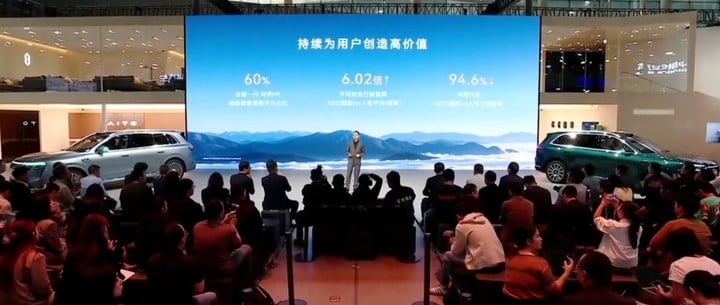
To prove that this system is not a concept that stops at PowerPoint, AITO chose to let the data speak on site. As of now, AITO's L3 real-vehicle test mileage has reached 11 million kilometers, accumulating more than 1,300 L3 vehicle safety strategies and more than 14,000 test cases, covering more than 100,000 user scenarios.
On the existing production fleet, AITO's total cumulative assisted driving mileage across the lineup has exceeded 12 billion kilometers, with more than 23.5 million kilometers added per day during non-holiday periods. Citing third-party insurance data, the company stated that the major accident rate has been reduced by 94.6%.
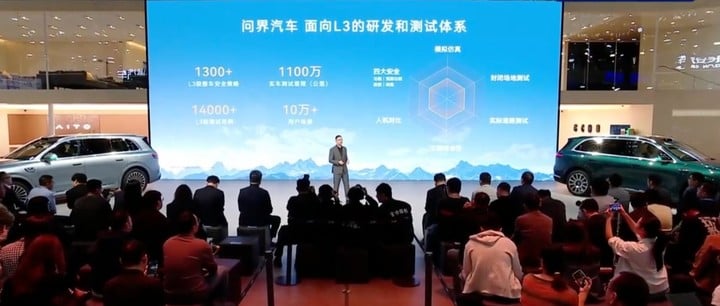
Zhou Lin offered his judgment on site: "In the L3 era, the core experience is hands-off and eyes-off. People do not need to keep holding the steering wheel, and under such circumstances, absolute safety must be guaranteed."
In the past, the AITO M7 relied on a staggered-competition price of around 250,000 yuan to secure AITO's most successful volume base. But as a model with a long lifecycle, the M7 has gradually been labeled as having an "older platform."
This new M7, backed by the L3 architecture, will be AITO's core product for the majority of family users going forward. For now, the only suspense left for the market is whether the final pricing can deliver another surprise when it officially goes on sale on December 15.