 AIFeed
Passkeys are actually great: no more remembering passwords, no more phishing. Logins are just a click or press now, and maybe a biometric scan added to that.
They aren't without their problems though. For instance, they can't be backed up; not like your password that you can write down to your notebook at home. The passkey provider is responsible to keep your passkey intact and secure. The provider itself also must remain alive. If the provider goes down, you can't use that passkey.
That's quite the point though. Because, if you could backup your passkey, it could also be phished from you with a convincing enough email and a link to a fake website that asks for your passkey backup file.
But, it's not totally hopeless. You can add multiple passkeys to an account from different providers as a backup. For example, you can add a Windows Hello passkey, and then one with your password manager too. However, that flow isn't intuitive. And some web sites don't even allow multiple passkeys, like Costco:
i can have multiple passkey providers on the same device, costco. you botched this.— Sedat Kapanoğlu (@ssg.dev) 2025-10-10T19:41:57.451Z
i can have multiple passkey providers on the same device, costco. you botched this.
Contrary to what Costco developers believe, I can have multiple passkey providers on the same device: my operating system, my password manager, and multiple physical security keys too. I'm sure Costco isn't alone in this, and many other web sites botch their implementation of passkeys. Some web sites let you keep your password along with passkey. That pretty much kills all the advantages of a passkey, and just turns it into a fancy "Face ID Login" flow.
Users are oblivious to the best practices of passkey-based authentication too. No user would think that they might need to add more than a passkey to their account in order to be able to recover it in the future. I don't know, maybe web sites should encourage it. I actually looked it up now, and apparently, FIDO recommends that approach too.
Account recovery is also inconsistent, and sometimes impossible. I believe account recovery is a greater problem than hacking. If you fail at providing a consistent recovery experience to your users, they'll just lose their account, and may not bother to create a new one.
Yes, there is email, and on some web sites, SMS. But these recovery flows are also prone to phishing. And neither email nor SMS stays forever. You should be able to have backup emails too, and the list of things to manage in order to use passkeys goes on and on.
The most guaranteed way to recover your account is having a backup physical security key that you won't lose, possibly kept in a safe or something. And PIN-based keys have, well, PINs, so you must not forget that either. Maybe, you should write it down in a notebook, heh.
Longevity of physical security keys is another unknown. My notebook would keep working 50 years from now, so my next of kin could access my data when I'm gone, would a security key last that long? Even if it remains functional and intact, will the software stack support it? We know that Windows currently doesn't support hardware from 20 years ago, let alone 50 years.
Perhaps, that should be factored in to passkey-based account design. A passkey might need to be refreshed, or tested once in a while, like Telegram's periodic "do you still remember your password?" prompts.
All added passkeys to an account needs to have a name, and that name must be able to be renamed. Telegram shows a physical security key like this:
I have multiple keys, and I don't know which one this is. So, if my key gets lost, how I can remove it from my accounts reliably?
Who manages the password managers?
Many password managers act as a passkey managers too, and that makes things extremely convenient: flash-speed sign-ins! However, 1Password, for instance, doesn't ask for biometrics when approving a sign-in, so, convenience comes with a cost: the loss of the second factor.
You see, in any authentication scheme, the security of second factor comes from "something you have", say, a physical key, versus "something you know", your password. So, password managers combine these two into a single, very convenient package, but you lose the two factors. It's only one factor now. If someone takes over your password manager account, it's game over for you.
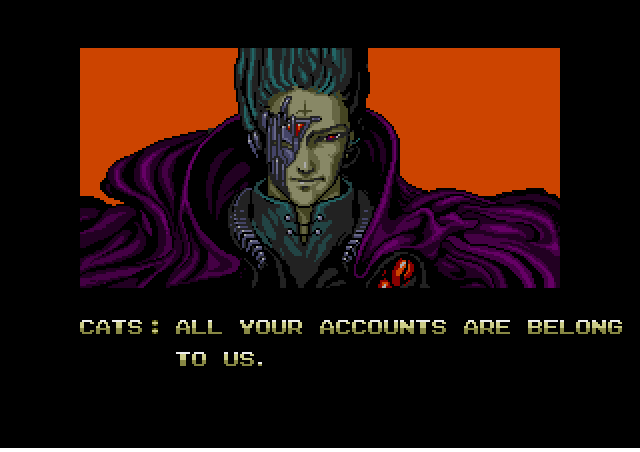
The takeover of all password information from password manager servers has happened before, multiple times. So, it's not a one in a billion possibility. If you were an extremely security conscious person with necessary knowledge and skills, you could have a strict passkey regime that keeps passkeys in security keys only instead of the password managers.
There is no central record of which websites we have registered our passkeys with either. Yes, your password manager remembers the one you registered with them. But, for others, like security keys, you must go over every web site you can remember of one by one. Losing a security key can be a great headache, especially if it was stolen by someone who targets you.
What will the regular user do? Passkeys are only "convenient sign-in" for them. They don't know about the caveats. They may be left with unrecoverable accounts, hacked accounts en masse, and frustration could be the best outcome then.
We still have some work to do before passkeys can become mainstream. Until then, users should be extra careful when switching to passkeys; not everything glitters is gold.