 AIFeed
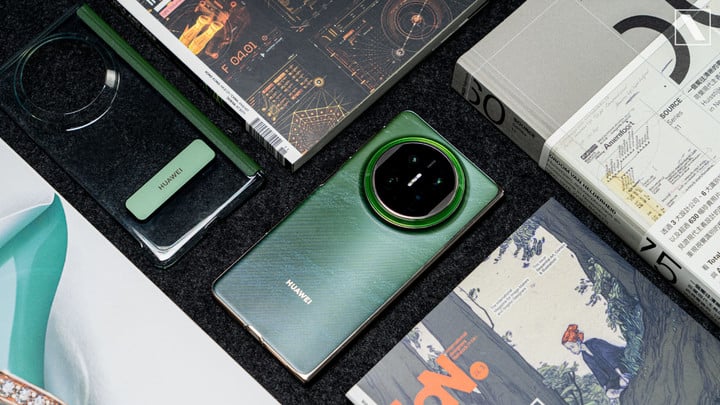
Huawei Mate X8 Review: Endgame
2026-11-27 11:06
On July 20, 1969, when Neil Armstrong first stepped onto the soft, cold, and slippery lunar soil, he uttered that line destined to be remembered for ages:
That’s one small step for [a] man, one giant leap for mankind.
That’s one small step for [a] man, one giant leap for mankind.
This is one small step for a man, one giant leap for mankind.
We have no intention of comparing the iteration of consumer electronics to the human moon landing, but after spending time with the latest Huawei Mate X8, we've come to a new understanding of that sentence—
After all, who would have thought that truly resolving the historic contradiction of large foldables—"the inner screen is inconvenient, the outer screen is impractical"—would only require taking one small step in width?
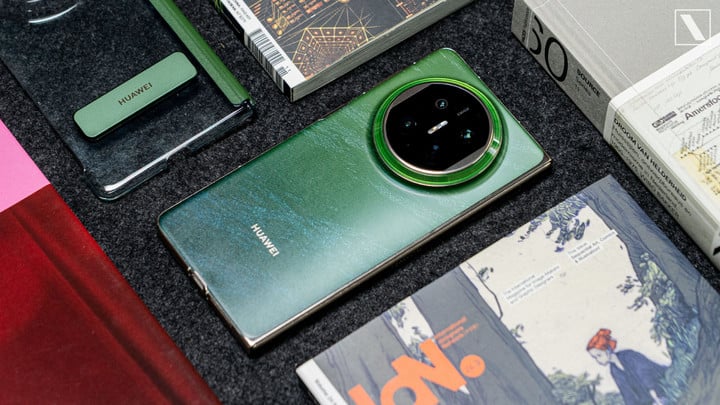
As the newest member of Huawei's foldable lineup, the Mate X8 not only widens the body but also makes substantial progress in thickness, weight, and feel:
A wide, flat body paired with front and rear quad-curved screens and rounded bezels feels like holding a jade tablet... What's more, the Mate X8's feel when folded is now indistinguishable from an ordinary slab phone.
From the Mate X in 2019 to now, after a full seven years of iteration, upgrades, and evolution, I think we can finally say it:
Starting with the Mate X8, large foldables have officially entered the "endgame" phase.
As the choice with the most mature approach, the most advanced technology, and the most comprehensive specs among all foldable phones today, if you've waited seven years and are still hesitating, now is the best time to stop hesitating.
Large Foldables Have Reached Their Limit—in a Good Way
The most noteworthy thing about the Mate X8, and the thing everyone will notice most immediately upon picking it up, has to be its two screens.
Unlike previous generations' approach, on the Mate X8 Huawei adjusted the outer screen resolution to 2444×1132, changing the aspect ratio from 20.4:9 to 19.4:9—
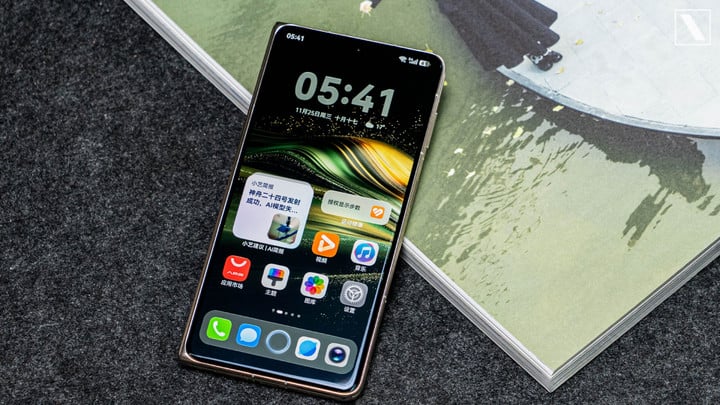
Don't be fooled by the small numerical change—in terms of screen ratio, it's equivalent to going from the previous "skinny" ratio directly to the same aspect ratio as the Mate 90 series slab phones.
Combined with the aforementioned quad-curved glass and rounded bezels on the Mate X8's outer screen, the combination truly brings the Mate X8 into that foldable utopia where "folded, it's just a slab phone."
The same good news carries over to the inner screen.
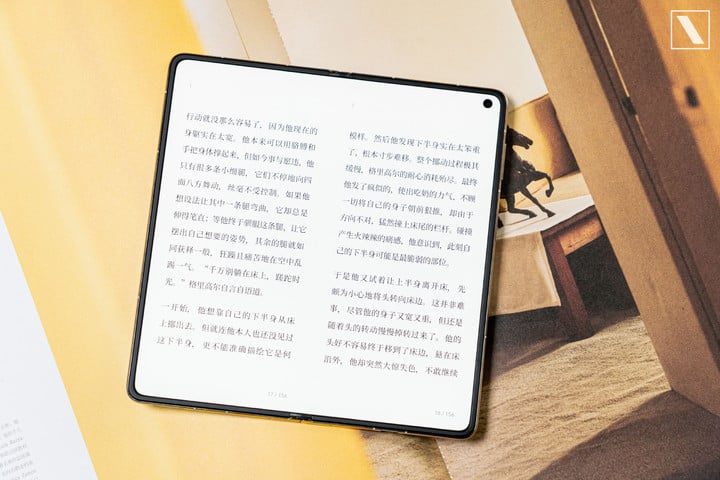
Because the outer screen got wider, the Mate X8's inner screen size has risen to 8.2 inches with a resolution of 2424×2340—the closest to square among all foldable phone inner screens to date:
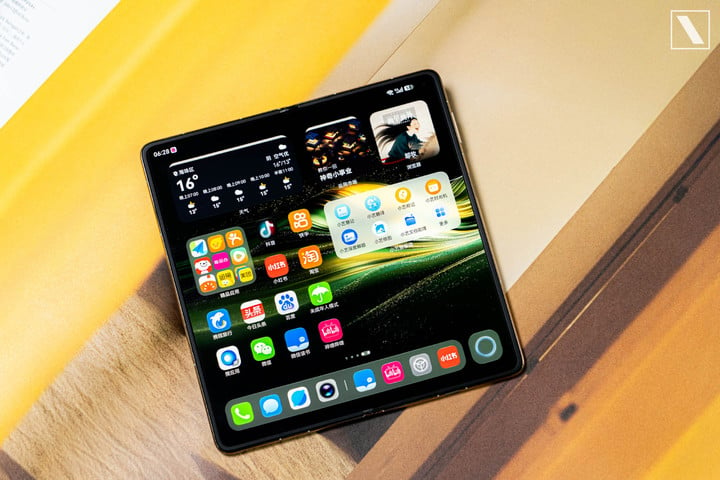
This is also why many people intuitively feel the Mate X8 is "wider" than other large foldables when they first get their hands on a real unit.
Although watching 16:9 videos, 21:9 movies, or 18:9 short videos on this square inner screen will still leave black bars, the place where this wider-than-others inner screen truly shines is split-screen:
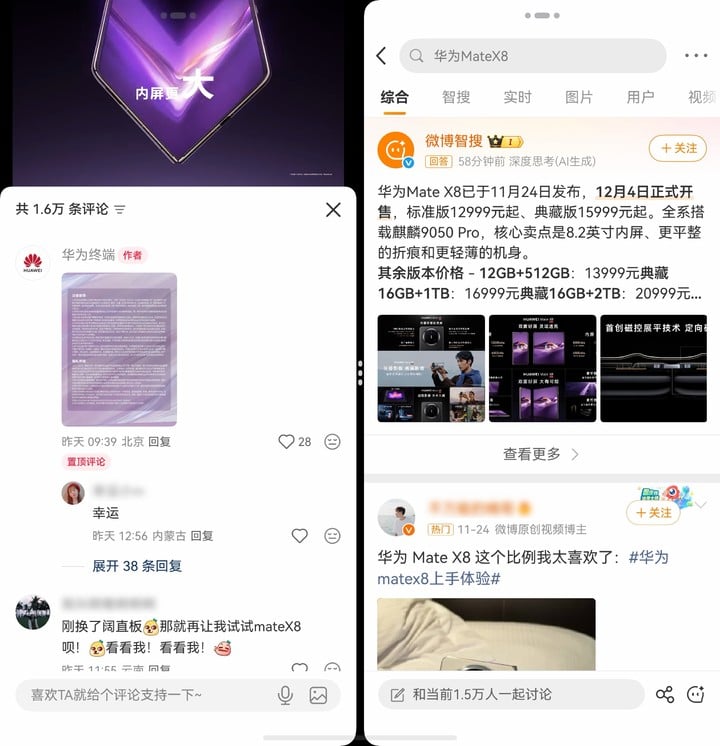
On past foldables, despite split-screen mode having a decently large area, once you factor in the losses from various UI elements and layout bleed, the windows on both sides would mostly still get compressed into something resembling a 9:21 "fish-tape screen."
But in the Mate X8's body that exceeds 150mm when unfolded, even split-screen apps have aspect ratios closer to a slab phone, effectively avoiding the viewing issues caused by horizontal compression.
Especially for use cases with information on one side and AI tools on the other, the extra X-axis space is extremely useful.
Along with efficiency, the Mate X8's screen experience reaches new heights.
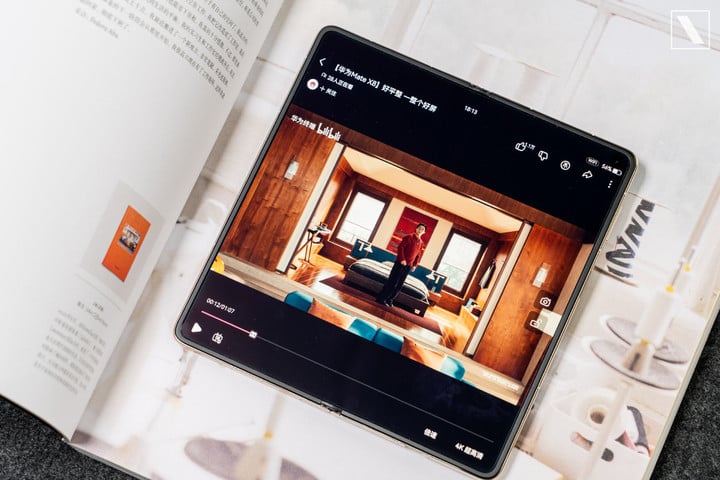
On the Mate X8, Huawei brought the (second-generation) dual-layer OLED "Linglong Screen" technology previously used on Mate slab phones to the outer screen: 1% APL peak brightness of 12,000 nits, and 10% APL brightness—closer to everyday use—can reach 6,000 nits.
It's not just the outer screen that's bright. Although the Mate X8's inner screen is still single-layer OLED, its 10% APL brightness can still reach an aggressive 4,500 nits.
In everyday use, this means that during our review period with the Mate X8, most of the time we had to manually lower the brightness below the auto setting—otherwise it was somewhat dazzling—
In particular, Huawei has also made tremendous progress this year in crease and anti-reflection control. By placing magnets on both sides of the hinge to "flatten the bulge" and filler in the middle of the hinge to "level the pits," the Mate X8's crease performance is indisputably T0-tier:
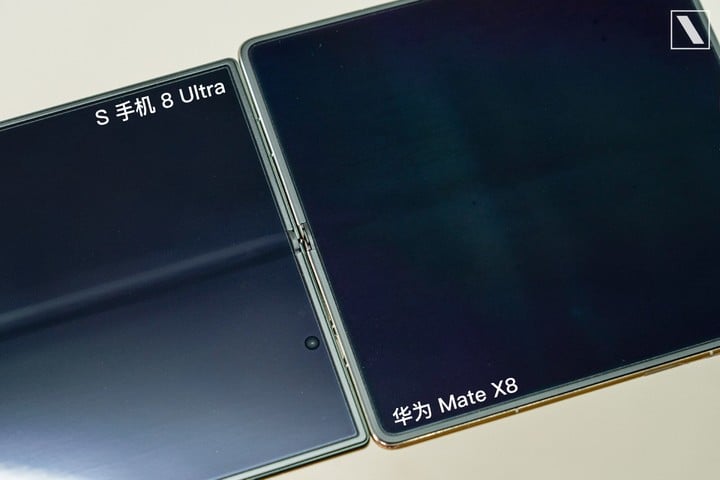
Combined with the massive improvement in anti-reflection on both inner and outer screens compared to the previous generation, the Mate X8's two screens—whether viewing, touching, or writing and drawing—are clearly ahead of other foldables on the market.
Even if such crease control isn't enough for you and you want a completely "visually crease-free" experience, Huawei even offers a matte film option for the Mate X8's inner screen, with service starting in January next year.
Unfortunately, the Mate X8's extreme crease control, significantly reduced body thickness, and higher stacking density don't come without a cost—the Mate X8 is the only recent Huawei foldable with "speaker grilles on the same side of the body," requiring you to unfold it and use it in landscape to get left-right stereo sound.
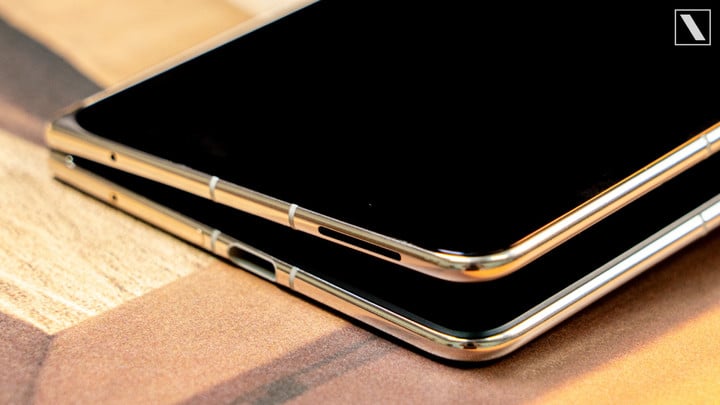
Fortunately, the Mate X8's inner screen is nearly square, so the experience is identical in landscape and portrait. This trade-off is a pity, but not unacceptable.
Catching Up to Slab Phones, Surpassing Slab Phones
Since the birth of large foldables, this category has been accompanied by a curse:
You're more expensive than a slab phone, less durable than a slab phone, weaker in imaging than a slab phone—if the experience in many scenarios is still worse than a slab phone, then what's the point of foldables existing?
For early-technology products, this criticism held true, but with the Mate X8, our impression has turned 180 degrees—
The Mate X8 is not "a foldable that's not inferior to a slab phone," but "a slab flagship that happens to unfold."
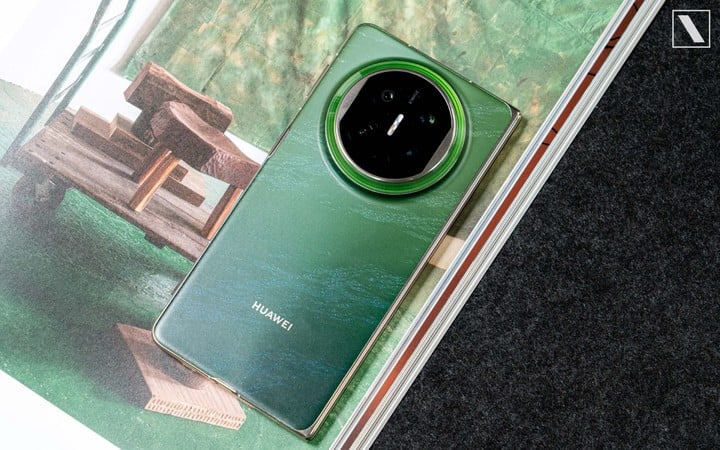
The best evidence for this view is the Mate X8's camera performance.
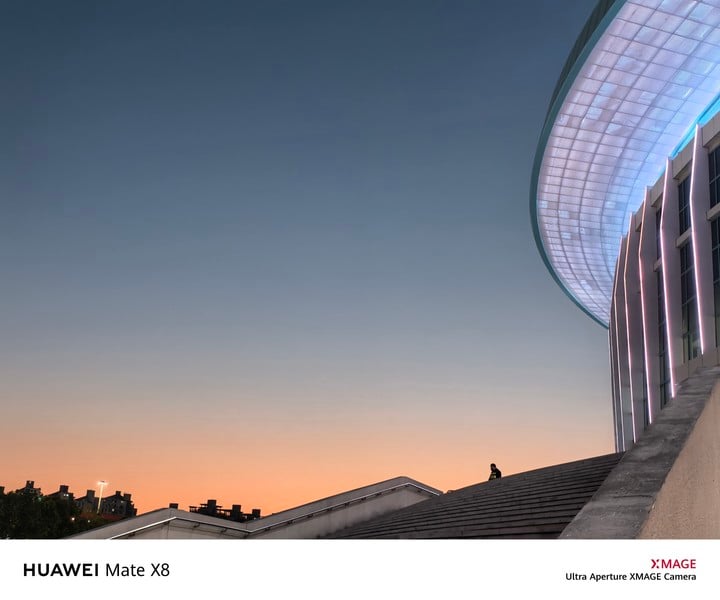
Take the Mate X8 Collector's Edition in our hands, for example: it uses a 50-megapixel, 1/1.28-inch large-sensor RYYB main camera, supports F1.49-F4.0 continuous variable aperture, and maintains an ultra-high dynamic range of 18EV.
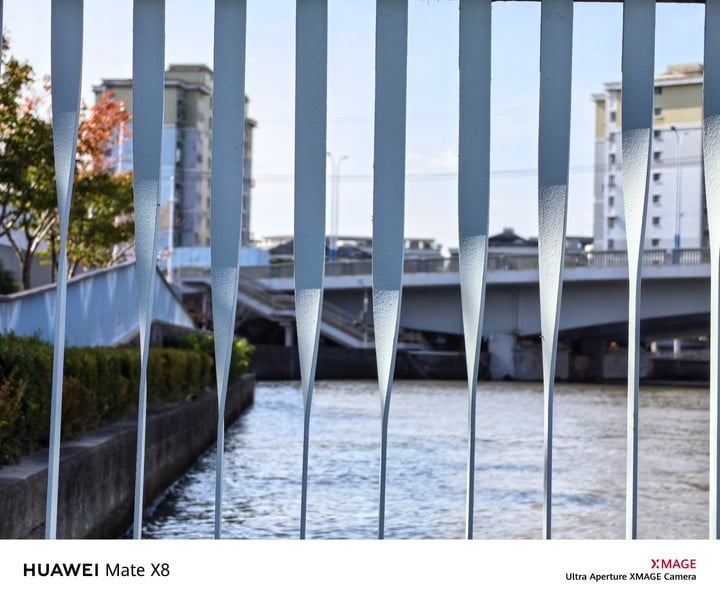
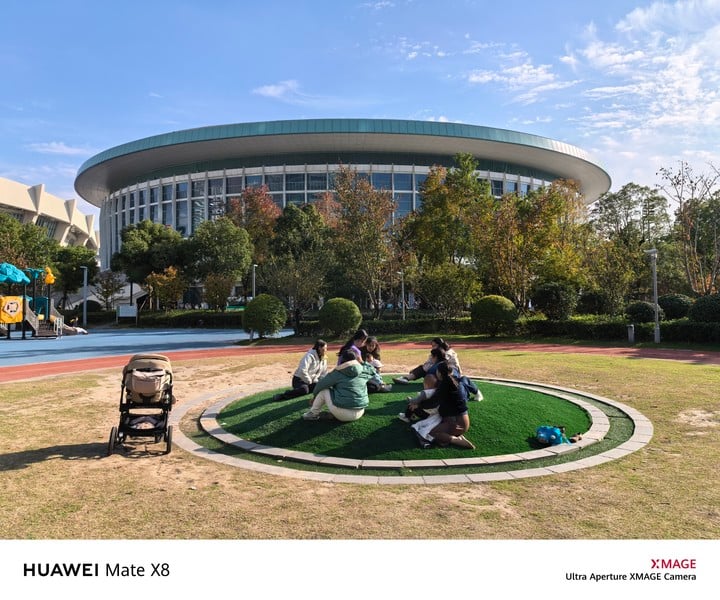
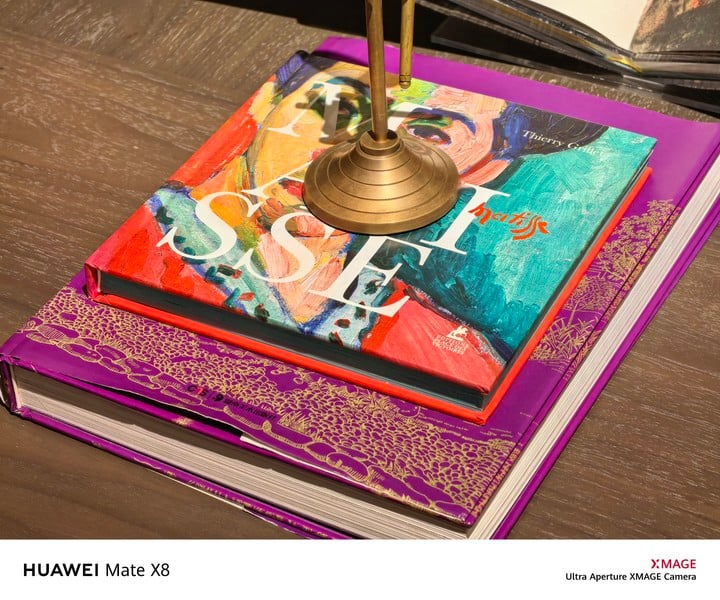
The Mate X8's telephoto also uses a 50-megapixel, F2.2, 85mm-equivalent periscope telephoto, and its tele-macro remains in the industry's top tier.
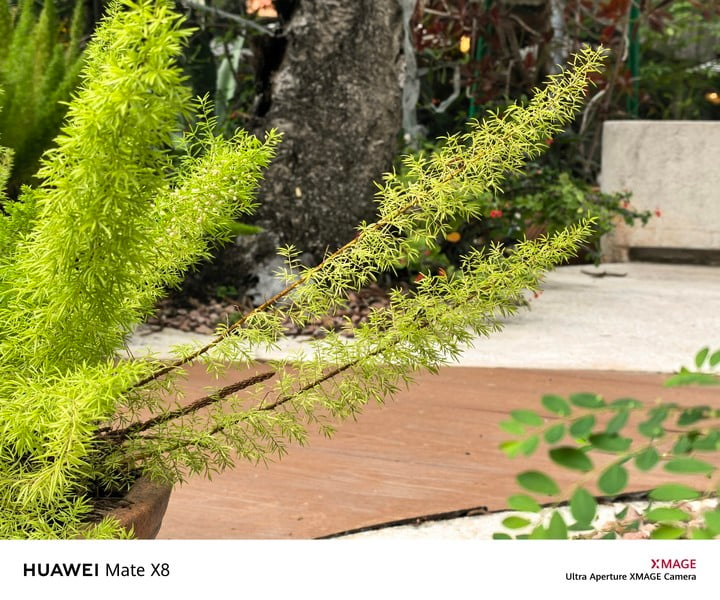
Not to mention the Mate X8 has an "official cheat code"—
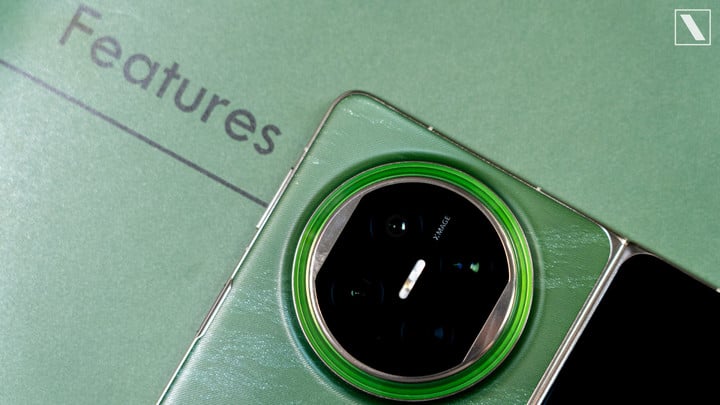
Yes, the Mate X8 actually supports adapting the previous Ruiying Z10 modular camera, letting you simultaneously have a 24-240mm one-inch sensor and a foldable-exclusive "waist-level viewfinding" capability:
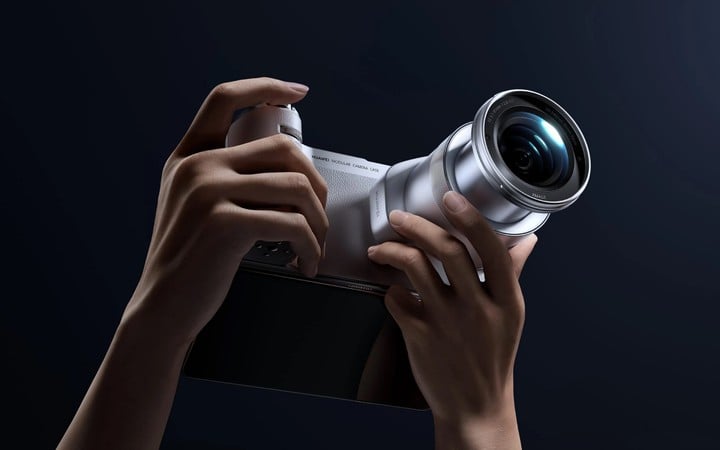
Of course, adapting the Z10 requires a dedicated phone case, unlike the Mate 90 Pro Max Collector's Edition which integrates the lens mount into the camera deco.
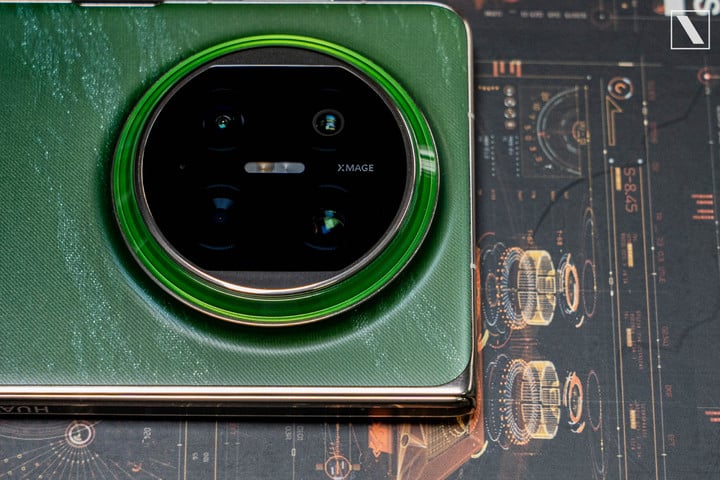
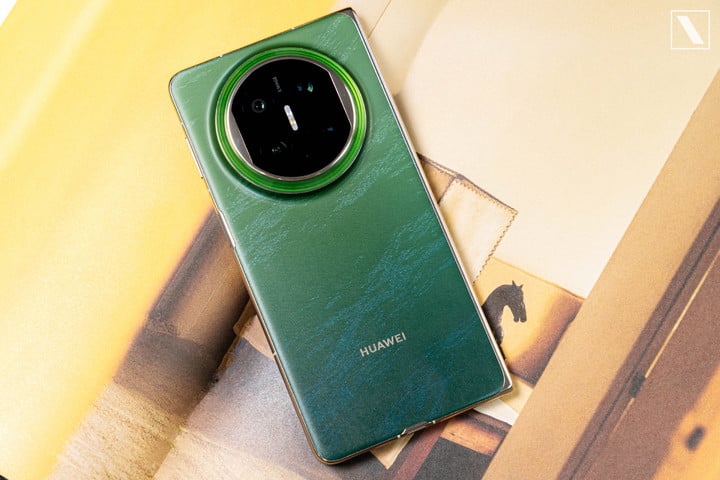
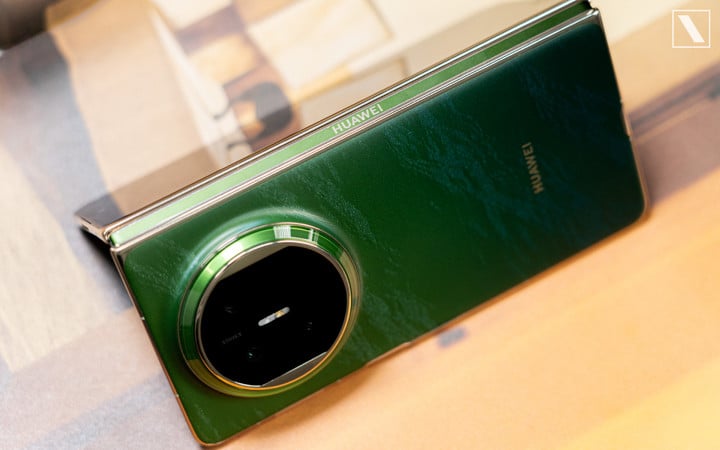
Fortunately, although it can't take lenses, the yttrium crystal gem on the outside of the Mate X8 Collector's Edition still sparkles brilliantly.
Article title: Huawei Mate X8 Review: Endgame
Body: Another change that longtime large foldable users will welcome is that Huawei has finally made some feature updates in HarmonyOS 7 for the "one-handed use" scenarios of large foldables.
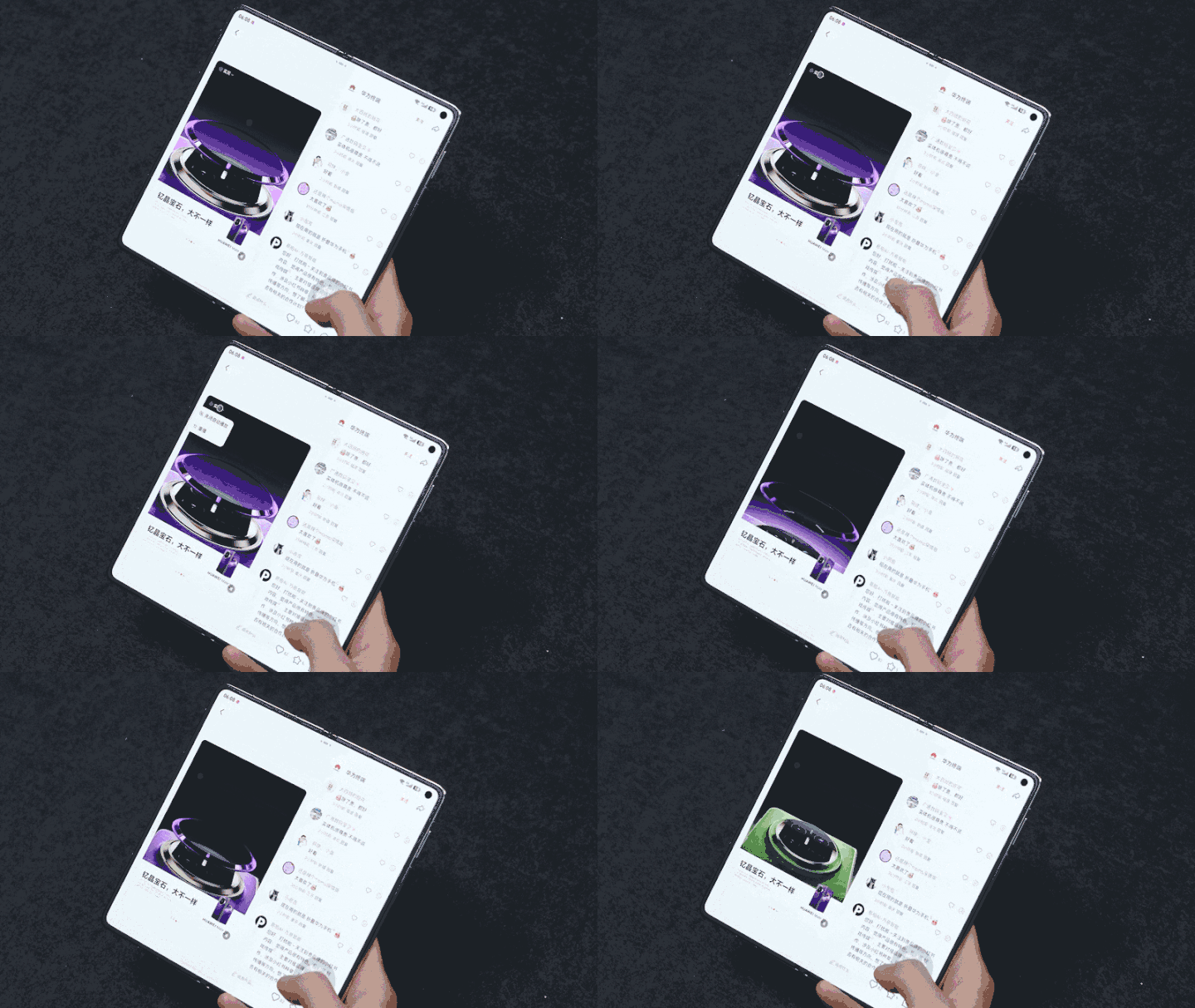
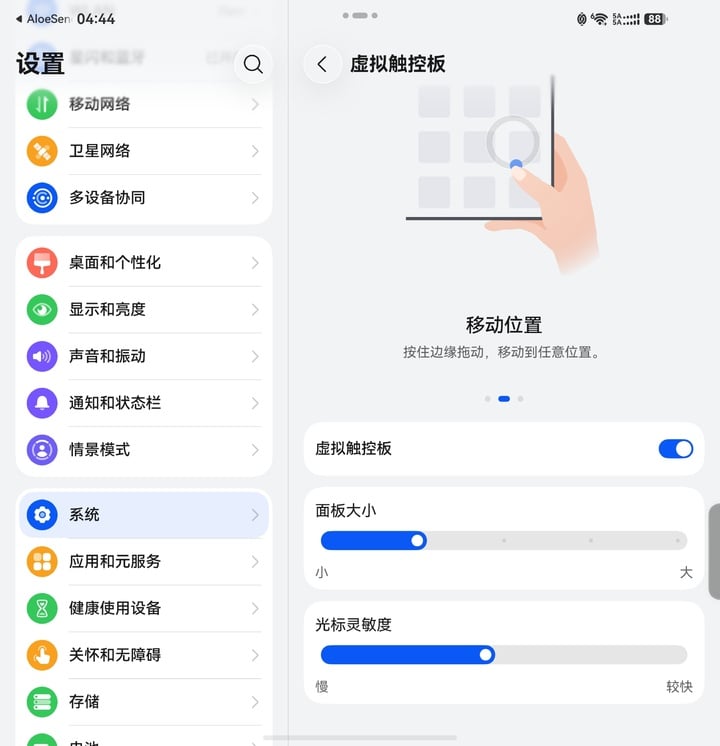
If you open the Settings menu or Control Center on the Mate X8, you can see a new "Virtual Trackpad" toggle.
Once enabled, the phone displays a small trackpad in the thumb area of the inner screen, supporting simulated taps and swipes, so you can operate content on the other side of the inner screen with one hand:
This isn't the first time we've seen a similar feature—
Samsung's One Hand Operation+ has long had a similar virtual trackpad feature, except Samsung, as always, buried it in Good Lock, while Huawei's virtual trackpad works right out of the box.
But after using the Mate X8's virtual trackpad, we also found two rather awkward aspects: first, it doesn't work on the outer screen, so if you want to tap the top of the screen one-handed, you still have to stretch your fingers.
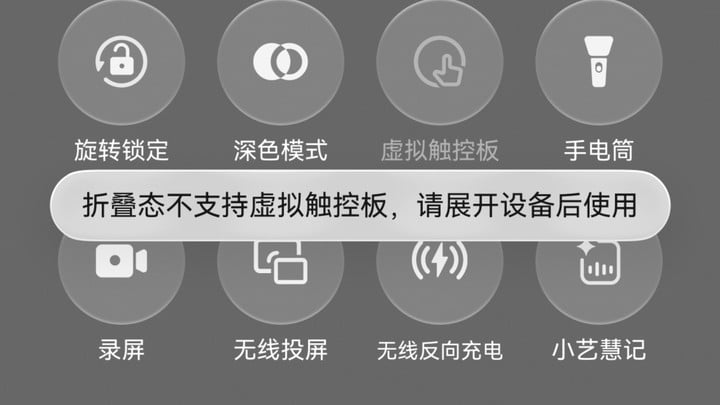
Second, although the virtual trackpad can be hidden by snapping it to the edge, the hint bar doesn't support adjusting transparency, and the master toggle for the entire feature is also in Control Center, so there's no way to quickly turn the feature on or off with one hand—
Also worth noting is HarmonyOS's gradually maturing AI capabilities.
In our earlier review of the Xingmang phone OSTA O1 Pro, we mentioned that Huawei set up a "roughly system desktop-like" Xiaoyi AI screen for Xiaoyi, using AI interaction to partially replace the traditional grid-style desktop.
And on the Mate X8, we also have an identical 1.5-level AI desktop:
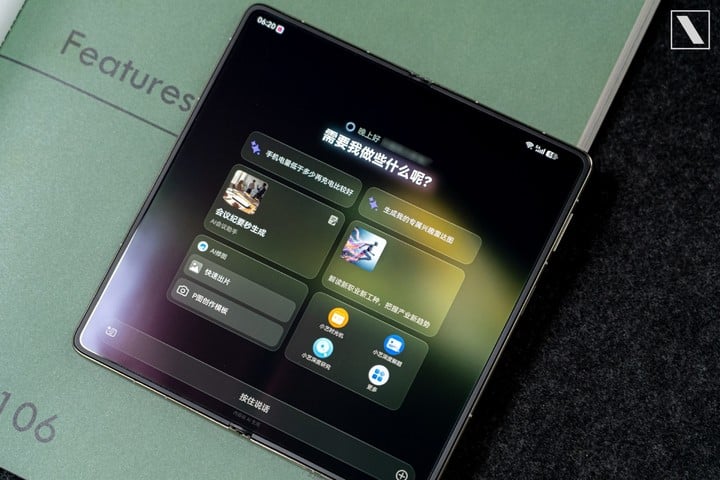
In particular, the Mate X8 also supports the M-Pen 3 and M-Pen 3 Mini styluses. I even quite enjoyed the process of writing in the input box to send messages to Xiaoyi, which to some extent reminded me of passing notes to my deskmate in middle school.
After the Endgame
On November 24, just before the Mate X8 launch event, Huawei officially announced:
The number of phones, tablets, and computer terminal devices running HarmonyOS 5, 6, and 7 has exceeded 100 million, the HarmonyOS ecosystem offers more than 460,000 available apps and services, and registered developers have exceeded 12 million.
This is an important milestone in HarmonyOS's shift from "ecosystem building" to "scaled development."

And in this process, Huawei's wide foldables, wide bar phones, large foldables, foldable-screen computers, and other new-form products play a crucial role—
In fact, it was the arrival of the Pura X running HarmonyOS 5 that marked Huawei's entry into a virtuous cycle of "using product forms to explore the system ecosystem, while the software ecosystem in turn feeds back into richer product forms."
As the newest member of the HarmonyOS 7 ecosystem, judging from its current product specs and actual experience, the Mate X8 is well deserved to be Huawei's most complete large foldable phone in terms of product strength to date.
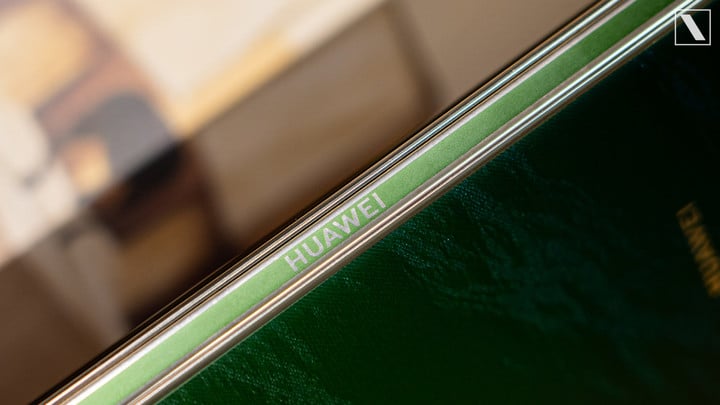
More importantly, the product thinking it embodies also foreshadows changes in the positioning of large foldable phones over the next few years.
According to a Counterpoint Research report, although foldable phones generate a lot of buzz, they still account for only about 2% of global smartphone shipment share—
Even after seven or eight years of evolution, foldables remain a fairly niche category in the overall smartphone market.
But the situation has begun to change.
As phone costs continue to rise, foldable phones—which once relied on form factor to prove their value—are gradually becoming true high-end flagships: they must not only have a form factor different from bar phones, but also provide a user experience comparable to bar flagships, and even better in some scenarios.
And within this definition, Huawei has already established an advantage that is hard to shake.
According to IDC's report on China's foldable smartphone market in the third quarter of 2026, Huawei, with a product lineup covering large foldables, wide foldables, tri-foldables, and other forms, captured more than 70% of China's foldable smartphone shipment share.
This leading position gives Huawei room to continue exploring different foldable forms, and also allows traditional large foldables to find a clearer place in a market with reference points:
It is first and foremost a primary phone that doesn't sacrifice flagship experience, and only then a complete large screen you can use whenever you need it.
Moreover, the most mature and widespread product form also means that large foldables are in fact the testing ground for all pioneering foldable technologies.
Advanced display panels, crease-free folding structures, metal printing processes, top-tier screen coatings, and software and AI capabilities developed for a large screen can all be implemented in concentrated form on a product whose form and constraints the manufacturer knows best.
The Mate X8 is the perfect example.
When foldables can gradually shed hardware compromises and deliver an increasingly complete flagship experience, they will also have the chance to move beyond the "small and beautiful" product positioning and become the daily primary phone that more high-end users are willing to choose.
The shift from "small and beautiful" to "big and comprehensive" reflects the evolution of foldables from inferior to bar phones, to catching up with bar phones, to surpassing bar phones—and it is also the path of this category from niche early adoption to mainstream flagship—
And the Huawei Mate X8 lets us see the first step taken on this path.