 AIFeed
Article title: Limited-time price from 254,900 yuan! The Mercedes-Benz all-electric GLC is "big, hearty, and great value"
Body:
Limited-time price from 254,900 yuan! The Mercedes-Benz all-electric GLC is "big, hearty, and great value"
2026-11-27 16:49
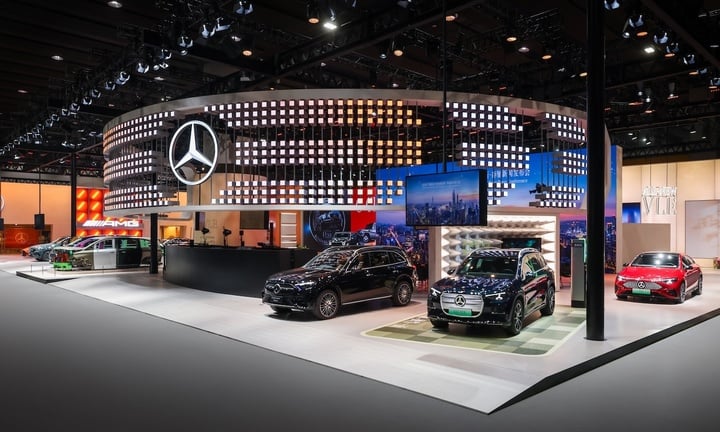
This year's Guangzhou Auto Show is different from previous years.
Against the backdrop of cracking down on "rushed cars," the pace of new car filings in China has clearly slowed. New-energy vehicle startups have few major new models this year; instead, the booths of traditional brands are more worth a look.
Among them, the all-new all-electric GLC SUV brought by Mercedes-Benz stands out in particular.
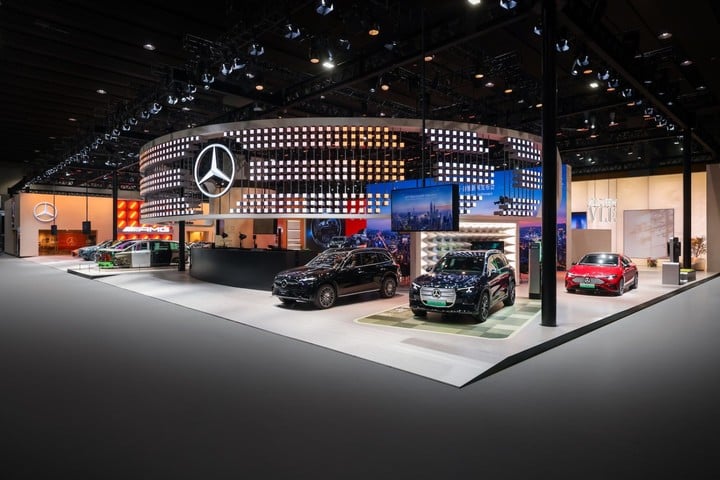
The all-electric GLC SUV, developed from the ground up on the Mercedes-Benz MB.EA all-electric architecture, further completes the product matrix at this auto show. On the basis of the Gold Edition, Mercedes-Benz officially launched the 299,900 yuan Silver Edition and the 362,200 yuan Platinum Edition.
Among them, the Silver Edition targets mainstream family users and comes with a dual-motor all-wheel-drive system; the 339,800 yuan Gold Edition enhances cabin luxury through features such as front and rear seat massage and the Burmester® 4D surround sound system; the Platinum Edition is a flagship for large families offering a 4+2 seat layout.
But the most noteworthy is the GLC 300 L Elegance Edition, which makes its debut with a limited-time exclusive price of 254,900 yuan.
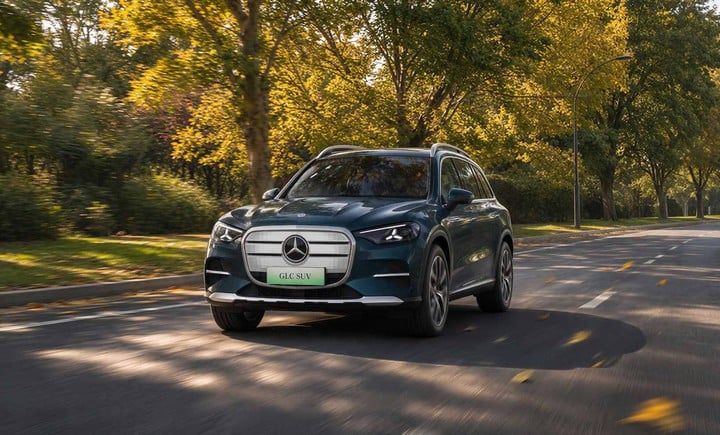
While retaining core features such as the MBUX Superscreen, two-speed transmission, and four-zone climate control, the Elegance Edition comes standard with an assisted driving system based on the R7 world model. For users who value intelligent experience and cost-effectiveness, this is undoubtedly its biggest highlight.
It can be said that this assisted driving system, standard across the entire lineup, is the real ace up the sleeve of the all-new all-electric GLC.
Intelligence is no longer a solo show for new-energy startups
As early as 2017, Ola Källenius, the current Chairman of the Board of Management of Mercedes-Benz Group AG, led a team to visit Momenta, which had just been founded, and Mercedes-Benz completed its investment that same year. Since then, the two sides went through proof of concept, pre-mass-production, and small-batch development. To make Momenta's algorithms adapt to Mercedes-Benz's strict vehicle validation process, the two sides maintained a long-term rhythm of weekly testing, feedback, and iteration, only ushering in large-scale delivery this year.
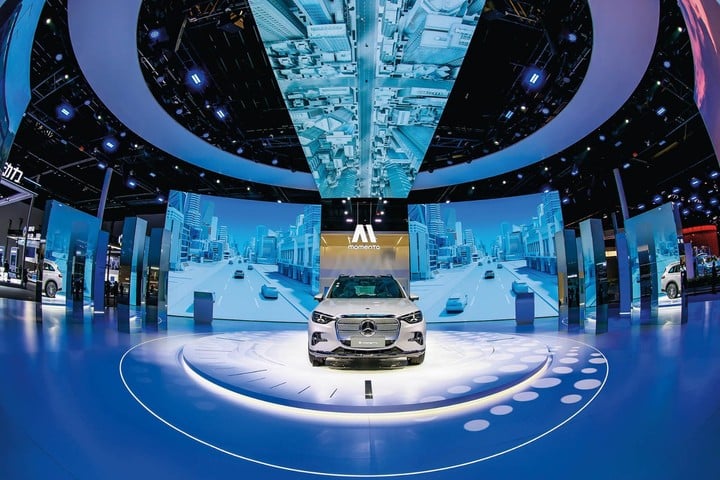
In the first half of this year, the R6 flywheel large model based on reinforcement learning connected urban and highway navigation. In the second half of the year, the R7 world model further filled in the connection between parking lots and public roads, making Mercedes-Benz the first luxury brand among Momenta's partners to support "parking spot to parking spot."
To make the system better handle complex road conditions, Momenta first uses real road data to train the model, then builds a simulation environment through the world model, allowing the system to repeatedly practice rare road scenarios in the virtual world.
According to figures released by Mercedes-Benz, the assisted driving system jointly developed by the two sides relies on 17 billion kilometers of real-road driving data and more than 168 million driving clips. The R7 world model's capability in complex and long-tail scenarios is 3 to 5 times higher than that of R6.
Now, the all-new Mercedes-Benz all-electric GLC can drive directly out of a parking spot, pass through urban areas and highways, and then enter the destination parking lot and park in a spot. Cross-floor memory parking supports up to 3 kilometers, and if the originally designated spot is occupied, it can find another empty spot. Even without setting a navigation destination, the system can handle following the car ahead, lane changes, and traffic light recognition.
Of course, parking lot routes still need to be learned in advance, and the driver must also be ready to take over at any time.
Dongchehui previously experienced the mass-production version of the R7 world model at Mercedes-Benz Tech Day, and during the process found that when passing through congested roads and most complex intersections, the system already rarely required manual intervention, roughly matching the official claim of "more than 60% reduction in takeover次数 per 100 kilometers" in terms of subjective feel.
What left a deeper impression on us was that the R7 world model handles pedestrians and non-motorized vehicles quite cautiously. When passing through intersections with obstructed sightlines, the vehicle slows down in advance, and when encountering pedestrians who appear suddenly, the braking action is also much gentler than before.
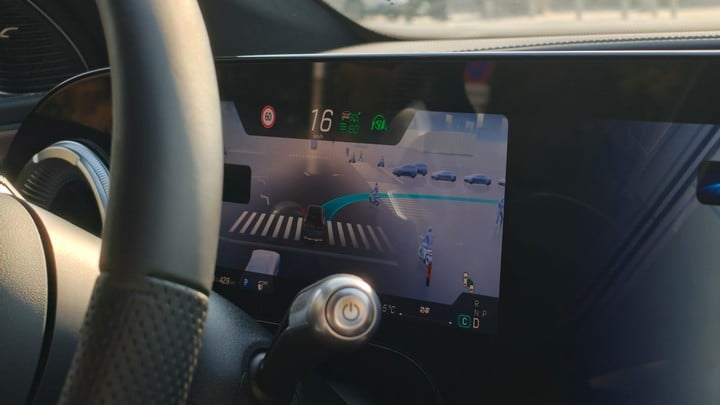
And when the driver actively corrects the direction, the R7 world model performs equally well.
Within the range of 0 to 130 km/h, the driver only needs to gently turn the steering wheel to naturally intervene in vehicle control. After releasing, the system quickly resumes assisted driving. Throughout the process there is no obvious tugging on the steering wheel, and there is no need to repeatedly exit and re-enable assisted driving.
To achieve this, Mercedes-Benz and Momenta once spent considerable effort.
Momenta CEO Cao Xudong once shared a development detail in a media interview: in early testing of the human-machine co-driving function, the vehicle was traveling at 120 km/h. After the driver turned the steering wheel and suddenly let go, the steering wheel occasionally showed slight oscillation, and the body also swayed gently along with it.
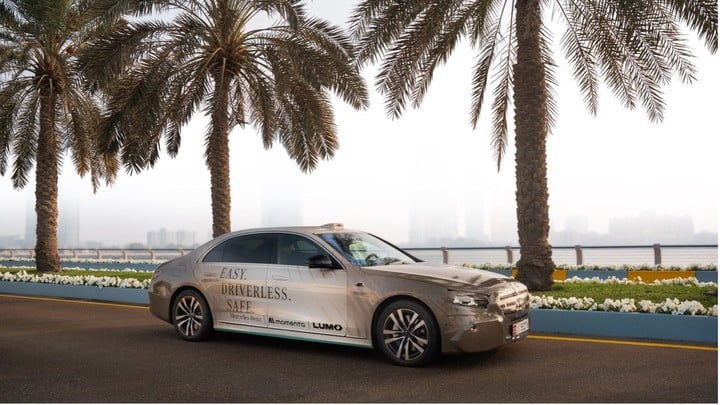
Although the sway was very small, Mercedes-Benz engineers still insisted on solving it. To this end, they brought in Mercedes-Benz's driving calibration expert, the "gold-medal driver," to collect data on the driver's operations when intervening and releasing through repeated tests at a closed site. Momenta then used this data for model training, ultimately eliminating the body sway.
Mercedes-Benz is well aware that what affects the actual assisted driving experience is precisely these hard-to-notice details. If the driver has to fight the steering wheel every time they intervene, driving will inevitably feel uncomfortable. In this way, through repeated testing, Mercedes-Benz's requirements for driving feel were integrated into Momenta's algorithms.
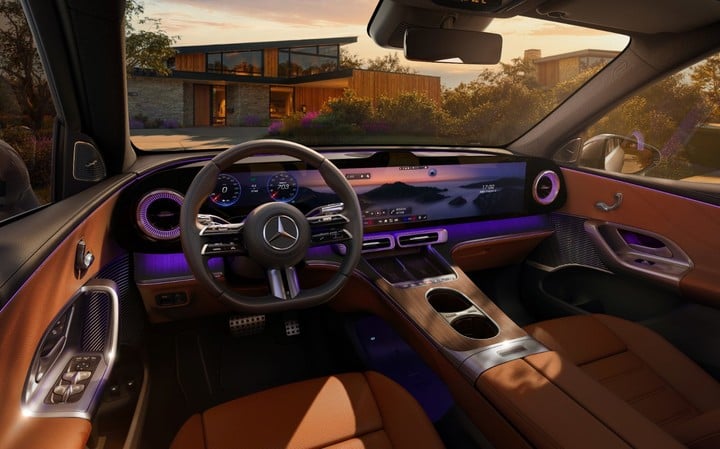
In addition to the handover of the steering wheel, everyday in-car operations also need to be smooth enough. To this end, the all-electric GLC adds physical stalks and scroll wheels on the steering wheel, so common operations such as adjusting volume and controlling cruise can be done on the fly without frequently going into screen menus.
On the other hand, "Xiaoben," connected to the Doubao large model, can also understand colloquial instructions. In-car functions such as air conditioning and lighting can be controlled just by speaking, further reducing reliance on the screen while driving.
Electric powertrain and chassis remain Mercedes-Benz's forte
In fact, Mercedes-Benz has long been thinking about how to make electric cars consume a little less electricity.
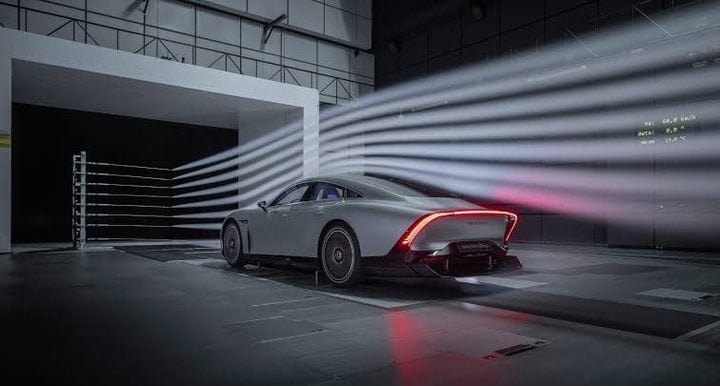
As early as 2022, the VISION EQXX concept car achieved a real-world highway energy consumption of 7.4 kWh per 100 kilometers. Although concept cars cannot be directly compared with production cars, the efforts Mercedes-Benz made in electric drive efficiency at that time can now be seen in the results of the all-new all-electric GLC.
The all-new all-electric GLC uses dual permanent magnet synchronous motors, and the front axle is also equipped with a DCU all-wheel-drive disconnect device. During constant-speed cruising, the front axle motor can disconnect from the wheels to reduce drag losses; when acceleration or more grip is needed, it can re-engage within 240 milliseconds to restore all-wheel-drive power.
At the same time, the rear axle is also equipped with a two-speed transmission. First gear is used for starting and acceleration, while second gear is engaged during high-speed cruising, reducing energy consumption by lowering motor speed. In this way, the vehicle can deliver all-wheel-drive performance when needed without bearing excess energy losses during steady cruising.
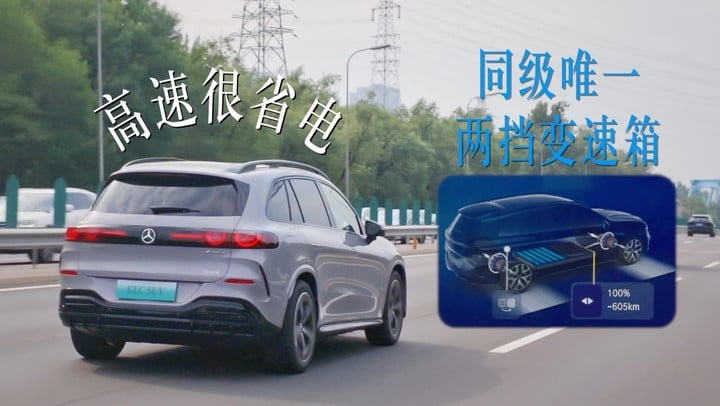
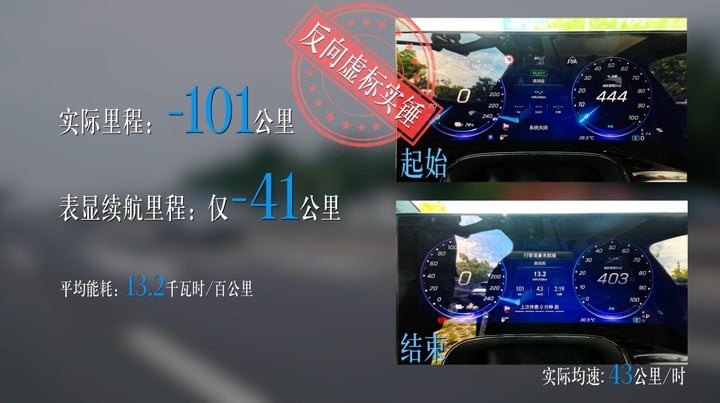
Its energy comes from a ternary lithium battery with a usable capacity of 85.5 kWh, offering a maximum CLTC range of 703 km and supporting a maximum charging power of 320 kW. A 10-minute charge can add up to 300 km of range, and charging from 10% to 80% takes only 22 minutes.
Mercedes-Benz even proactively lowered its declared range figure by about 2% within the scope allowed by regulations——
This is perhaps the legendary "reverse underrating."
Range has numbers to look at, but whether the chassis is good can only be known by driving.
In everyday driving, differences in suspension tuning are most easily felt when going over manhole covers, road seams, and continuous speed bumps. Especially after continuous bumps, whether the body can quickly settle down directly affects the ride experience.
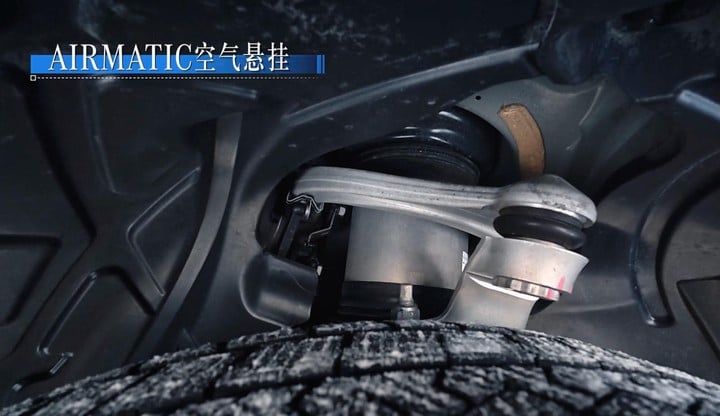
Targeting these common road conditions in China, the all-electric GLC is equipped with four China-specific hydraulic bushings front and rear, and the steel suspension version has also been specially tuned. If the AIRMATIC air suspension and ADS+ damping system are optioned, the vehicle can suppress body sway even faster when facing larger undulations.
For an SUV with a wheelbase of 3027 mm, whether it can turn around easily in an underground garage is also a very practical question.
The all-electric GLC is equipped with ±4.5° rear-wheel active steering. At low speeds, the rear wheels turn in the opposite direction to the front wheels, shortening the turning diameter from 12.3 m to 11.3 m; during high-speed lane changes, the rear wheels turn in the same direction as the front wheels, helping the body maintain stability.
And as more and more driving operations are handed over to the system, the vehicle's own safety protection cannot be lacking either.
The battery pack of the all-electric GLC eliminates coolant pipe interfaces inside, reducing the risk of coolant leakage after a collision and resulting short circuits. Mercedes-Benz said that before launch, the all-new all-electric GLC completed more than 230 real-vehicle crash tests, nearly 80 of which were conducted in China. The tests also covered more complex consecutive collision scenarios, such as the vehicle first suffering a side impact and then hitting a pole.
Article title: Limited-time from 254,900 yuan! Mercedes-Benz electric GLC "big items, great value"
Body:
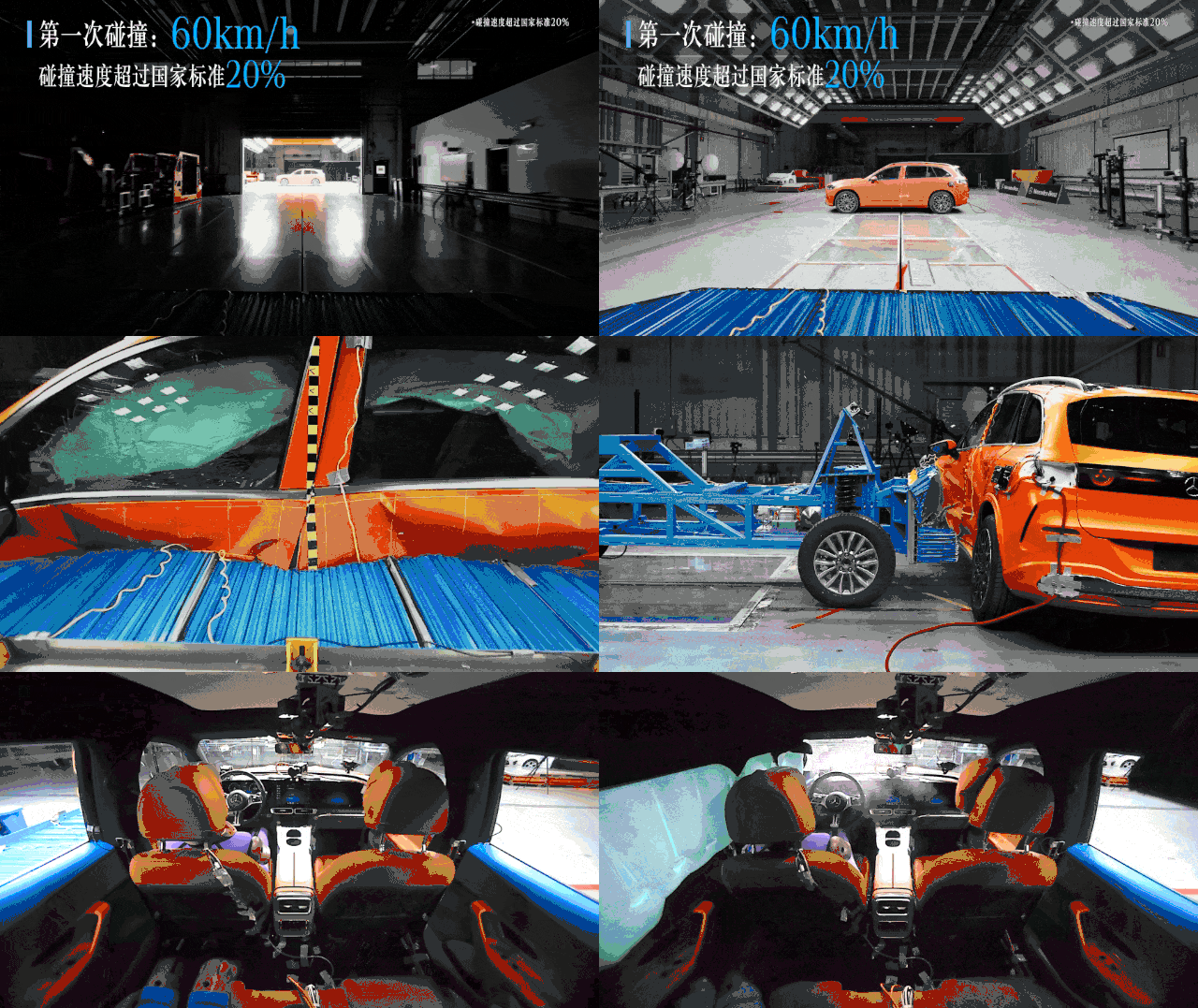
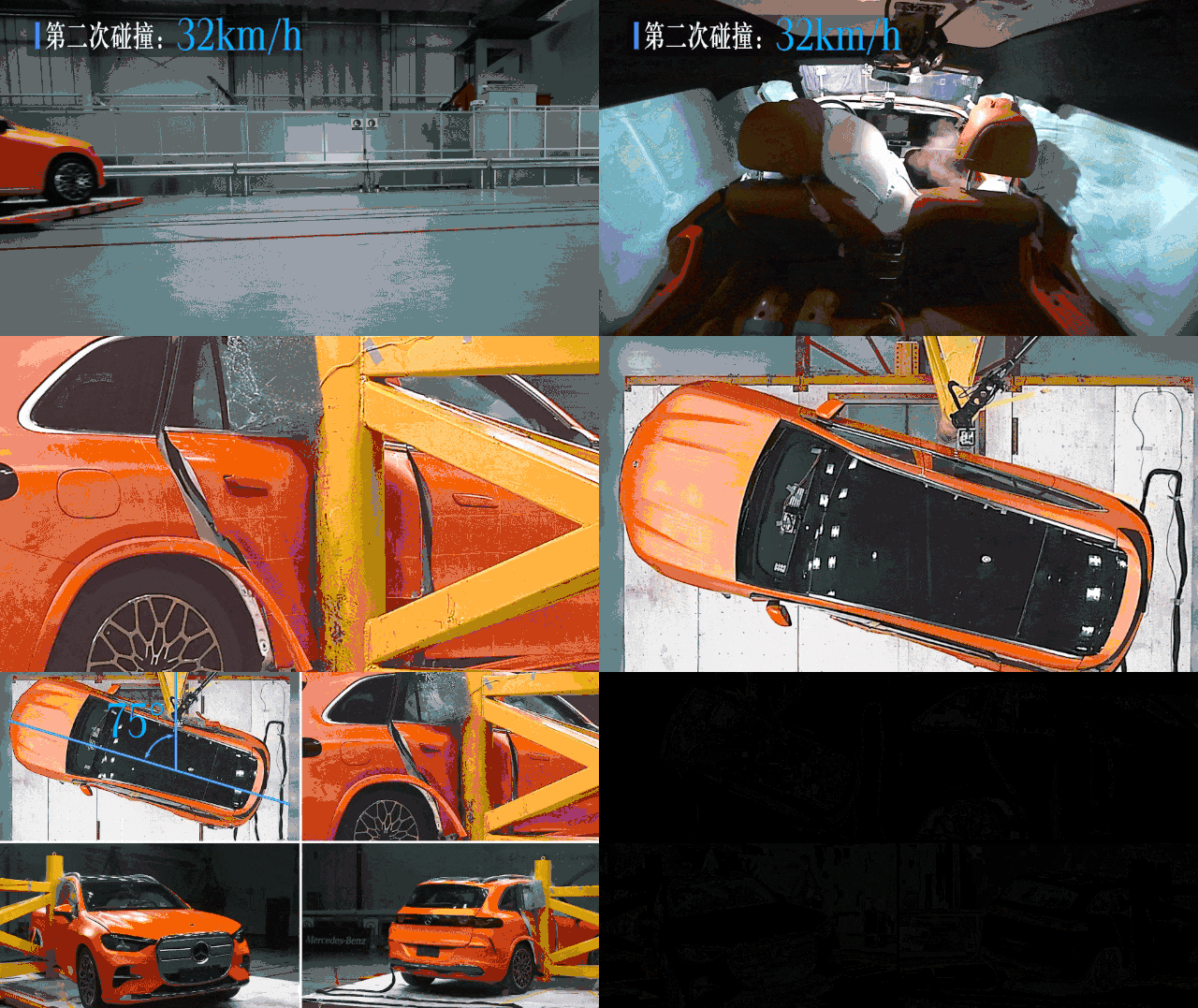
Driver assistance can help the driver spot hazards in advance and take evasive action, but accidents on the road cannot all be avoided. When a collision actually happens, what protects the occupants is still the airbags, the seat belts, and a solid body structure.
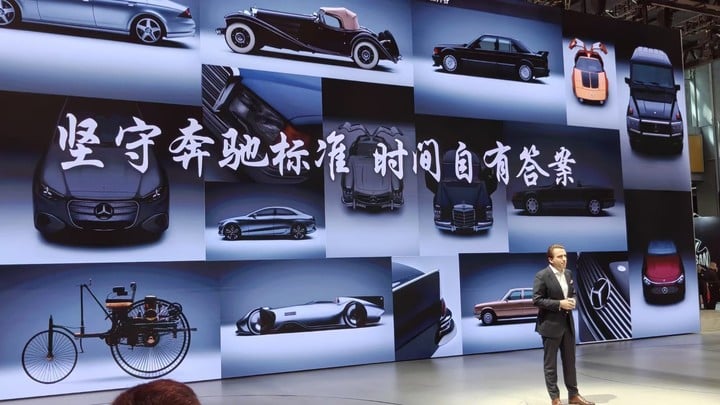
Li Desi, President and CEO of Beijing Mercedes-Benz Sales Service Co., Ltd., said at the launch event that rather than chasing a passing trend, Mercedes-Benz values safety, quality, and user experience more.
In today's industry, many are competing on launch speed, chasing hype, and even taking shortcuts to get ahead; Mercedes-Benz, by contrast, is willing to spend time on the things you don't usually see but can always feel—not seeking quick wins, but aiming to stand the test of time.
In 1914, American aviation pioneer Lawrence Sperry let go of the control stick in mid-air, raised both hands above his head, and showed the world the earliest autopilot system in aviation history. More than a century later, aircraft have long since achieved autopilot, and cars are now able to drive from one parking space to another. Traditional luxury brands like Mercedes-Benz have finally made it into the first tier when it comes to intelligence.
However, today's cars are still at the driver-assistance stage. No matter how many operations the system can perform, the driver cannot hand over their attention along with it.
Sperry raised his hands back then to prove to the world that an aircraft could keep itself stable. Today's Mercedes-Benz does not need to prove how advanced its technology is in that way. Rather than letting the driver take their hands off completely, they would rather put effort into refining the cooperation between human and system.
Mercedes-Benz has always believed that when to hand driving over to the system and when to grip the steering wheel again should always remain the driver's decision.