 AIFeed
Top Commercial-Grade AI Video for Just 0.5 Yuan per Second! China's Open-Source Newcomer Takes Global First Place

30-second single-take, with automatic shot planning
Heng Yu, reporting from Beijing, QuantumBit | WeChat Official Account QbitAI
So what quality of AI video can you get now for the price of a cup of milk tea?
The 1080p video below cost 15 yuan to generate.

This is a 30-second raw clip generated in a single pass, not edited in post-production~
On the image-to-video leaderboard of the authoritative evaluation body Artificial Analysis, the model that generated this video has climbed to first place worldwide.
It has firmly joined the ranks of top-tier commercial-grade benchmark video models.

A heartfelt observation: in this wave of video models, domestic players really are charging hard on the global stage!
As you can see, it is also made in China — it is MAGI-2, a 480B video model just released by the video startup Sand.ai.
MAGI-2 has first-tier video generation capabilities, yet its per-second pricing is one-tenth that of leading closed-source models at the same level.
The global AI video creation platform Higgsfield has published its latest comparison of video generation models' performance and pricing. The results show that MAGI-2 significantly expands the Pareto Frontier of video generation models, redefining the cost-performance ratio of flagship video generation models while approaching the generation quality of the current strongest models.

While prices drop sharply, MAGI-2 still aligns with commercial production standards in creative controllability.
The model supports parsing of complex scripts up to 20,000 characters and millisecond-precise shot cutting, can mix up to 20 reference images, videos and audio assets, and supports targeted modification of local details in already-generated footage.
In addition, during the pretraining stage, MAGI-2 also exhibited an understanding of task rules along with autonomous reasoning and planning capabilities.
Would you believe this video model can actually solve Sudoku on its own (insert a slow, emphatic exclamation mark here)?
Sand.ai says that with prompt enhancement (PE) turned off, no solution steps provided, and no language model called in as backup, MAGI-2 solved a 9×9 Sudoku in a demo using only the task instruction and a reference image.
Applied to video creation, this autonomous planning capability means that a simple story outline is enough for MAGI-2 to arrange storyboards and design camera movement and character actions on its own.

On the day of release, Sand.ai announced plans to open the MAGI-2 model weights as soon as possible, giving developers worldwide the chance to use and further develop the model.
The open-source camp in AI video generation now has a new bargaining chip for contending with the global top tier.
A Capability Leap from Autonomous Planning to All-Modal Local Editing
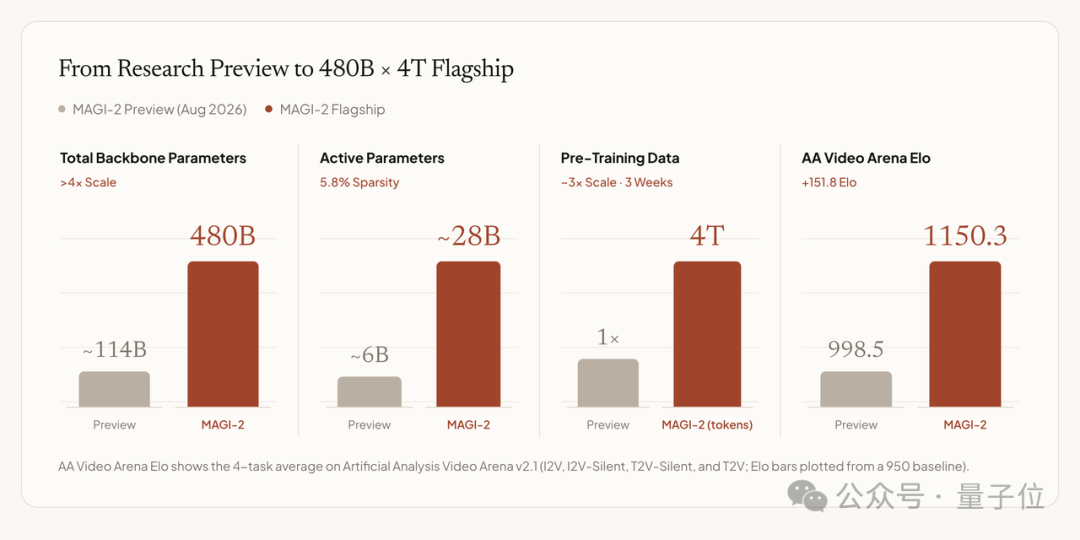
In August this year, Sand.ai launched MAGI-2 Preview with 114B total parameters; the newly released MAGI-2 has 480B total parameters. After scaling up the model, the team observed unexpected early emergent phenomena in pretraining evaluations.
The Sudoku solving mentioned above is one of them.
Give it a 9×9 Sudoku reference image, and without a language model pre-computing the answer or solution steps written into the prompt, it can understand the row, column and 3×3 box constraints by itself and fill in the correct numbers step by step in the video.

In the main arena of video creation, this capability manifests as an autonomous understanding of narrative logic and cinematic language. Even when the creator has not specified every detail, the model begins to try to fill in the plot and organize shots on its own.
In the AI video below of a conversation between Lu Su and Zhuge Liang in a boat, the creator provided only character and scene references plus three plot beats: "Lu Su boards the boat and takes a seat," "the two converse," and "Lu Su's expression changes after Kongming reveals his purpose."
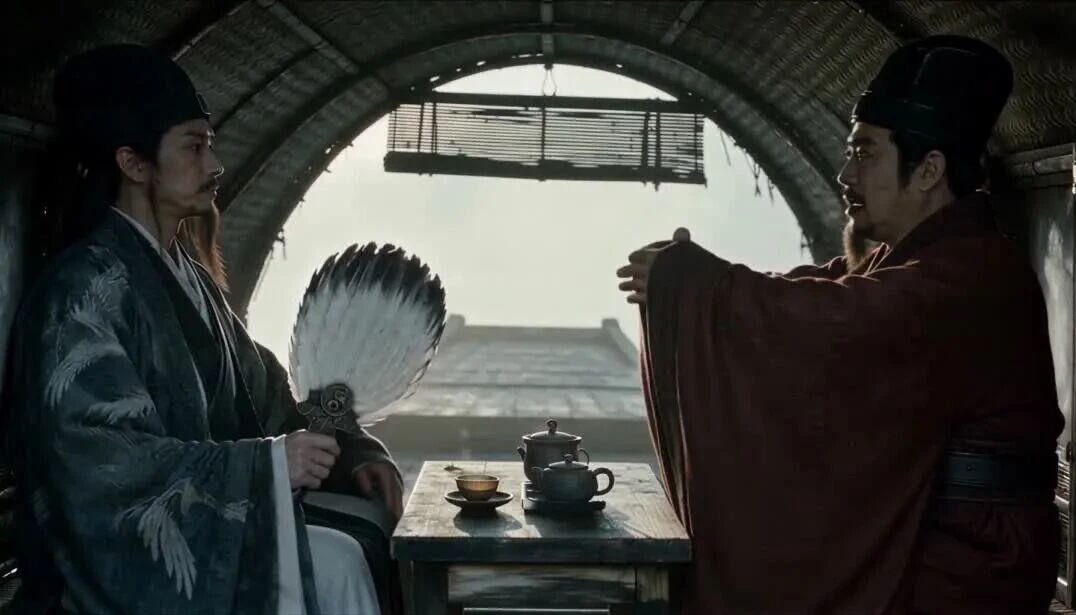
With prompt enhancement (PE) turned off throughout, and with no shot sizes, camera positions or cut points written at all, MAGI-2 worked out a reasonable set of compositions and viewpoint changes on its own, and filled in character close-ups and expression transitions that were not in the script.
That said, Sand.ai did not report only the good news in its model technical report; the paper shares an observation similar to the "alignment tax" of large language models —
after post-training fine-tuning toward high aesthetic preferences, the cinematic feel of the final footage is indeed maxed out, but the reasoning and generalization abilities that emerged during pretraining become harder to trigger.
Clearly there is still much research to be done to give video models both aesthetics and general intelligence. How to find a balance between high aesthetics and strong logic will also directly guide the design direction of their next-generation training data.

Back to MAGI-2's model performance.
As image quality gradually approaches the level of live-action footage, competition among AI video models has entered a deeper contest of capabilities.
What currently separates video models is now the precision of complex script execution, control of shot rhythm, and the coherence of long-form narrative, among other things.
MAGI-2 can think for itself, but that does not mean it does not follow orders.
In fact, the model's precision in executing creative instructions is quite outstanding. If a creator wants precise control over every frame checkpoint, MAGI-2 performs excellently in instruction following.
The technical report published a set of timeline control tests.
In the shot-cutting test that most tests control precision, all 12 specified cuts hit their marks, with an average timing deviation of only 0.028 seconds and a maximum error of just 0.08 seconds — a difference of two frames, far more precise than the deviations of close to 1 second common among mainstream industry models.

The technical report also explains that MAGI-2 supports prompts up to 20,000 characters, allowing creators to precisely define character positioning, action sequences, camera trajectories and the timing of events.
Beyond precise shot control, MAGI-2 also broadens the expressive space of video creation.
For example, spatiotemporal consistency within long takes is another highlight of MAGI-2's capabilities.
The 30-second single-take video below takes viewers through five classic paintings, including Van Gogh's The Starry Night and Monet's Water Lilies.
Five artistic styles flow naturally with the camera movement, while scene transitions, spatial relationships and camera motion remain coherent.

A single 30s finished clip is currently the longest single-pass output of any video model; moreover, a single generation can cover a complete narrative arc of setup, development, turn and conclusion, and maintain coherence of camera movement and spatial relationships — all of which are current difficulties and key focus areas for video models.
Looking at the visual dimension, stylization is one of MAGI-2's more prominent capabilities.
It not only supports multiple styles such as realistic, painterly, animated and handmade-material looks, but can also extract color palettes and textures directly from reference images for use in generating new content.
In this 20-second handmade stop-motion animation referencing Mexican papercut art, whether it is the texture of the papercut, the brushstrokes of an oil painting, or the motion characteristics of 2D animation, MAGI-2 can maintain a specific style well across continuous generation and avoid style drift.

Such rich visual expression still needs sufficiently flexible creative tools to carry it. At the concrete workflow level, all-modal reference and precise local editing further lower the barrier to revising footage.
MAGI-2 supports up to 20 media references in a single pass, including 10 images, 5 videos and 5 audio clips.
Character appearance, scene layout, artistic style, actions and sound can all be controlled through different assets.
For example, in this clip Straying into the World of Giant Flowers, reference images simultaneously lock in the protagonist's appearance, clothing and three different scenes, using leaf and petal occlusions to achieve natural transitions.


One of MAGI-2's capabilities has already drawn attention from professional AI video creators.
Creator DiDi_OK, who went viral early this year with the AI short film Pai Zi and received public praise from The Wandering Earth director Guo Fan, was full of praise after initial testing of MAGI-2.
He commented that being able to use text, images, video and audio simultaneously in a single generation opens up new imaginative space for visual storytelling, and the initial test results are quite promising.

A small tip: from actors and props to sound and language, different elements in a video can all become independent editing targets.
A video that has already been shot, with camera movement and performance choreography completed, can have its protagonist swapped or a new product inserted via instructions; an actor can also be made to speak another language, with lip sync reconstructed accordingly.
Finished videos can also become content assets for secondary creation.
For scenarios such as brand advertising, e-commerce marketing and film and television short dramas that require large amounts of asset combination and multi-version delivery, what is saved is not just the visible generation cost. What it brings behind the scenes is also greater creative space and lower content iteration costs.
How Does a 480B Behemoth Achieve High Cost-Performance?
The research version MAGI-2 Preview released in August this year has 114B total parameters and about 6 billion activated parameters.
Article title: Top-tier commercial-grade AI video at just 0.5 yuan per second! A new Chinese open-source force takes global first place
Body: Just a few months later, the official version of the MAGI-2 model was scaled up to more than 4 times its original size, reaching 480B total parameters and about 28 billion activated parameters.
The capability gains brought by scaling are also quite significant. On Artificial Analysis Video Arena v2.1, MAGI-2's average Elo score across four tasks jumped from 998.5 to 1150.3, an increase of 151.8 points.
Making the model four times larger while keeping the price of 1080P finished video at 0.5 yuan per second—how did Sand.ai do it?
The answer lies in Sand.ai's full-chain efficiency design, from the underlying architecture and training infrastructure to the data pipeline.
At the model architecture level, MAGI-2 continues two core architecture designs from the Preview stage.
First, the Single-Stream Unified Transformer.
Text, video, and audio tokens enter the same sequence and continuously interact within a unified model backbone, laying the foundation for audio-visual synchronization capabilities such as character lip-sync, action Foley, and environmental sound fields.
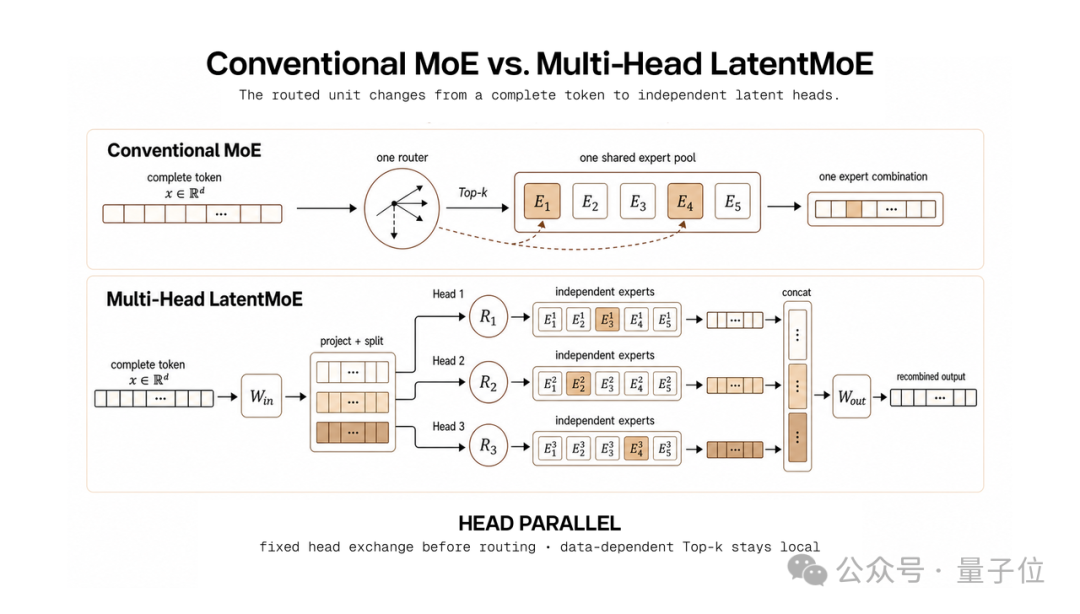
Second, the Multi-Head Latent MoE architecture, which is also the key to MAGI-2's ability to scale efficiently to hundreds of billions of parameters.
Conventional MoE adopts a route-first, dispatch-later mechanism, dynamically sending complete tokens to experts on different devices. As model scale grows, issues such as cross-card communication and load imbalance can easily become training bottlenecks.
Out of considerations related to hardware affinity and large-scale distributed training efficiency, Sand.ai splits each token into multiple independent heads, each with its own router and expert pool. The system first statically dispatches slices according to fixed ownership, and then performs dynamic routing and computation locally on the target device.
As a result, cross-card communication volume is decoupled from the number of activated experts (top-k), and the shape of communication tensors can be determined in advance, suppressing load skew—"some starving while others feast"—slow-card long tails, and additional synchronization overhead.
Around this architecture, Sand.ai developed its own training infrastructure such as MagiFSDP, MagiMoE, and MagiMuon, optimizing parameter sharding management, expert computation and communication coordination, and distributed optimizer efficiency, respectively.
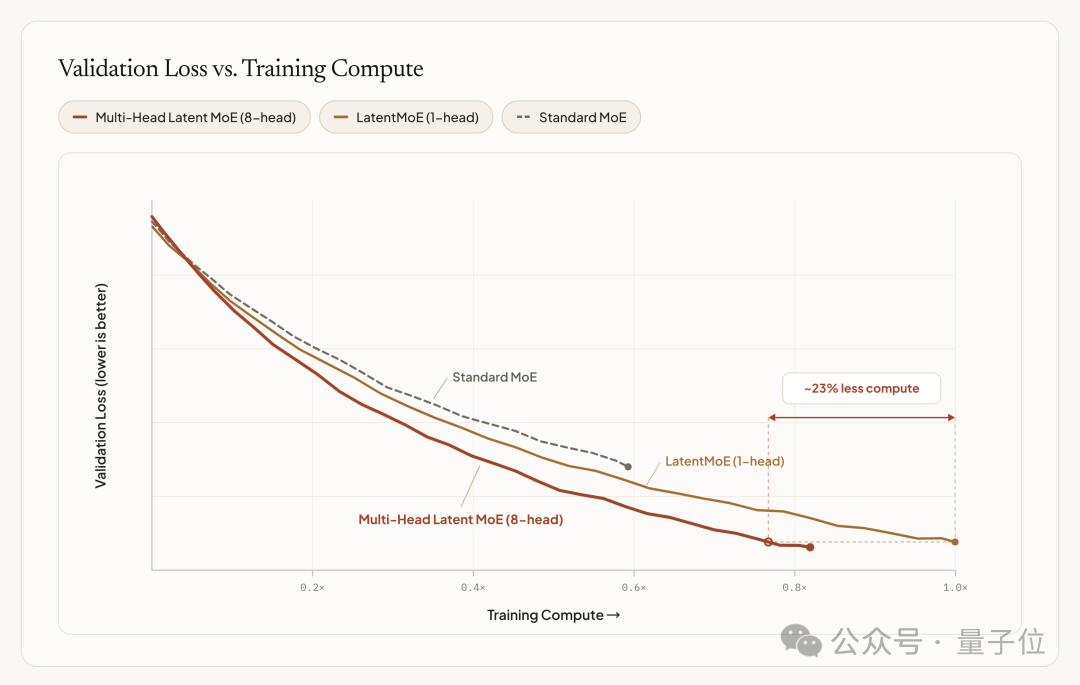
In a 480B pretraining experiment with identical total FLOPs and each using its optimal configuration, Multi-Head Latent MoE achieved about 22% training acceleration compared with LatentMoE.
Architecture and the training system solved the problem of how to efficiently make the model larger, while how to translate the capacity of hundreds of billions of parameters into real intelligence placed higher demands on data scale, information density, and processing efficiency.
To match the 480B total parameter volume, MAGI-2's pretraining data scale was expanded by about 3 times compared with Preview, reaching 4T Tokens.
Relying on its self-developed data pipeline, the team completed annotation of about 1 billion samples in just three weeks.
Even more interesting is their data selection strategy. The technical report specifically calls out the need to "avoid the Data Filtering Trap." This refers to the tendency during video model training to filter out some complex real-world material in pursuit of visual aesthetics.
To enable the model to fully learn the complexity of the real world, the Sand.ai team ultimately chose to retain data such as multi-person interactions, frequent shot changes, on-screen text, and complex sound fields.
The technical report shows that model capacity and data scale brought obvious scaling dividends. Problems that previously required post-training fixes, such as extra fingers and action collapse, were already greatly reduced in MAGI-2's pretraining stage.
With a solid enough foundation, post-training can devote all its energy to "fine renovation."
At this stage, the focus of reinforcement learning (RL) shifted from fixing basic structural defects to polishing lighting, textures, hair, materials, and acoustic质感.
At the final image quality output stage, MAGI-2 uses a dedicated latent spatiotemporal super-resolution model to upscale low-resolution latents to 1080P at 25fps, and reinjects the original reference image during the super-resolution stage.
Because basic generation can already anchor the spatiotemporal positions of faces and text, the super-resolution model can directly "copy the homework" from the original image when reconstructing high-frequency details.
Even in complex scenes lasting as long as 30 seconds, the consistency of small faces in long shots and the clarity of on-screen text were significantly improved.
In summary, larger model capacity, sparse computation architecture, and system optimization together form the technical foundation for MAGI-2 to improve performance and control computational overhead.
Raising the innovation starting point for the global open-source video ecosystem
At the end of the technical report, Sand.ai candidly acknowledged the current limitations of the MAGI-2 model.
During extremely high-speed and violent motion, the action transitions and trajectories in images generated by MAGI-2 occasionally still show flaws; local motion in medium- and long-shot 2D animation sometimes appears slightly too smooth; and the layering and physical texture of sound effects in highly complex sound fields still have room for improvement.
In addition, how to balance the aesthetics of finished video with the general generalization ability demonstrated in pretraining during the post-training stage remains a topic the team will continue to tackle.

The good news is that the team working on these problems is expected to grow further.
Sand.ai announced that it plans to open the MAGI-2 model weights as soon as possible.
A Chinese AI startup is bringing a full-power configuration—480B parameter scale, native 30-second continuous narrative, and a place in the first tier of an authoritative international leaderboard—to the global community by planning to open its weights.
The world's top-tier video foundation model is now being placed directly in developers' hands.
The 480-billion-parameter model capacity, original MoE architecture, and technical path validated through large-scale training all have the opportunity to become the foundation for the open-source community's next round of innovation.
Researchers can explore the intelligence boundaries of video models on this basis, developers can fine-tune and build applications around specific industries, and compute hardware vendors also have the opportunity to advance model adaptation across different hardware architectures.
The opening of a high-level foundation model is expected to transform R&D capability originally concentrated among a few model vendors into broader ecosystem innovation capability.
Exploring upward toward the capability limits of video models, and outward releasing the innovation dividends of frontier technology—
Sand.ai is turning the upper limit of the world's top video models into the innovation floor of the open-source ecosystem.
- A leading Chinese computer vision authority starts a second venture! Leaving Apple to focus on next-generation spatial and physical AI 2026-11-25
- Yao Shunyu and the Hunyuan team answer netizens on Reddit, Hy small model already on the roadmap 2026-11-21
- The Riemann Hypothesis proven?! With Claude's support, a 34-year-old mathematician releases a Lean proof 2026-11-21
- Industry's first "device-side super node," enabling device-side AI to compute as a team: AI efficiency surges 270%, no need to replace chips or models 2026-11-24
Related Reading

Another crown: 27M small model surpasses o3-mini! The post-00s whiz who turned down Musk is indeed different
Brain-inspired framework design challenges Transformer

AI Qiuqiu speaks live to all humanity: open-source brain-computer interface, open-source technological civilization
AI Qiuqiu: fighting for open-source brain-computer interfaces

Model only 1MB, a lighter face detection model open-sourced, performance not weaker than mainstream algorithms

Huawei open-sources another big one: ultra-large-scale MoE inference secrets
Omni-Infer, architecture, technology, and code all open-sourced

I'm MiniMax, using interns to process data, and still topping the open-source LLM charts
Official technical blog reveals technical details

Tencent open-sources an on-device offline translation model, only 0.4G, supporting 33 languages
No internet needed, download and run directly on the phone locally