 AIFeed
Exclusive Interview with Liang Qiwei of Phantom Blade Zero: I Want Young People to Think Chinese Kung Fu Is Cool丨Diversity Companies
2026-11-26 11:48
When we want to drink cola, for a very long time there were only two choices: Pepsi and Coca-Cola. When we choose a phone, there's a 90% chance we're bouncing between Apple, Huawei, Xiaomi, OPPO, vivo, and other brands. When we buy sportswear, the first names that come to mind are, in all likelihood, Nike and Adidas. But the world is colorful precisely because, beyond these giants, there exist companies that defy tradition, strive to create something different, focus on design and function, and look toward tomorrow. They have non-mainstream business models; their designs and products offer unique user value and enough social talking points. Most importantly, they carry none of the baggage of big companies and dare to advance recklessly. They are "Diversity Companies." Diversity is the key to an open world. iFanr believes that only by truly paying attention to and understanding diversity companies can one see the future earlier than most. In the column of the same name, iFanr will, through exclusive interviews, witness together with you how these diversity companies are reshaping the future and defining the new normal.
When we want to drink cola, for a very long time there were only two choices: Pepsi and Coca-Cola. When we choose a phone, there's a 90% chance we're bouncing between Apple, Huawei, Xiaomi, OPPO, vivo, and other brands. When we buy sportswear, the first names that come to mind are, in all likelihood, Nike and Adidas.
But the world is colorful precisely because, beyond these giants, there exist companies that defy tradition, strive to create something different, focus on design and function, and look toward tomorrow.
They have non-mainstream business models; their designs and products offer unique user value and enough social talking points. Most importantly, they carry none of the baggage of big companies and dare to advance recklessly. They are "Diversity Companies."
Diversity is the key to an open world. iFanr believes that only by truly paying attention to and understanding diversity companies can one see the future earlier than most. In the column of the same name, iFanr will, through exclusive interviews, witness together with you how these diversity companies are reshaping the future and defining the new normal.
This article is the 16th installment of the "Diversity Companies" column.
In the Chinese gaming circle, Liang Qiwei and his company S-Game have always been a maverick presence——
Nearly twenty years ago, in an era when the concept of "indie games" was far from widespread, the Rain Blood series, independently developed by Liang Qiwei while still a student, was already a wuxia RPG with word-of-mouth acclaim in niche circles.
A few years later, Liang Qiwei and his game company S-Game developed their first commercial game—Rain Blood: Mirage, a side-scrolling action game built around wuxia action as its selling point. In a Chinese game market where piracy was rampant and the business model for single-player games was still unclear, it sold over 300,000 copies, but generated only a few million yuan in revenue.
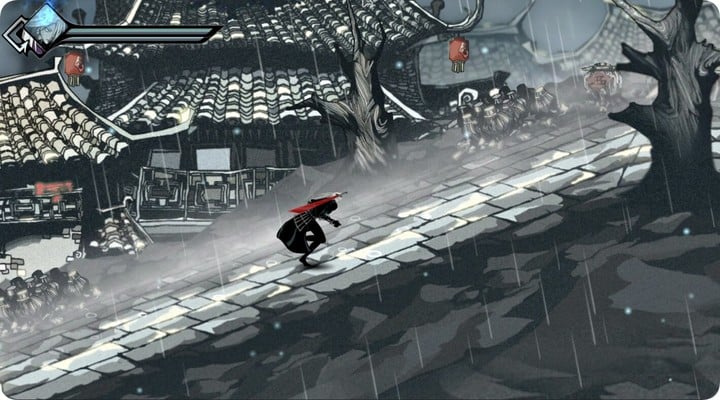
▲ Rain Blood: Mirage gameplay
Later, Liang Qiwei and S-Game pivoted to the mobile game market. Phantom Blade, the mobile game adapted from the Rain Blood series, was one of the earliest successful mobile game cases in China.
Nearly a decade after the pivot to mobile, Liang Qiwei once again stepped onto the world stage with the AAA-spec game Phantom Blade Zero, which instantly became the most influential Chinese single-player game of 2026.
On the aggregator site Metacritic, Phantom Blade Zero scored a high 88; within 72 hours of release, Phantom Blade Zero's global sales had already surpassed 4 million copies; two weeks later, Phantom Blade Zero's Steam store page had over 100,000 reviews, overwhelmingly positive.
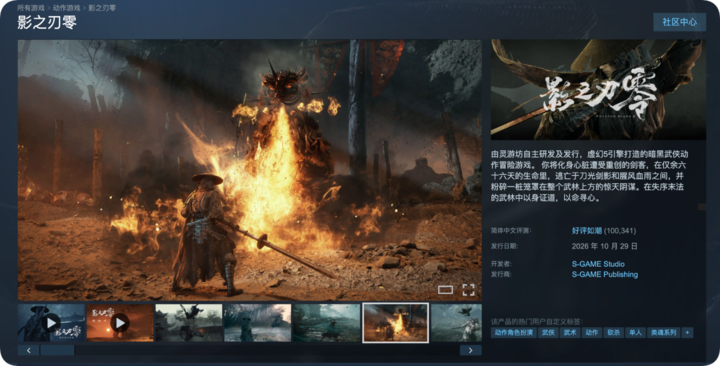
After spending over 60 hours completing Phantom Blade Zero on the highest difficulty with a 98% collection rate, iFanr visited S-Game, where we sat down with Phantom Blade Zero producer Liang Qiwei to talk about the wuxia games he has made over twenty years, and his Phantom World jianghu.
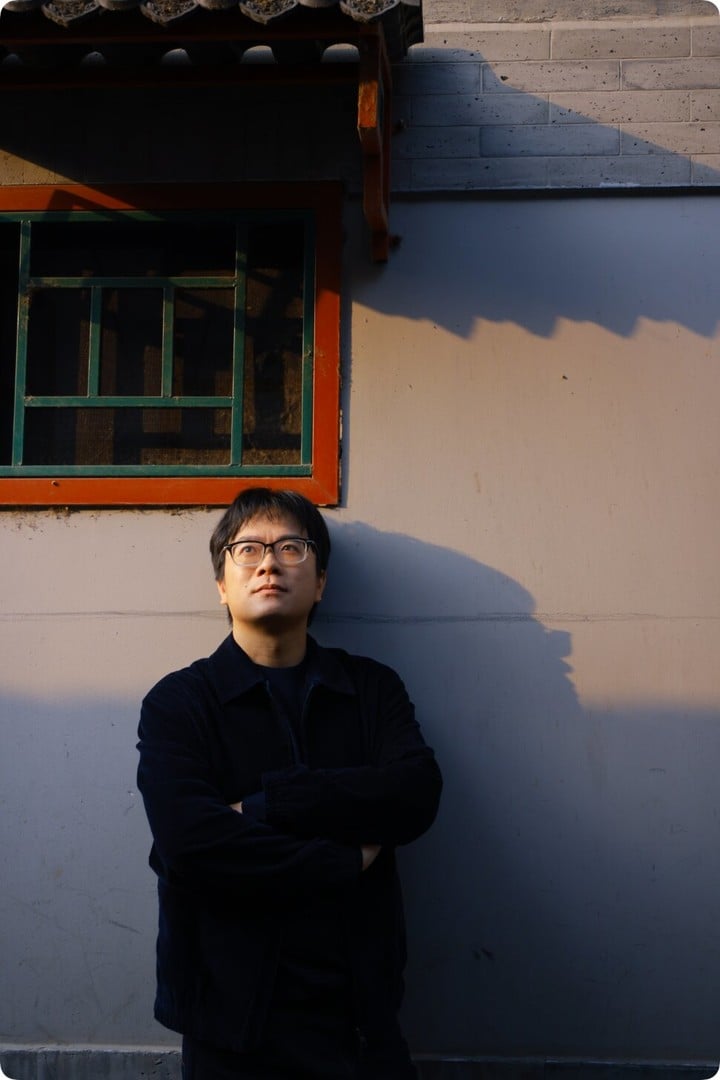
▲ Liang Qiwei, founder of S-Game and producer of the Rain Blood and Phantom Blade series and Phantom Blade Zero
Attack and defense as one—that is the aesthetics of wuxia games
iFanr: It's been about two weeks since Phantom Blade Zero launched. How do you feel? Has there been a sigh of relief?
Liang Qiwei: I think the joy is relatively short-lived, while the pressure and regrets from the development process stay in your heart. Player and market feedback both look decent, but that sense of accomplishment also only lasts a very short time—your gaze quickly falls on the shortcomings that still exist in the work, and you think about the vast number of areas that could still be polished and improved.
Overall, this time we've roughly achieved the expression we wanted: exploring how kung fu wuxia can enter contemporary players' entertainment experience in a brand-new form. It's been bumpy all the way, the game is far from perfect, and there are quite a few regrets. But our core creative aspiration has landed.
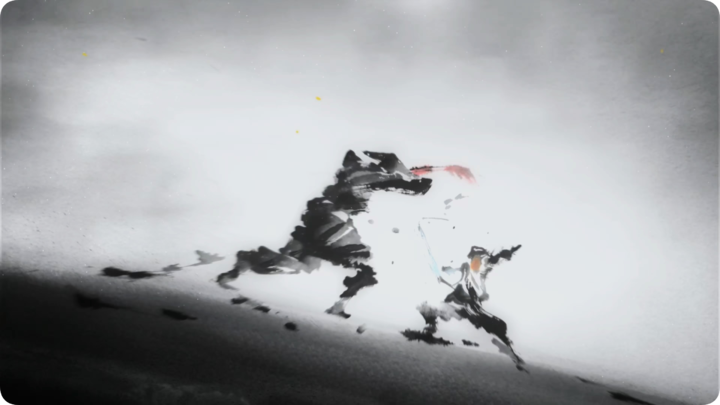
iFanr: The design of blocking while exchanging blows in the game—I figured it out while playing. Because characters in Phantom Blade Zero attack in a set of moves each time, not one move at a time, players can block the first hit and the several that follow. The killing intent gauge is the same—it's also an attack-and-defense-as-one design. How did you come up with this action system?
Liang Qiwei: Overall, it's still Chinese wuxia aesthetics. The aesthetic paradigm of the wuxia films we used to watch—can it be transferred into a game?
Why do you think you weren't used to it at the start? Because you've played action games. Suppose a player with no action game experience at all—there's simply no such paradigm in their mind, so it's actually a bit easier for them to accept—they'd feel it should be this way all along; that's how it is in wuxia films, so fluid and graceful.
Attack is defense, defense is attack—this concept was mentioned in wuxia films before; we've just put it into the controls.
Where did the previous paradigm come from? Japanese action games, for example—their paradigm comes from kendo, from Japanese sword-fight films. That's one strike at a time: attack is attack, defense is defense, slash left, slash right, one-two-three-four, with a strong sense of segmentation.
But suppose you forget Japanese action games and graft your thinking onto earlier works, like Tsui Hark's wuxia films—the desert showdown with Donnie Yen in New Dragon Gate Inn, or in The Swordsman, the Dugu Nine Swords versus the Seven Stars Sword Formation—you'll find we're closer to that.
Attack and defense seem to stick together; a string of clicks produces a fluid chain, and you can't count one-two-three-four. Many light weapons, especially dual blades, move like a dance when used.
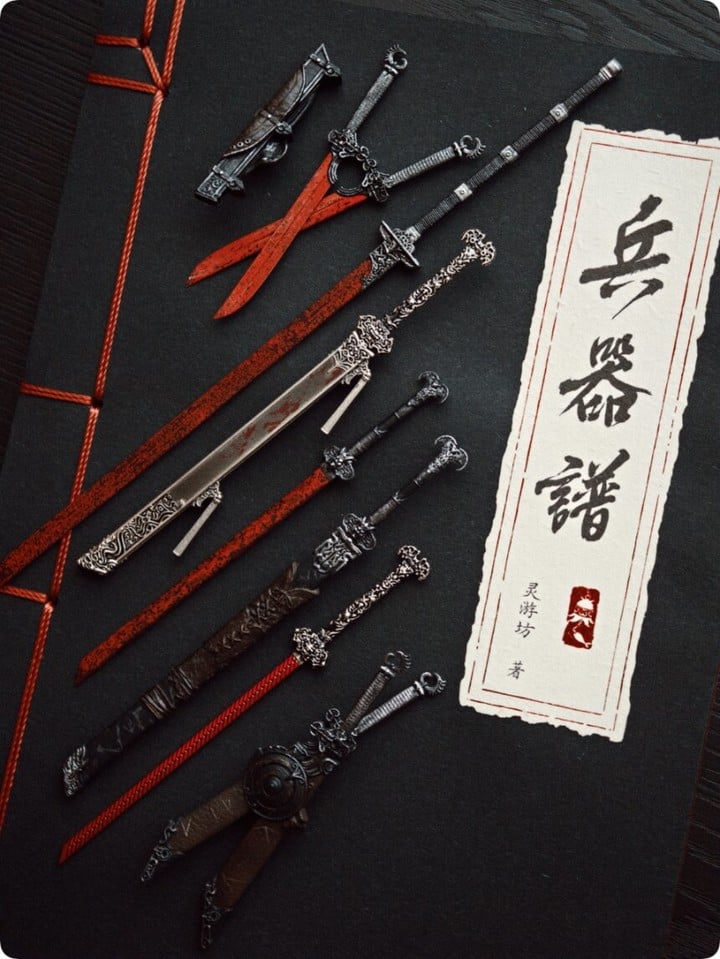
There are about fifty weapons in the game, including classic ones like the Green Dragon Crescent Blade, and exotic weapons from wuxia films like the blood-dripping guillotine. Each one was made with a lot of heart—motion capture took two to three years before and after. We redid it all in a kung fu punk way; only this kind of grafting is more meaningful.
We're not creating an independent work on top of a fixed paradigm, but recreating a paradigm from a more fundamental level. Of course there are some issues with stats and balance, but the first step, I think, has been achieved—we created and popularized a paradigm.
iFanr: I saw that discussions among players in the game community are also quite interesting. Many people initially found the game very hard, then gradually moved on to discussing which "wheelchair" builds are good to use, and now everyone is spamming "Lord Soul jokes." Was this within your expectations?
Liang Qiwei: To some extent, this is the result of design. As far as the main story goes, it's the process of Lord Soul constantly knowing himself and reclaiming his own abilities, so on one hand it's a stat increase; on the other hand, it's the player's own deepening understanding of the game.
Our tutorial is very concise, and the real "guidance" is actually the four fights in the Demon Abyss, plus the final overall assessment.
Many players call the first fight in the Demon Abyss "Subject One"—passing this challenge is like opening the door to a new world. The enemies' stats in the game actually don't change at all, but after going through the Demon Abyss trials, when you fight other enemies again, you can clearly see each move's wind-up and openings. The enemies' movements in front of you become so slow, so friendly. You can actually feel that sense of becoming stronger after Lord Soul reclaims his abilities.
In the art form of games, the way of narrating is through gameplay, through interaction. The several Demon Abyss fights are the process of the protagonist finding himself and awakening his bloodline. If it were a film or animation, it could basically only show the plot, with the audience mostly in the perspective of bystanders; but with games as the medium, the experience is also accompanied by your deepening understanding of the game. Through the five Demon Abyss trials, players themselves seem to "awaken their bloodline" as well.
That said, the early difficulty is indeed high, and that may also be necessary—our system is rather special: the first Demon Abyss test is about defense, requiring you to hold the defense button and precisely deflect red and blue light. Just the "hold" part is different from everyone's past habits.
In the future we may also do some more purely gameplay-oriented content updates, such as Boss rematches, where you can crank the Boss up to be as strong as possible.
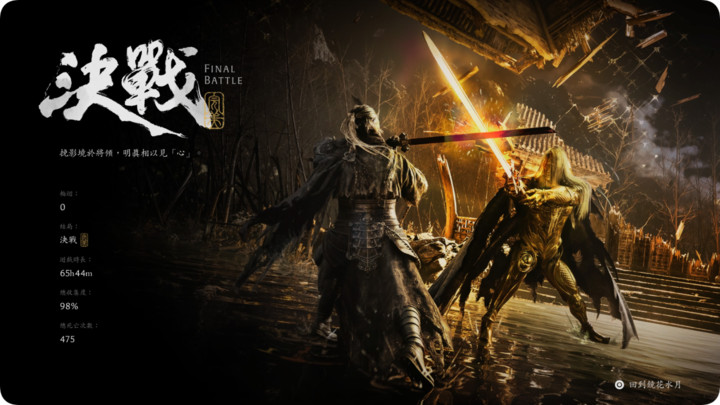
iFanr: In Phantom Blade Zero, Lord Soul grows stronger together with the player, but in the old Rain Blood, Soul was very strong at the start and grew weaker and weaker. Is this contrast intentional, or did it form naturally?
Liang Qiwei: It wasn't specially designed, actually. The old Rain Blood was too short—four or five hours and you start with a max-level character, so it's the reverse: strong at first, then weaker and weaker. Now it's mainly about a stronger player experience, and I think there's nothing wrong with handling it this way—we just wanted players to personally feel that Soul is exactly that kind of strong character. Not only is he powerful in ability, he's also mentally strong. Even the tragedy of sixty-six days only adds a more legendary, more romantic hue to his strength.
Some players say that if it weren't for Lord Soul, Dream Theater Manor and Lu Family Village would be Chinese-style horror. But because the protagonist is Lord Soul, it doesn't feel scary—only like firepower suppression.
Of course I haven't removed all the challenges; you still have to deal with them seriously.
Among our player base, over 75% have had little exposure to action games. If we don't serve them well, don't show the romance of wuxia, and don't let players feel powerful themselves, then we haven't taken care of those three-quarters of players. But in taking care of these players, we haven't abandoned our original game-making philosophy either.
Article title: Exclusive interview with Phantom Blade Zero's Soulframe Liang: I want young people to think Chinese kung fu is cool | Diversity Company
Body:
Kung Fu Punk, wuxia with a Phantom Blade flavor
ifanr: Phantom Blade Zero's "kung fu punk" isn't traditional wuxia. How was this style settled on?
Liang Qiwei: Actually, this style has been there since the earliest Rain Blood. For example, the ghost attendants look like wooden figures, with arms like metal scythes. To put it plainly, these designs come more from personal aesthetic preference.
Our generation was influenced by Chinese wuxia novels, but also watched Japanese anime and Hollywood films. The interweaving of different cultural works, with all kinds of currents of thought mixed together, forms an aesthetic that is itself a diverse fusion. We know that historical research isn't our strong suit, so we chose to express ourselves through mixing and original interpretation—more a reflection of our own aesthetic. Works like Blade of the Immortal, Berserk, and Claymore share a similar creative approach to ours.
Half of a wuxia film is action, but what matters more is the dramatic part. Our approach is actually quite special—it's like pulling a culture that has already passed, a subject that has already passed, back and showing it to today's young players.
Once the later content opens up, through side quests, visits, and map exploration, an overall impression eventually forms: this feeling is wuxia.
The three teachings and nine schools, the jianghu, intrigue, so much love and hate, and this love and hate is so fragile—like willow catkins in the wind, duckweed in the water, so fragile and yet beautiful. So many chance encounters, so many fated connections, and yet so fleeting.
At first it may be purely for the thrill of combat, but later on, I think players can slow down and experience the love and hate within.
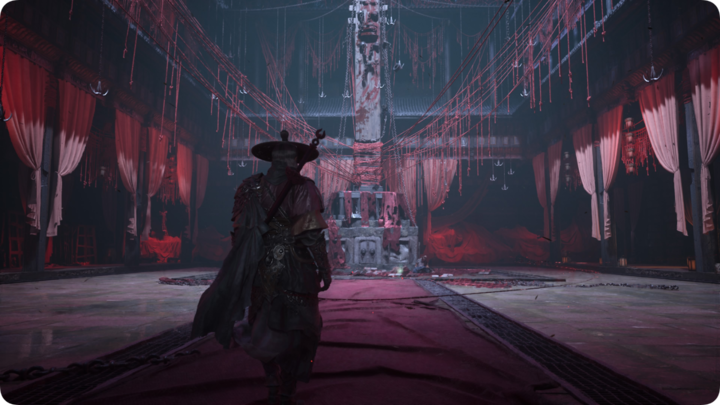
At last year's Shougang demo event, red threads were draped over the steel plant—clearly not anything wuxia. Yet player feedback was that this was exactly the flavor of wuxia.
How could wuxia appear in a steel plant? What exactly is this flavor? Maybe we've found our own flavor.
Some domestic players may have thought they could use the existing wuxia culture as a backdrop to interpret this world. Then they came in and found that we're not Shaolin and Wudang at all—the entire worldview is built from a large number of ideas, even a bit like The Three-Body Problem or Cthulhu Mythos, mixed with wuxia.
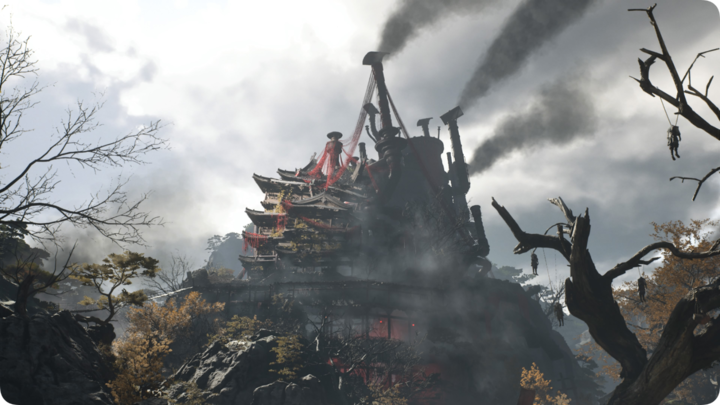
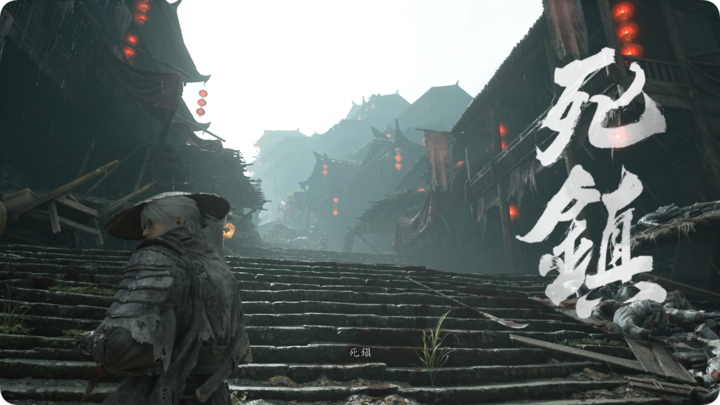
ifanr: The game's levels are very striking. Pang Town, for instance, is large and has a strong sense of depth, yet you don't get lost. How was that achieved?
Liang Qiwei: Pang Town wasn't planned to be this big from the start. It took shape bit by bit, entirely from a gameplay standpoint, as we made it. All of our level designers have architecture backgrounds. In three-dimensional space, how to shift views, how to frame views, how to convey the sense of scale and realism of an ancient town—to put it plainly, these are all undergraduate required-course material.
We've done surveys and research on ancient buildings, and some level designers participated during their studies in publishing books on surveying and researching ancient Chinese dwellings.
I think what's rather clever is thinking of applying this kind of talent and knowledge in this place. These are the basic skills of studying architecture, and then they stopped doing architecture and came to make games. As for why you don't get lost, it relies on various forms of guidance—various lights, and spatial guidance.
ifanr: The game also has a large number of folk culture elements, especially the lion dance boss fight, which left a deep impression on me. How was it designed?
Liang Qiwei: This is a combination of research and design. Lion dance, Nuo masks, Fujian deity parades—their purpose is all to pray for favorable weather and good harvests, with some immense power in the unseen. As a mortal, I want to connect with such things, and so various methods arise to communicate with the unknown.
Many traditional folk customs are very beautiful, but through beauty we want to convey the Chinese sense of awe toward nature and the unknowable. Cultural symbols must combine with ritual, with people, with our way of thinking.
Lion dance is a celebration, and Once Upon a Time in China turned celebration into competitive combat. We wanted to create an atmosphere for the lion dance somewhere between oppressiveness and ritual.
This boss fight really took a lot of effort, and the motion capture cost was very high. Our music director Bo Caisheng is also full of ideas—the drums and gongs in the first phase of the lion dance fight were recorded live at a lion dance troupe. The second phase adds electronic music, rock, and suona, mixed together to form a new listening experience.
In the game, the Lion Dance Venerable finally performs the caiqing, placing all hopes on the protagonist—an inheritance in both concrete and abstract senses.
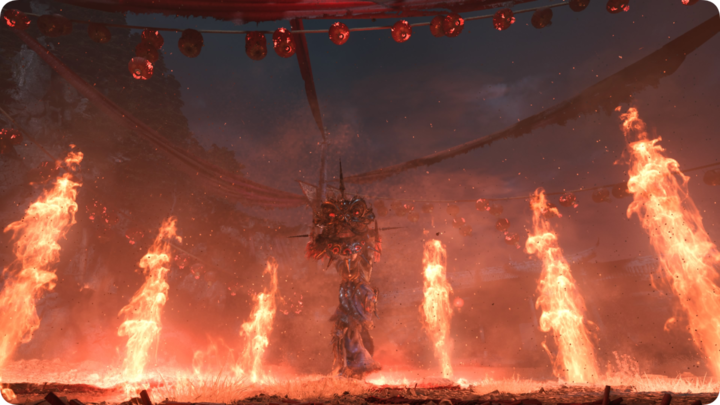
▲ Lion Dance Venerable · Blaze boss fight
ifanr: I think it's a pretty good phenomenon that the kung fu films we loved as kids now have a chance to be loved again by young people.
Liang Qiwei: We're still far from enough. Many of our post-2000s colleagues had never watched martial arts films or read Jin Yong or Gu Long before working on the project. Only after doing this project did they catch up a little.
Over the past twenty or thirty years, as the Hong Kong film industry declined, such films have actually become very rare. Now when people mention wuxia, especially young people, the first reaction is no longer something fresh, but something that has passed. In a few more years, wuxia may become like Peking opera—a niche cultural heritage.
Young people's familiarity with kung fu films may not even be as high as with Demon Slayer or Naruto. Japan completed the modernization and industrialization of the samurai and ninja genres. Now a katana appearing in a cyberpunk setting—even a laser katana—feels perfectly natural to you. Through decades of practice, Japanese creators have let cultural symbols exist independently of their genres.
Conversely, Chinese cultural symbols often still have to cling to a genre: mention Chinese kung fu, and people associate it either with the Eastern Depot and Embroidered Uniform Guard, or with the Song dynasty resisting the Khitan. It always has to be tied to a specific era and a specific story.
Actually, Chinese kung fu appearing in science fiction or on space battlefields should also work. We also want new players to feel that this thing is cool.
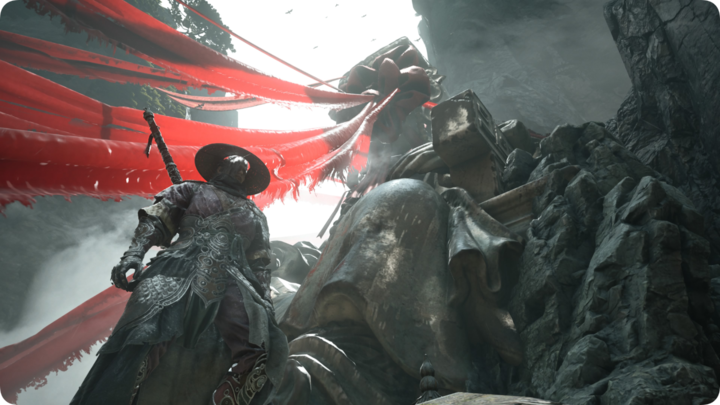
Martial artists, knights, creators
ifanr: From independent developer to mobile games to developing a AAA game—is this a series of transformations, or have you always been doing what you want to do?
Liang Qiwei: It's always been what I want to do. Even now, spending hundreds of millions more, it's still making what I want to make. I've been doing it for over twenty years—just more polished and more costly. In essence it's no different from what I made in a Tsinghua dorm twenty years ago; it's still the same thing, just with more resources now.
This counts as a kind of happiness—having the chance to use so many resources to make what I've been making for so many years, to release it, and to have players give good feedback. It's still quite amazing.
A few months ago in Los Angeles, we visited the Lucas Museum of Narrative Art. Star Wars may originally have just been some scattered ideas from the author's early years, and eventually it grew into what it is today. Seeing it was quite moving.
Phantom Blade Zero has now begun to enter many players' view, but for what I want to express and for what we've accumulated over the past twenty years, it's still far from enough.
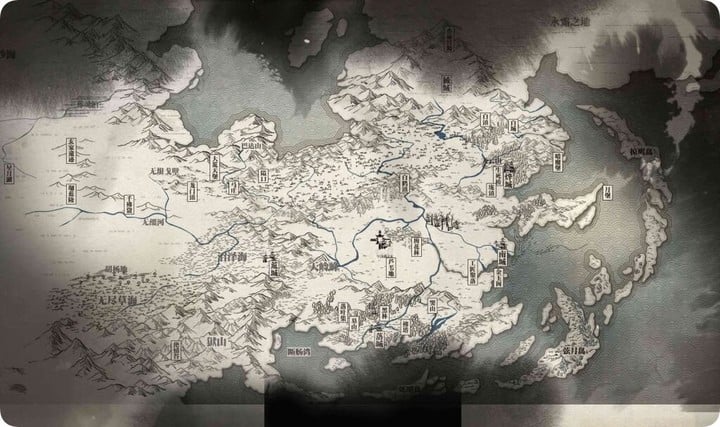
There are still many places we haven't made. Players have posted the entire map of the Phantom World—Pang Town is only a very small part of it.
ifanr: After making wuxia games for so many years, do you think S-Game has weathered the cycle?
Liang Qiwei: Actually, we just do well what we need to do. Cycles are nothing more than business cycles and technology cycles. To truly weather the cycle, I think you'd have to reach the level of Nintendo or Disney to count as truly weathering it.
Technology is only a means. Including mobile games in the past—now with UE5, technology has entered a new era. In the future there's AI, and how far AI can develop, none of us know. But these are all means, and means can be chosen.
But creation is nothing more than a person, as a creator, having a series of things in their heart they want to express, what they've always thought and felt. They may create through different commercial and technological means, but what they produce is the same.
ifanr: Did the development of Phantom Blade Zero use AI this time?
Liang Qiwei: When it comes to artistic creation such as writing, music, and art, we are very wary of AI. Before launch we have to inspect all assets to see whether AI materials have mixed into the official asset library through outsourcing or substitute resources. We must ensure that the materials in the final official build are zero AI. For functional, efficiency-oriented work like optimization and testing, AI can be used, but artistic creation must be very cautious.
The value of artistic creation equals the thing itself plus the added value contained behind it. A genuine Van Gogh versus a reproduction—even if they look exactly the same, how many times does the value differ? Handmade and AI-made should be priced differently.
Suppose an AI-generated character portrait, even if as exquisite as a hand-drawn one—once players know it's AI-generated, they'll feel it's not worth it. This involves pricing power; it's not about efficiency, it's about added value.
We're still observing whether, within three to five years, the general public's common understanding can put a price on AI-created works. Whether pricing power and the logic of pricing will change. Especially in the United States, California is both the center of the AI revolution and the center of the anti-AI wave—Hollywood screenwriters and unions keep going on strike precisely because human value and AI value are in contention.
ifanr: As a creator, in the AI wave, how should one grasp opportunities, or keep oneself intact?
Liang Qiwei: If you're already creating with the logic of using AI, I think you should continue on that path. But the value of handcrafting may become even more scarce in the future. However, this may be an opportunity belonging to only a very small number of people.
As for scarcity—if human nature doesn't change, it may always be this way. On one hand, AI gives 99% of creators greater convenience, while also raising the scarcity and premium of the remaining 1% of handmade creation.
In the era of AI short dramas, is Nolan even more admired? In the AI era he adopts a more handmade approach, making you feel there's scarcity in it. But if you're a creator after the AI technology wave, you may no longer have the chance to become Nolan.
That he can do this is itself a kind of privilege, an ability to price handcraft.
ifanr: Finally, let's talk about your favorite product this year?
Interview with Phantom Blade Zero's Liang Qiwei: I Want Young People to Think Chinese Kung Fu Is Cool | Diversity Company
Liang Qiwei: Setting aside our own game for the moment, I've recently been playing the remake of The Legend of Zelda: Ocarina of Time. How does a product transcend cycles, how does it give people eternal joy? This is worth thinking about and learning from. The people on the Zelda team, Eiji Aonuma and the others, are all very seasoned developers.
Compared with our overseas peers, we creators are still on the younger side. We still need to build up further, to understand that kind of pure creation and pure joy.