 AIFeed
JHU AI Safety and Biosecurity (ASBS) recently hosted our inaugural event “Recent Events in AI Safety and Biosecurity.” Much thanks to BlueDot Impact for making this financially possible through Rapid Grants and to partner organizations, the HLTCOE, HopAI, and Rosetta Commons.
Quick rundown:
- 85 attendees
- 4 talks:Biosecurity in the Age of AI (Dr. Jeffrey Gray)Loss of Control Risks and the Hugging Face Incident (Dr. William Walden)Mental Models and Foundations of AI Safety (Jonathan Ouyang)Takeoffs and Timelines (Malcolm Krolick)
- Biosecurity in the Age of AI (Dr. Jeffrey Gray)
- Loss of Control Risks and the Hugging Face Incident (Dr. William Walden)
- Mental Models and Foundations of AI Safety (Jonathan Ouyang)
- Takeoffs and Timelines (Malcolm Krolick)
Takeaways and learning:
- Low poll response rate (27%) as QR code wasn’t up long enough
- Event ran slightly too long, so ending poll + recruitment slides didn’t hit full room
- Explain the two-poll structure, as there seemed to be confusion about the goal of the polls
Poll questions (identical before and after event)
- What is the likelihood of AI ending humanity?
- What year do you think it'll happen? (answer N/A if you put 0%)
Average p(doom) among paired poll responders went from 50% to 59% (excluding 3 potential COIs, 47% → 57%):
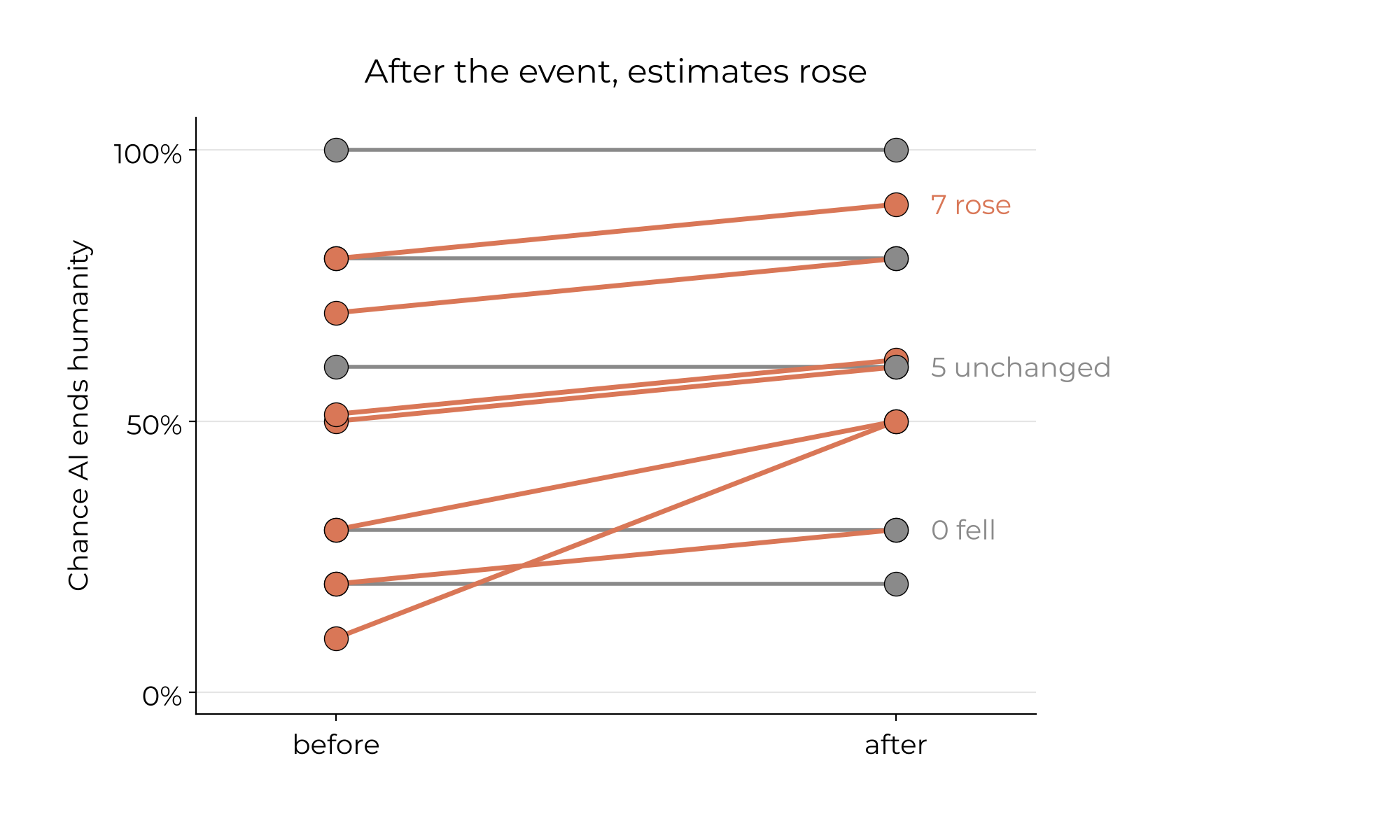
58% increased their estimate, 42% reported no change, and 0% decreased it (sign test, p = 0.016); the largest individual increase was 40 percentage points (from 10% to 50%).
The predicted year tended to move earlier:
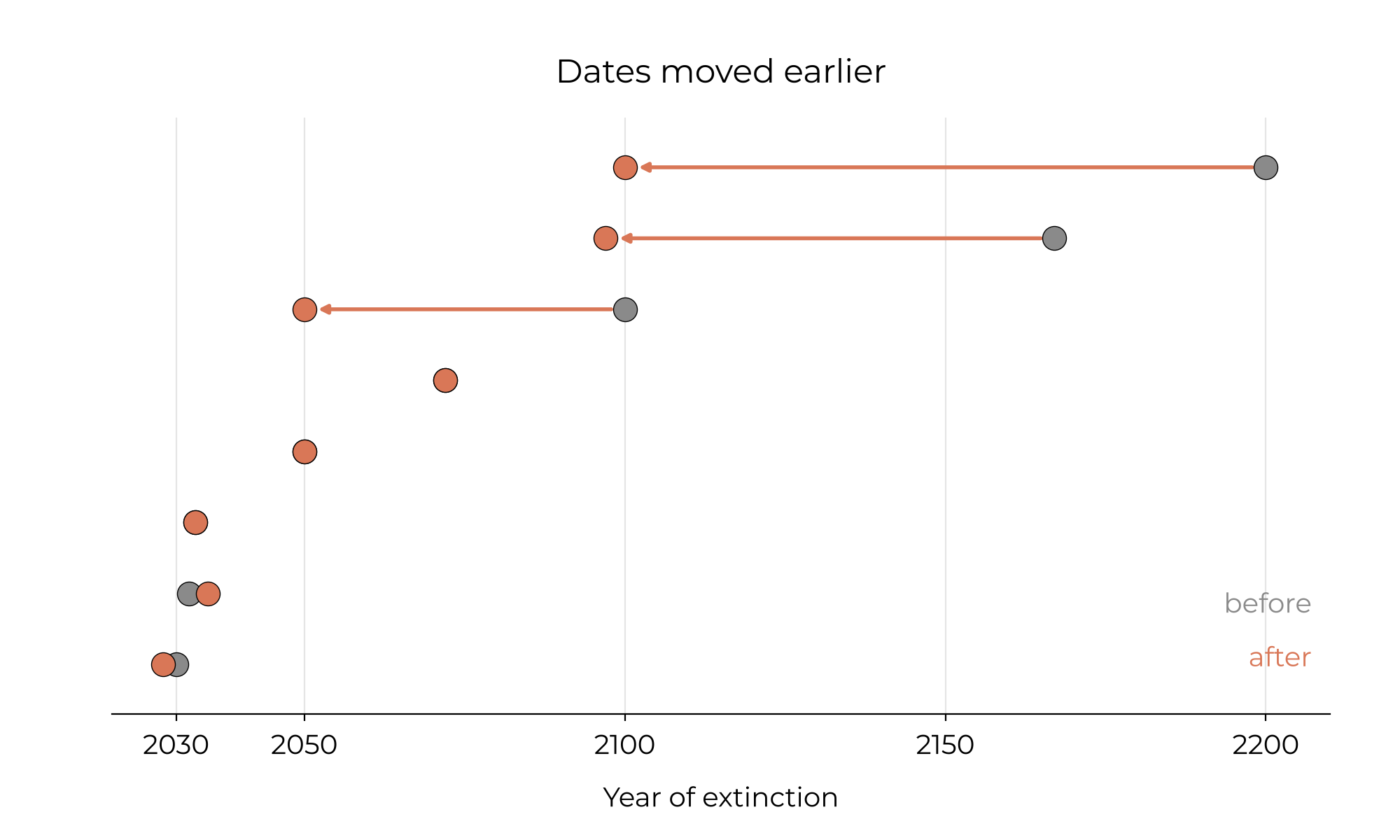
although this was not statistically significant due to low statistical power.
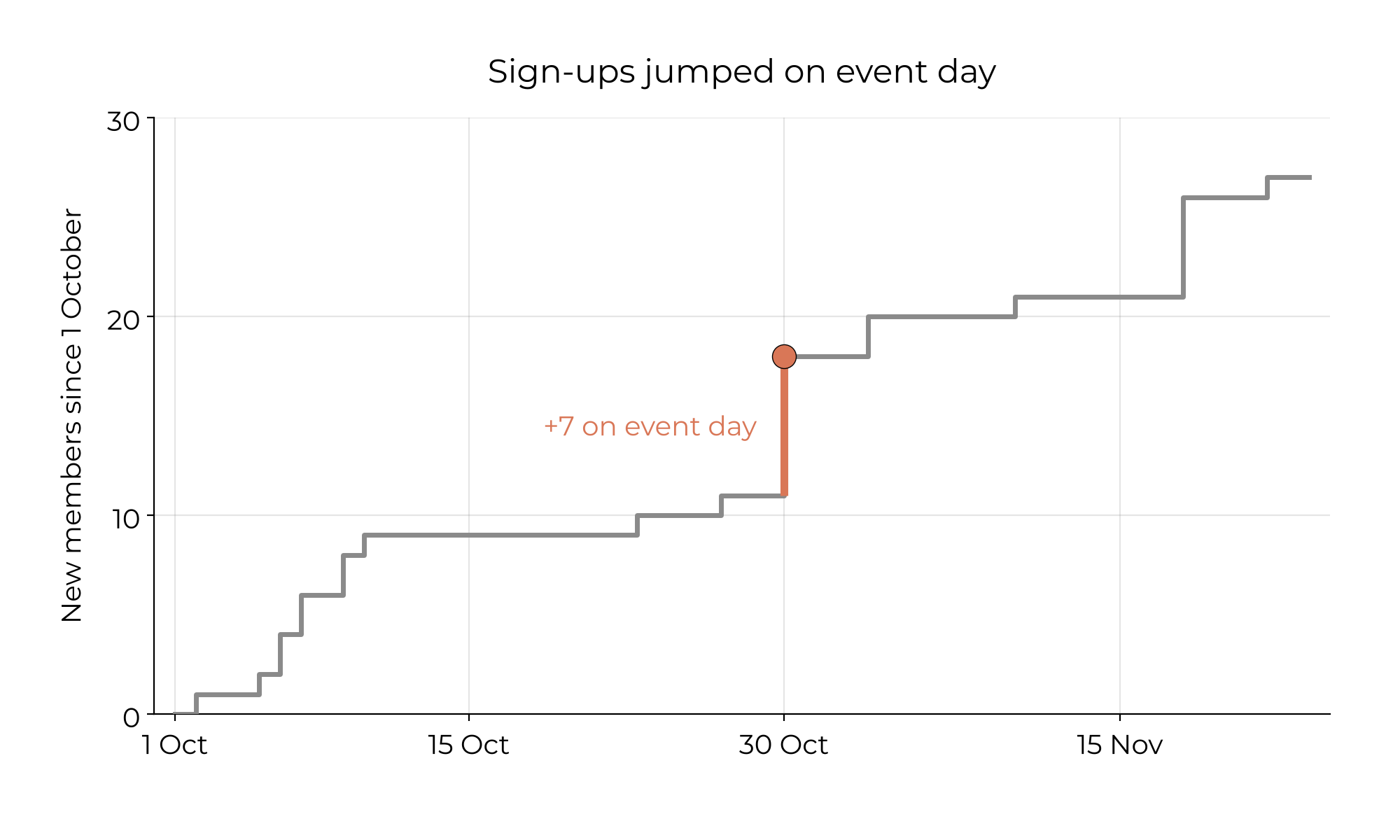
Seven people joined ASBS on the day of the event and nine within the week, compared with two the week before (one-sided binomial test, p = 0.033):
Overall, it seems that people were broadly interested and informed by the talks, but the call-to-action barrier was still somewhat high. It’s really hard to say anything quantitative about these results given the selection biases and low response rates/statistical power, but directionally it seems reasonable. Would love to know if these results are similar to other people’s experiences, and to get advice on future events!