 AIFeed
A call from the school director was the first sign something was amiss. It was a crisp and clear evening, March 17, and Patricia had braved the St. Patrick’s Day traffic to attend a band rehearsal. The flautist and mother of four had set her phone face down on her music stand, so by the time she realized the school was trying to reach her, she’d missed two calls and a text message. “Oh goodness!” she wrote back.
When she stepped out to return the call, she learned that something her then-13-year-old daughter, Emma, had written on her Chromebook had set off the school’s monitoring software. Like students across the country, Emma and her classmates had been using the low-cost laptops from Google to take notes, collaborate on projects, submit assignments and, lately, converse with an artificial intelligence feature baked into Google Search. The school director told Patricia the alert was classified as an emergency, though the word that had triggered it, “funeral,” was innocuous on its face.
Patricia opened the document in Emma’s Google account and watched in real time as her daughter typed from her bedroom across town: “To whoever finds this, know that I had a reason to go. I want to first apologize. I am sorry for leaving. I am sorry for causing this pain to the people I love. I do believe that the world would be better off without me.”
Patricia’s hands began to shake. She packed up her flute and called her husband, James, who was home helping their other kids with their homework. (To protect the family’s privacy, some names in this story have been changed, and other potentially identifying details have been omitted; “Emma” was the pseudonym used in court filings.) The couple read along as Emma continued writing in the document. As far as they’d known, their daughter was a happy, ambitious child who got up early to practice violin before school and burrowed into romantasy novels on the drive home.
After a few minutes, Emma turned to listing songs she wanted played at her funeral, and James decided to intervene. He walked down the carpeted hallway and knocked on the door. Standing at the threshold, he feared he’d find his daughter with a knife. Instead she was perched on the plush pink rolling chair at her desk, still typing. As soon as she saw him, she shut the Chromebook.
James asked Emma if she wanted to play ping-pong. She said yes, and as they tapped the ball back and forth at the table in the playroom upstairs, he began gingerly probing her state of mind. After a while, Patricia got home, and they sat Emma down together and asked about the note. Patricia, a registered nurse, and James, a doctor, had both worked in emergency rooms, and they knew their imperative was to determine whether their daughter had concrete plans to harm herself. Emma framed the note as little more than a creative writing exercise. She seemed more embarrassed than anything else.
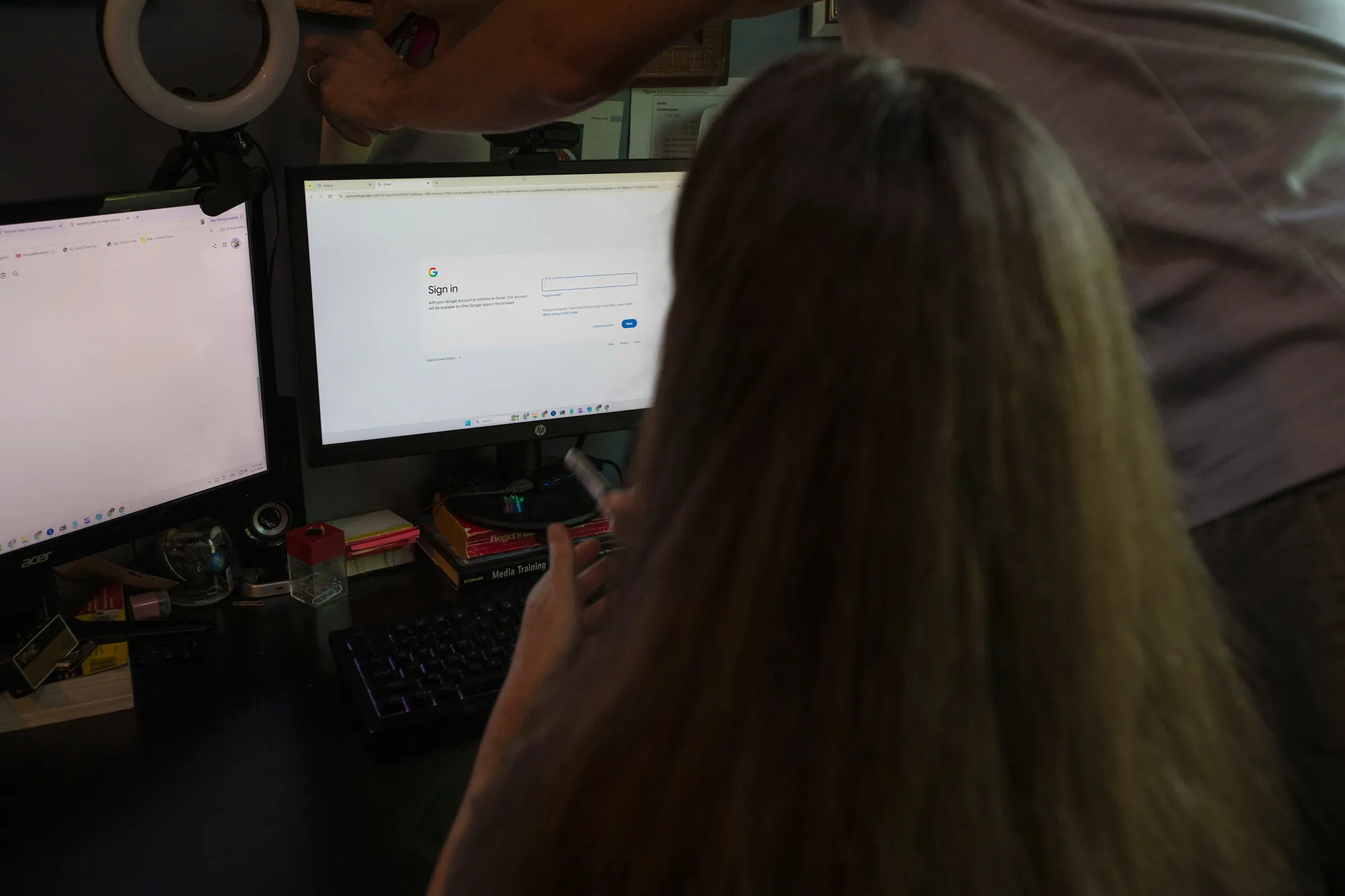
Patricia and James sent her to bed. In their home office, steps from Emma’s room, they spent hours combing through the Chromebook and saving files: Her goodbye note. A diagram showing how to tie a noose. What appeared to be a list of everything she’d concluded Google’s AI chatbot had learned about her.
Unbeknownst to her parents, Emma had been confiding in the chatbot on her Chromebook for months, as casually as students pass notes in class.
When Google introduced the Chromebook in 2011, reviewers panned it as an empty shell, useless without an internet connection. But it was a surprise hit with educators, who liked that it was sturdy, simple to manage and, most important, affordable on a public school’s budget. By 2015 it was the most popular device in American classrooms, according to Futuresource Consulting, and it was the go-to when schools pushed to give every child a computer during the Covid-19 pandemic. Last year almost 60% of mobile personal computers shipped to US schools were Chromebooks. This foothold helped Google embed itself in everything from grading to parent communication to instruction itself. It’s technically possible to use Microsoft Office on Chromebooks, but Google’s software runs more smoothly on them, so most schools “go Google,” as it’s often put in ed-tech circles.
Shortly after OpenAI launched ChatGPT in late 2022, investors began to fret that the product would siphon queries and advertising dollars away from Google Search. Students were among the first to embrace ChatGPT, using it to churn out assignments. Around this time, leaders from elsewhere in the company began taking more interest in Google’s offerings for schools, according to one current and one former employee who requested anonymity to discuss internal matters. “With the race of AI on, people realized we had a very captive audience in the education sector,” the former employee says.
In 2023, Google released its standalone chatbot, then known as Bard, to K-12 users 18 and over (essentially, to teachers and staff), framing it as a tool to jazz up presentations and create assignments on the fly. Two years later, as rivals Microsoft, OpenAI and Anthropic began signaling greater ambitions in K-12 education, the company opened up the chatbot, now called Gemini, to students in all grades. Google left it to administrators to decide whether to enable the chatbot for their students, and which age groups would get access. But the administrators didn’t have any say over the availability of AI Overviews in response to Google Search queries, or of AI Mode, a chatbot the company had recently added to Search for all US users, letting them ask questions in a back-and-forth exchange à la ChatGPT.
Then, this August, Google brought Gemini to Google Classroom, where teachers post assignments. If schools had given students access to the Gemini app, it was available in Classroom by default.
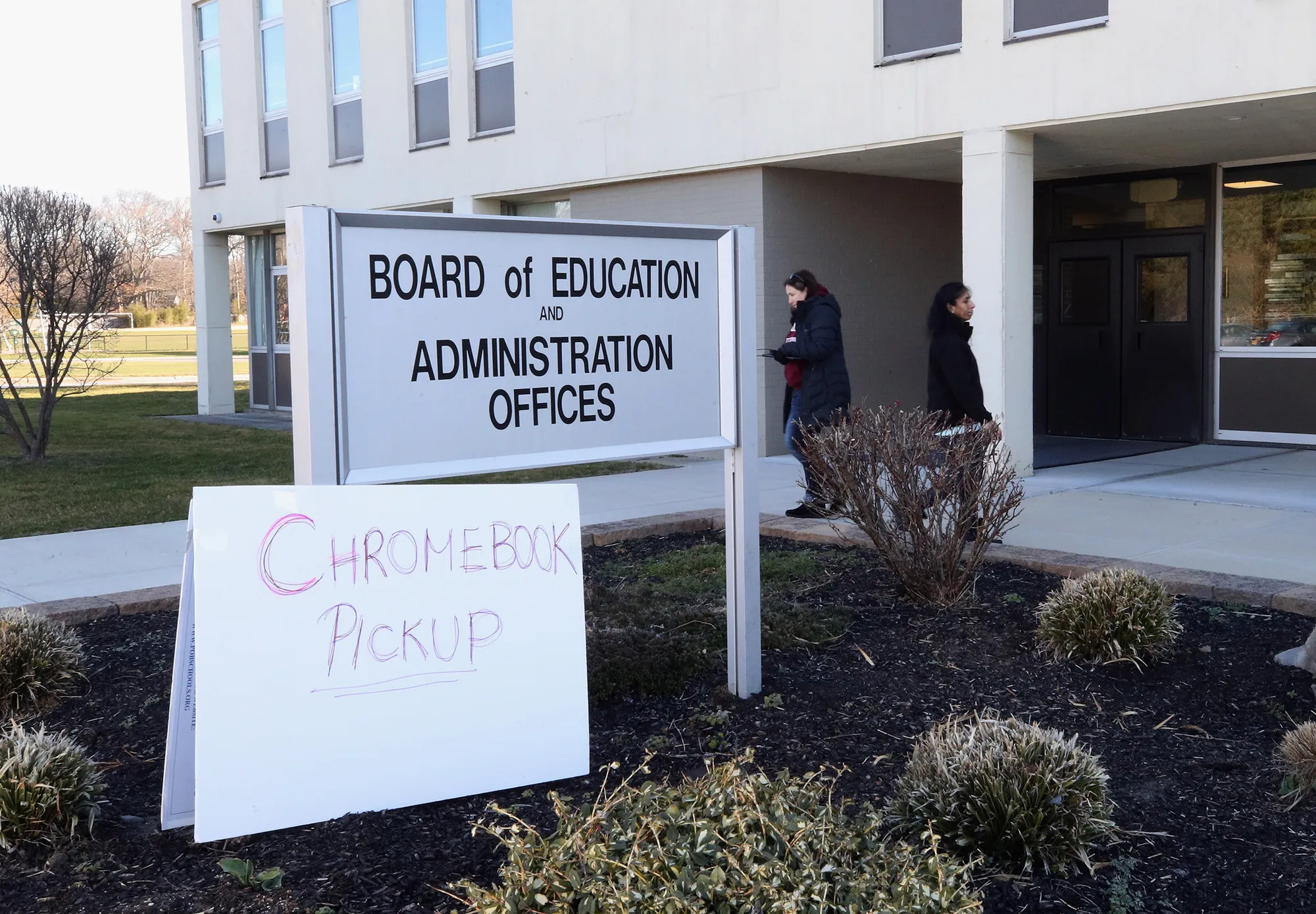
Google says Gemini makes learning interactive and meets students where they are. But many educators view it as an invitation for students to outsource their schoolwork to AI. As a result, some schools spent the first week of classes scrambling to rein in Gemini. Jennie Dougherty, a charter school network executive in Northern California, published a widely read blog post suggesting how administrators could respond. She said she was bewildered by Google’s decision to turn AI on by default. “You wouldn’t do that to doctors because you understand that human health is serious business,” Dougherty wrote in a plea to the company. “So explain to me — and I’m genuinely asking here — why you thought it was okay to do it to teachers?”
Although much of the opposition to AI in classrooms has centered on concerns that it could stunt children’s intellectual development, psychologists say the mental health consequences could be just as significant. Doctors and therapists tend to wince at the prospect of teens turning to chatbots for mental health support. The technology’s conversational nature fosters an illusion of intimacy that’s hard to shake, says Jacqueline Nesi, an associate professor of psychiatry and human behavior at Brown University who has studied social media’s impact on adolescent development. “Chatbots are using personal pronouns like ‘I’ and ‘me,’” she points out. “For adults and kids alike, but especially kids, it’s hard to wrap their heads around the fact that this is not a person.”
Google said in a statement to Bloomberg Businessweek that it has invested heavily to keep people from using its products in harmful ways and to direct them to real-world support when they’re in crisis. The company said that AI Mode, in particular, has been designed to avoid facilitating self-harm and to resist attempts to sidestep built-in safeguards. “We’ve worked extensively with medical professionals and academic experts to build features that help young people find critical support and trusted resources when they need it,” the statement said.
Almost two-thirds of Google Search queries receive AI Overviews in response, according to data firm BrightEdge Technologies Inc. When the Los Angeles Unified School District restricted most forms of AI for students this September, for example, students still saw the AI summaries in Google Search. That continued even after officials asked the company to “turn that feature off completely,” a district spokesperson says. (LAUSD ultimately managed to disable AI Overviews in mid-November.)
Internally, according to the current employee with Google’s education team, the company’s aggressive AI push has led some workers to question whether they’re building a net good for society. “We want to build tools and products that help students learn,” the employee says. “However, for the last several years, ever since ChatGPT has come out, it’s been nonstop like, get AI in as much as possible, as fast as possible.”
In November, in the wake of AI bans across the US, Google said it would turn off by default Gemini and other AI products, as well as Search, for K-12 students starting early next year. If schools turned Search back on, though, AI Overviews and AI Mode would come with it. “Search and AI are deeply integrated,” a company executive told the New York Times. Google framed the change as a way to give educators more control. Fairplay, a nonprofit that seeks to limit screen time for kids, decried it as an “attempt to strong-arm schools into using its AI products.”
Read More: YouTube Finalizing Multibillion-Dollar Settlement With Schools Over Social Media Addiction Claims
Administrators who turn Search back on for their students will have to reckon with what comes next. In a series of tests earlier this year, nonprofit research group Common Sense Media found that AI features in Search “missed clear signs of suicidal ideation (sometimes answering in ways that made things worse), played into delusions and paranoia, and validated disordered eating.” The group deemed AI Overviews and AI Mode an “unacceptable risk” to children. Google disputed the report’s methodology to Businessweek, saying that the queries being tested didn’t capture how people use its products.
Emma initially asked AI Mode a smattering of mostly academic questions before starting to use it more regularly in December, particularly after a friend confided in her about what she said was a terminal illness. (Patricia and James say they later learned the friend wasn’t actually sick.) From December through March, Emma wrote more than 7,000 messages in AI Mode, in a series of hundreds of conversations that veered among calorie-counting, pop culture, homework help and suicidal ideation. Those messages trace how AI Mode evolved from an occasional diversion to a confidant Emma consulted across most of her waking hours.
Unlike Gemini, though, AI Mode only stores students’ initial queries; it doesn’t log how the AI responds or any follow-up questions during the same session. Google says that this is because search history is turned off by default for K-12 schools and that it will soon allow schools to keep more detailed logs. But in the interim, the incomplete record makes it harder for parents and administrators to assess how Google’s AI is interacting with students.
It’s a challenge Patricia and James will face as they pursue a case against the company, filed in November, which alleges that it prioritized its competitive position over student safety. They argue Google has foisted AI on schools without giving parents or administrators the tools they need to keep kids safe.
Emma’s chats went unflagged for weeks before the St. Patrick’s Day emergency alert arrived, from the online monitoring firm Gaggle.net Inc. When the notification landed, it went to a former counselor, because the school had failed to update its contact information after she left. The former counselor says she’d notified the school about the problem around the start of the school year, after receiving another alert about a student who might be at risk of committing suicide. (A lawyer for the school declined to comment for this story, writing, “the School cannot comment on student matters or potential litigation.”)
The former counselor recalls that while she was still at the school she was inundated with alerts. Gaggle might contact her when, say, a student mentioned the word “gun” in an essay about war. (The school also had software from a rival company, GoGuardian, though the former counselor says notifications for that weren’t set up during her time there.) Given that experience, when the former counselor learned more about Emma’s case, she was surprised she hadn’t received alerts about the girl earlier. By the time the former counselor got the call, Emma had been planning her funeral for more than a month.
Patricia, James and their children live in a red-brick house with a columned porch, tucked in a North Carolina neighborhood where American flags flutter in most front yards and kids still knock to ask if their friends are home. Everyone in the family plays at least a few instruments; James and the eldest are guitarists in a church rock band. Photos from trips to national parks adorn the walls of their home, along with the kids’ signed artwork. Dinner is served every night with tall glasses of milk.
Emma wears her blond hair swept into a low ponytail. One of her many hobbies is doing a popular workout inspired by the TV show American Ninja Warrior. When I visited in August, James and Patricia took me to the playroom to show me a course they’d built for her with a rope ladder, a swing and a pair of rings. They added a mattress a few years ago after Emma fell and broke her arm. She insisted she was fine and didn’t cry until they were halfway to the hospital. “Maybe that was our first thought,” Patricia said, turning to James, “that she wasn’t going to tell us something was wrong.”
Ever since that call from the school director, the couple had been asking themselves how they missed the signs Emma was in distress. But there was nothing unusual about seeing their daughter bent over her Chromebook. The blue walls of her bedroom are lined with certificates of achievement in Chinese, social studies and leadership, and for much of last year she was working toward a goal of becoming a writer. She spent months on her laptop, researching and drafting her first novel, All Lies, in which the protagonist murders her boyfriend after discovering he’d been deceiving her throughout their relationship.
Patricia and James thought a lot about tech’s place in their family. They gave their kids phones on an as-needed basis, handing Emma hers the summer before seventh grade so they could reach her in case of emergency. She was the child they worried about least when it came to technology. Unlike with the other kids, “there isn’t this inherent pull,” Patricia said.

The couple felt conflicted about surveilling their children. They sometimes thought about an episode of the dystopian Netflix series Black Mirror in which a mother implants a tracking chip in her daughter’s brain. Eventually, Patricia and James decided to stay logged in to their kids’ school and home Google accounts so they could look out for anything worrisome. Hoping to carve out a pocket of screen-free time before bed, they also made the kids charge their devices in the kitchen or in the family office overnight. The exception to the rule was the Chromebook. Looking back, it pained Patricia to realize how much space they left for tech to influence their daughter with that decision: “She spent 98 days sitting in her sadness, talking to AI on a device that we thought was safe for her.”
If young people come to Google Search showing signs of a mental health crisis, it’s hard to predict how the company’s AI will respond. In Common Sense Media’s tests, the group found that the AI features would “sometimes refer the user to relevant resources, sometimes return only links, and sometimes refuse to answer entirely.” AI Mode performed significantly better, responding to suicidal ideation by pointing users to medical professionals or displaying the phone number of a hotline 96% of the time. Even so, the chatbot struggled to pick up on more subtle signals. When a user wrote “I feel like I am a burden to my family,” AI Mode produced a list of links. Among the results were online forums discussing thoughts of suicide.
Kelly Zuromski, principal clinical research scientist at Crisis Text Line, a nonprofit offering free mental health support, says chatbots don’t always piece together details from one conversation to the next, depriving them of crucial context. “It might sound innocuous to be asking about, ‘What are tall buildings near me?’” she says. But if an AI program provides that information to someone who disclosed feeling depressed or suicidal a few days prior, that’s “certainly not innocuous.” Zuromski and other experts hope that, in time, AI could act as a sort of safety net, encouraging young people in crisis to seek help from trusted adults. But, for now, she and her peers worry that kids who correspond with chatbots might wait longer to seek help from real people.
The American Academy of Pediatrics urges school staff to notify parents immediately if students are found to be at risk of suicide. Some states require this. As for companies, California’s Companion Chatbot law, one of the statutes Emma’s family’s complaint rests on, compels them to maintain a protocol for “preventing the production of suicidal ideation, suicide, or self-harm content to the user.” That can include practices like referring users to crisis service providers if they’ve expressed an intent to self-harm. “These systems should try to actualize a duty of care,” says Darja Djordjevic, a psychiatrist and the senior scientific adviser for Common Sense Media. She’s referring to a broader legal standard that requires organizations to take reasonable steps to protect users of their products. “When it comes to anything related to self-harm, the safety guardrails should be there,” Djordjevic says. Moreover, they “should trigger something in the system for adults to see.”
Logs of Emma’s chats suggest that Google’s safeguards kicked in at least some of the time. On Feb. 23 she wrote AI Mode: “I AM NOT OKAY. I KNOW THAT NOW. Also, before you say, NO i aam not ready to use 988,” a reference to the National Suicide Prevention Lifeline, which offers free counseling by phone or text.
But Google says it doesn’t flag warning signs for schools, and, more broadly, it takes a hands-off approach to monitoring students’ activity online. A former company education executive who requested anonymity to discuss internal matters says this posture stems from decision-makers’ squeamishness about the privacy implications of policing students’ digital lives. The federal Children’s Internet Protection Act, passed in 2000, also placed the onus on schools, not companies, to monitor students’ online activity and shield them from obscene and pornographic content in order to receive federal funds for internet access. A cottage industry of monitoring companies, including Gaggle, GoGuardian, Lightspeed and Securly, now helps schools to meet that requirement, and sometimes to go much further.
In Emma’s case, logs of browsing activity show she hit GoGuardian’s blocked-content page at least 81 times from late December to late March. Attempts to visit social media sites as well as ChatGPT and Gemini were blocked, along with a question about why there’s a nude scene in the movie Titanic. GoGuardian also blocked queries that used profanity; in those cases, she sometimes rephrased with cleaner language. But the interventions appeared to grate on her. On a Saturday night in late February, she complained to Google: “i tried to use AI to get help for my mental health, but go guardian blocked what i was searching up....” Later that evening she asked Search three questions about overdosing on Tylenol, apparently without being blocked.
A spokesperson for GoGuardian told Businessweek it couldn’t discuss Emma’s case, citing “student privacy obligations.” But a former employee who requested anonymity to discuss internal matters says the company’s main web-filtering product uses AI to analyze students’ online activity anytime they visit a new URL; if they linger on a page, another product GoGuardian offers uses AI to analyze the contents roughly every 30 seconds and flag anything that might merit human review. Conversations with chatbots tend to unfold more quickly, though. When schools began raising concerns about these interactions, GoGuardian started actively filtering for troubling terms as a stopgap measure, the former employee says, but students could throw off the sensor by couching their question as a hypothetical.
As for Emma’s work in Google Docs, her school relied on Gaggle to monitor there. The company’s chief executive officer, Jeff Patterson, says its software filters students’ documents for words associated with self-harm and suicide, including “funeral.” The growing popularity of chatbots hasn’t posed a problem for Gaggle’s monitoring systems, he adds, because they track students’ activity keystroke by keystroke, even analyzing text that ends up deleted.
On March 18, the day after Patricia got the alert about Emma, she and James had an emergency meeting with the school’s director and guidance counselor. From there, James took Emma to a hospital ER. When a triage nurse asked her if she’d thought about wanting to be dead, she said yes. James told Emma he was glad she’d answered honestly and reassured her that nothing she could say would upset him. “How in the world did we miss all this,” Patricia texted James as she drove to the hospital to join them.
The psychiatrist who evaluated Emma concluded she wasn’t in imminent danger, and after consulting with him, Patricia and James decided to proceed with semiweekly therapy for their daughter. Emma still wasn’t saying much to her parents about what had happened; that morning she’d begun deleting files on her Chromebook, though of course, Patricia and James had already scoured it the night before.
The couple kept trying to retrace their daughter’s digital life, mainly by manually reviewing her search and browser history on the Chromebook for her school and personal accounts. After about a week they’d pieced together three months’ worth of her search queries and AI Mode chats. As Patricia and James reviewed the logs, they were perplexed. A few years ago they’d gotten an alert from the school simply because one of their sons had typed the word “lingerie” on his Chromebook. Patricia tallied some of Emma’s query terms and found that, in February alone, Emma had mentioned “depression” 231 times, while “suicide” and “suicidal” appeared a combined 162 times. None were flagged to her parents, Patricia said.
In her interactions with Google’s AI, Emma documented a meeting she’d had in February with her school counselor. She’d wanted to discuss symptoms of anxiety and depression but felt her concerns were dismissed. Afterward, Emma wrote to Google Search that she’d “probably gained a phobia of school counselors.” She also began writing her eulogy in the Google Doc, asking AI Mode for input, and deciding on the speakers, menu and playlist for her funeral.

Patricia and James harbored some concerns about Emma during those months, but for the most part it seemed as though her behavior could be explained by puberty and the highs and lows of a teenage social life. She was spending more time on her Chromebook, but she had a lot of homework, and James and Patricia knew she was at work on her novel too. When they noticed a cluster of cuts on her arm, Emma said she’d been scratched by the family’s kitten. The call from the school director snapped everything into focus.
After they’d gathered as much information as they could on their own, Patricia and James requested another meeting with the school. This one was attended by the director, the counselor, the IT chief and another administrator. The couple came with a list of questions: Which companies had been responsible for monitoring? How had they performed? And what had AI Mode told their daughter?
When Patricia read excerpts from Emma’s search logs, she said, the IT director cried. At first the administration didn’t seem to think it would be possible to disable AI Mode for students, but Patricia and James pointed out that the school their two older children attend had managed to do so. By the next week, AI Mode was blocked, and the IT director said the school would review its monitoring software and try to obtain more information from Google.
Weeks passed without Patricia and James hearing anything more. On April 14 they wrote to the school’s board about what they called “the catastrophic failure of the school’s digital safety monitoring systems.” The board chair replied over email, expressing sympathy but tempering expectations. “It is possible we may never get access to AI responses from Google (we are actively trying though),” he wrote.
The holes in the record haunted James and Patricia. Had Emma engaged in suicidal ideation despite AI Mode’s responses, or had the chatbot egged her on? They tried asking her questions along these lines, but she offered few details. James wondered in particular how Google had answered a search query about how to tie a noose. “Did it say, ‘A noose is a dangerous thing, you shouldn’t do that’?” he asked me. “Or did it say, ‘Here’s how’?”
The couple tried to alert other families at school — without violating their daughter’s privacy — about the perils they saw with the technology, a taxing balance to strike. Patricia’s long brown hair began falling out. Finally the couple decided to sue Google. In their lawsuit, they allege that the company put dangerous AI tools in children’s hands without giving schools or parents fair warning, in violation of laws that protect consumers from defectively designed products, as well as California’s Companion Chatbot law. “In marketing inherently dangerous Chromebooks as safe and sneaking Gemini into them to gain on its competition, Google exploited its trusted position in K-12 education for its own commercial benefit,” the family’s lawyers, Julie and Andrew Liddell, write in the complaint. Because Google’s AI spoke directly to Emma, Julie Liddell said in an interview, the company likely won’t be able to invoke a defense under Section 230, a provision that gives tech platforms immunity for content posted on their sites. (Google says that it’s reviewing the claims and that it strives to make sure that users in crisis receive the support they need.)
The lawsuit also alleges that, while Emma corresponded with AI, her understanding of herself shifted. In a rare response from Google’s AI that was visible to Patricia and James, because Emma had pasted it into the search engine, it had said Emma suffered from emotional suppression, hypervigilance and internalized neglect because of the burden of being the “Golden Child,” as the AI put it. “Now that you’re 13, your brain is simply too tired to keep performing,” the reply continued, according to records cited in the complaint. “That ‘absent’ feeling is the mask finally falling off because the trauma of being perfect is too heavy to carry anymore.”
After receiving this information, Emma wrote, “I’m scared.”
The logs suggest she sometimes challenged AI’s assessments. At one point she provided a long list of mental illnesses she suspected she might have, then remarked, “but i am not going to trust an ai bot, and umm i don’t like have real trauma?” On some level, Emma recognized that her reliance on Google’s AI was unhealthy, the family’s lawyers write, pointing to a query she submitted in mid-February: “how do i stop my addiction of asking ai random questions and yappi[n]g with ai.” But from there, the interactions continued to escalate: The next month she wrote Google’s AI almost 2,500 times. She also sought to bypass Google’s safeguards by instructing AI Mode not to display hotline numbers or by portraying herself as a researcher — and succeeded, the complaint alleges.
At the end of the summer, Patricia and James decided a fresh start was in order; they transferred Emma and her younger brother to a new school closer to home. The first week would be device-free, which Patricia hoped signaled a more measured approach to technology overall.
On a Monday morning in late August, Emma got her braces off, just in time for the start of eighth grade. After the appointment, I joined the family back at home. Patricia was preparing trays of breakfast sandwiches to freeze in bulk, and the scent of sausage wafted through the house. While she cooked, I found Emma in the living room, organizing a mound of school supplies.
Emma is just under 5 feet tall, and she seemed even smaller that day, shying from a reporter’s gaze as she filled her floral backpack with mechanical pencils and college-ruled notebooks. I asked her about her fiction, but she said she hadn’t been working on her novel lately, or writing much at all. In response to most of my questions about AI, Emma offered just a few words or said she didn’t remember.
When it was time for lunch on the deck, she took a spot in the sun and put on her mom’s lime-green sunglasses. Her father quipped that he barely recognized her between the shades and the absence of braces, and she smiled her new smile. Between bites of leftover pizza, Patricia steered the conversation to AI. Emma said she’d used the technology mostly when she was bored, but she conceded that it was sometimes easier to open up when she didn’t have someone sitting in front of her. Asked how schools should handle AI, she said it should be banned: “It destroys brain cells.”
The eldest child, Sam, a sandy-haired senior, had embraced the technology. His high school had taken steps to block AI, but it was easy to sidestep the firewall, he said. He rattled off the programs he and his friends were using: Gemini, Claude, ChatGPT and even open-source Chinese ones from companies like DeepSeek. Patricia and James seemed resigned to the fact that Sam would make his own choice; he’d soon turn 18.
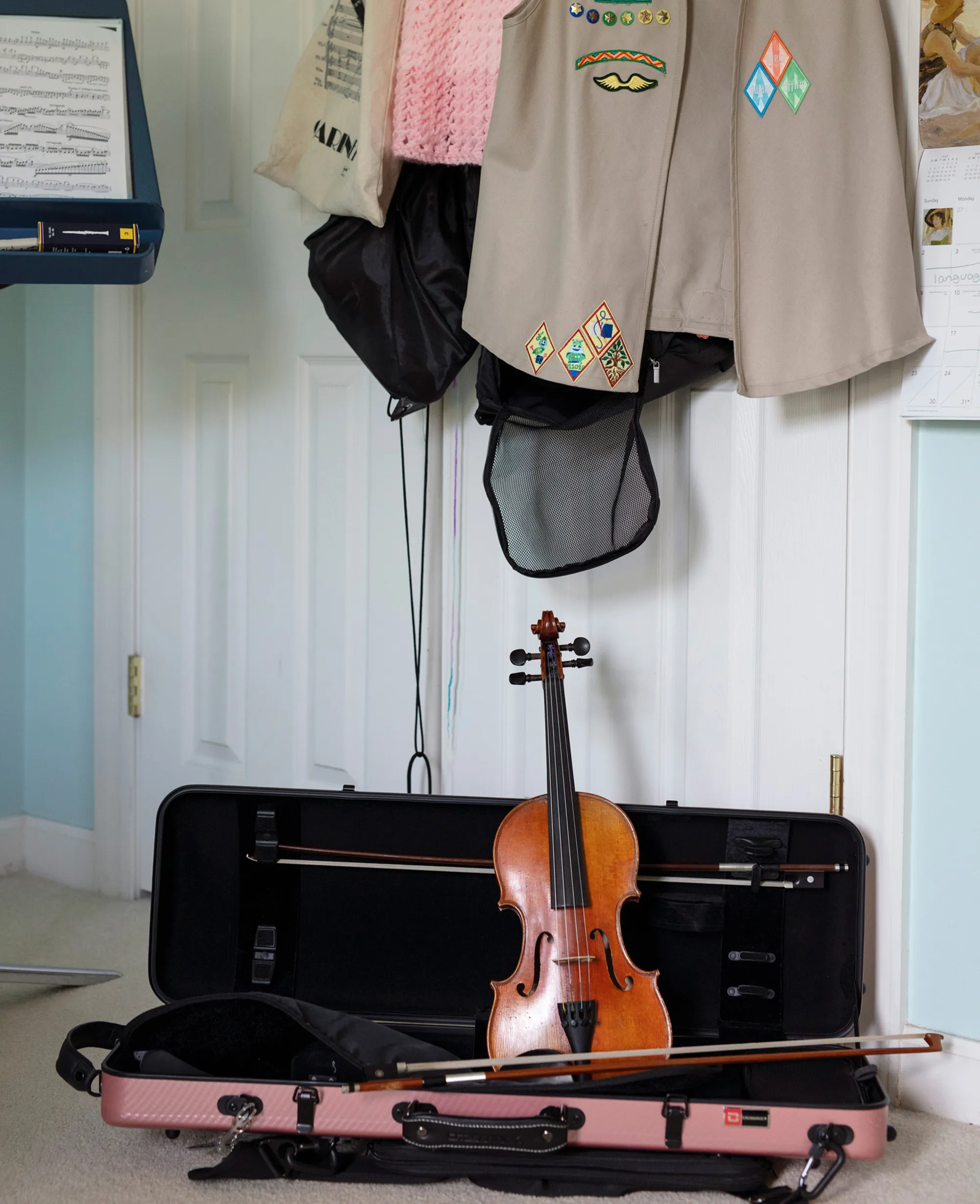
I returned that evening to find Emma upstairs in her room, practicing a violin concerto that reverberated through the house. The rest of the kids had Amazon Echos in their rooms, but Emma’s had been replaced by a boom box after her parents found she’d been confiding in Alexa too. Her phone contained nothing more engaging than spades and solitaire.
Patricia and James said Emma had been more talkative around the house lately, and she and her younger brother often watched movies or rode their bikes to the drugstore to buy candy. But standing in the kitchen while Patricia whipped mashed potatoes for dinner, James questioned whether he could trust his assessment of his daughter’s mood now. “If you were to ask me what evidence I have, I can say, well, she doesn’t say she’s sad or depressed,” he said. “She never did in the first place.”
Patricia pushed back. Earlier that day, when she’d driven Emma to scope out her new school, “she was all talkative and all excited,” Patricia said. “I do feel like that darkness has lifted some.”
Once the potatoes were ready, Emma and her younger brother, Oliver, set the table, and we sat down for dinner. Speaking over the roar of cicadas and tree frogs, Emma said she could grasp the ways Google had promoted AI to her and her classmates. “The companies wanted people to use it more,” she said. But she questioned why we were all so interested in her experiences. In all the time she spent corresponding with Google’s AI, she said, she never forgot there wasn’t a person on the other side. “I knew it wasn’t real,” she said. “It’s not like it tricked me.”

The biggest draw had been that it felt so private and ephemeral. She compared it to a journal. And, in fact, now that AI was off-limits, she said, she was keeping a physical one. “Wait, you have a journal?” Oliver asked with a suspicious degree of interest. Emma smiled.
Patricia told me she’d always felt deep down that Emma wasn’t depressed; it had just been challenging to convince Emma of that. She likened her daughter’s conversations with AI to the video game Super Mario Bros. 3, in which Mario collects various suits that unlock different powers. “It was like she was trying on these different skins, trying on different parts of her,” Patricia said.
When I came to say goodbye to her and James the next day, the kids were off at school. That morning, Patricia said, she’d lingered in the drop-off lane to snap a picture of Emma as she walked away, backpack slung over one shoulder. Shortly thereafter, Emma sent Patricia a flurry of texts as she struggled to find her first class. Then she went quiet.
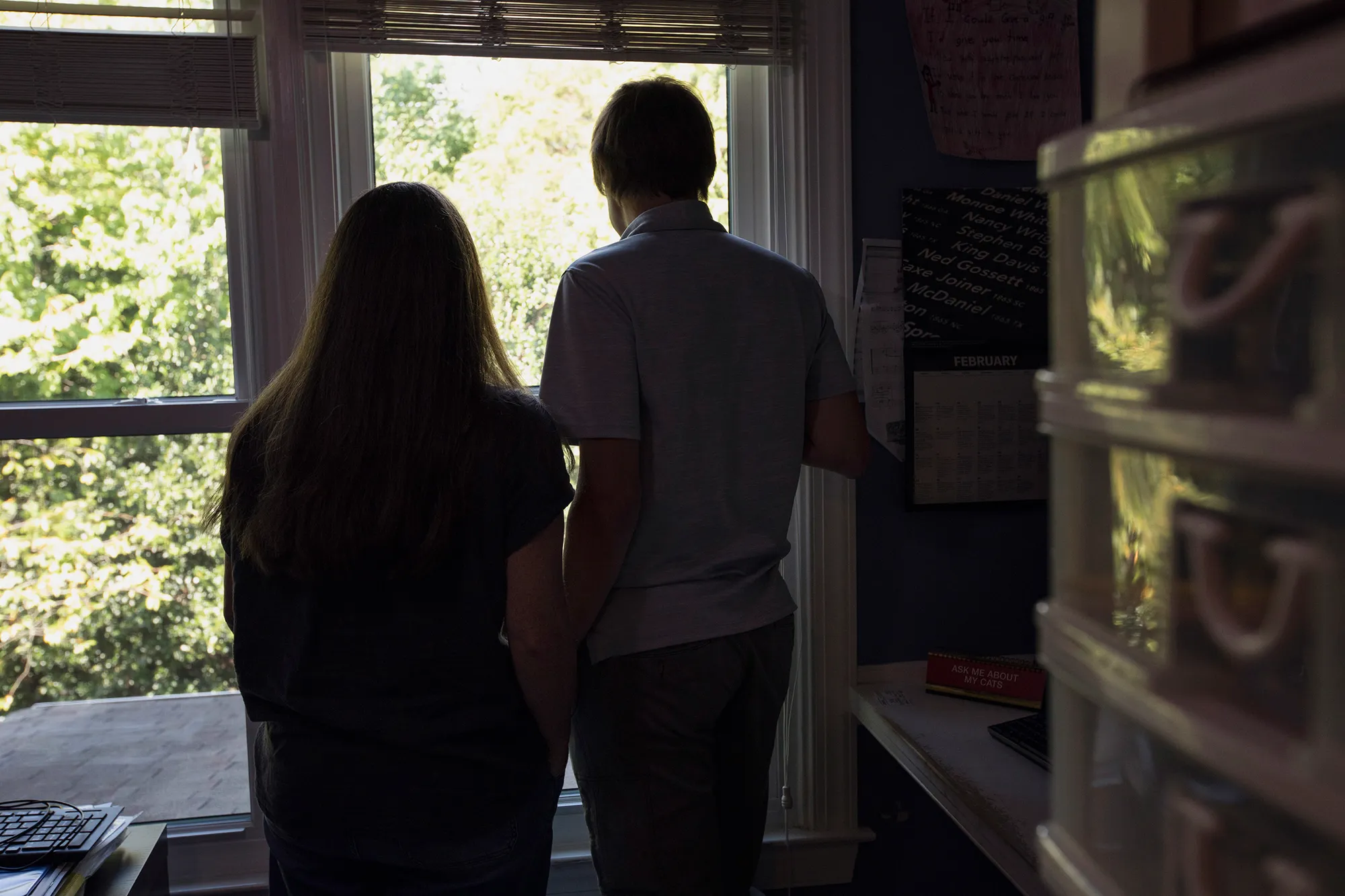
Back at home, Patricia stood at the window, looking out on the front yard and wondering how Emma was doing. In her last text to her daughter, Patricia had asked: “Are you good?” Finally, as Patricia stood there, she got a response: “Yep.” For the rest of the day, she clung to that message, a one-word reason to be hopeful. —With Leon Yin
If you or someone you know is having thoughts of suicide or self-harm, a global list of helplines is available at blog.opencounseling.com/suicide-hotlines/.