 AIFeed
The "Trial Period" Is Over: Apple Starts Charging for AI | AG&I
2026-11-24 13:55
Recently, in its latest beta system, Apple revealed a pricing plan that sets a "daily usage cap" for Siri AI.
Apple, long known for its precision in service commercialization, has finally torn through that veil with its own hands.
Rewind two years: when phone makers were all shouting about the "first year of AI phones," few would have guessed that the first thing to achieve commercial success wouldn't be some disruptive interaction revolution, but the uniformly displayed payment QR codes of phone makers.
Stuffing the AI bill into iCloud
In the second developer beta of iOS 27.3 pushed on November 16, Apple has already revealed this pricing plan: setting a daily quota for cloud AI compute.
Specifically, basic on-device commands like setting alarms and timers remain free and unlimited, but once it comes to heavy features that call Apple's "Private Cloud Compute," sorry—we now have quota limits.
These include Siri AI, which requires multi-step complex reasoning, the erase and spatial reconstruction features in Photos, Image Playground, and shortcuts and third-party apps that call cloud models such as AFM 3 Cloud.
What's notable is that Apple doesn't use a universal token balance pool, but instead draws separate lines by feature category—Siri, image generation, shortcuts, and other categories each have their own independent usage caps.
Apple's rules don't start by demanding money right away, either.
Each Apple device you own has its own independent free basic quota every day; only after a single device's free quota is exhausted does the system draw on the extra quota provided by iCloud+. If "Family Sharing" is enabled, all family members share this same extra quota pool—first come, first served, until it runs out.
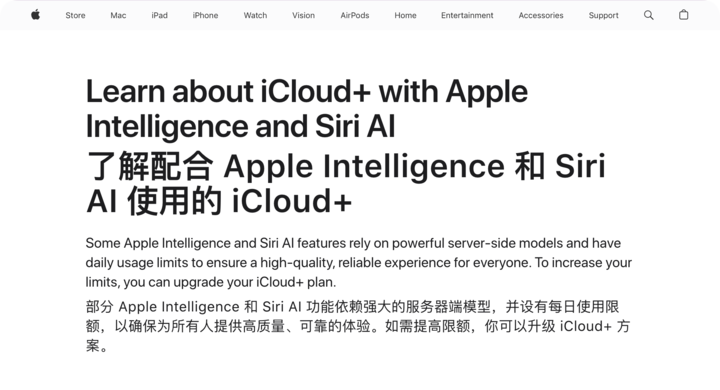
If the daily basic free quota is used up, you either wait until midnight the next day for a reset, or pay to upgrade iCloud+.
Users can only upgrade to iCloud+ tiers of 200GB or above to unlock 2x to 20x quota bonuses (the $0.99/month 50GB entry tier gets no bonus). Once a feature category hits its daily cap, the system pops up a notification reminding you to upgrade your plan—
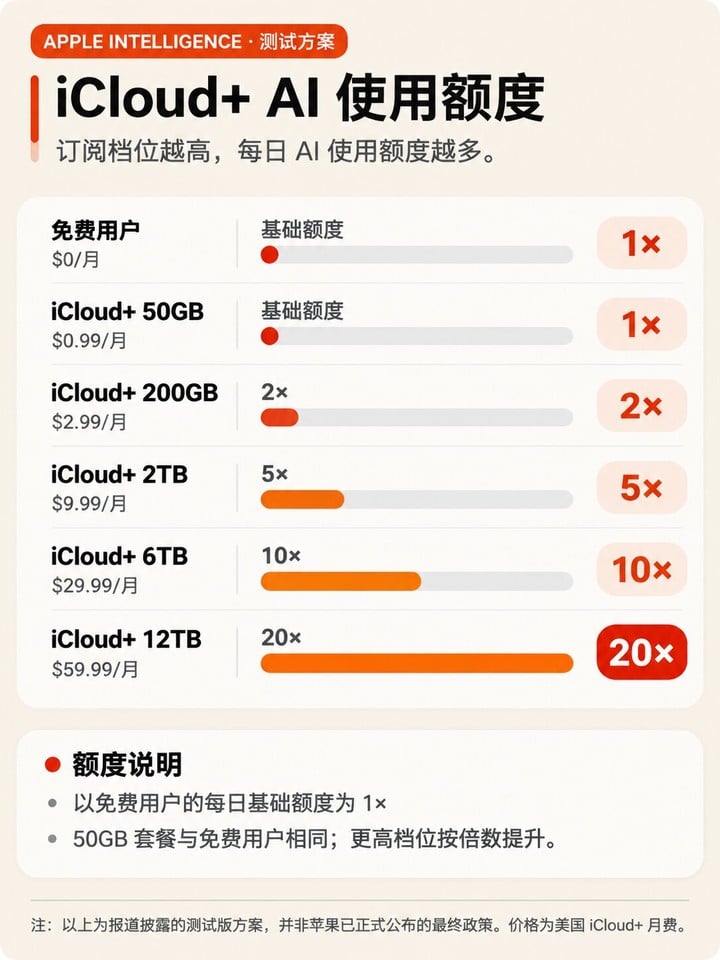
Note that this isn't a temporary top-up pack you buy for a few bucks for one day—it directly changes your existing monthly subscription tier, and unless you manually downgrade later, it will auto-renew at the new price next month.
There were actually early signs of Apple planning to charge for AI features, and the logic behind it is simple—
At WWDC 2024, when Apple first sketched out the Apple Intelligence pie in the sky, its headline was "on-device processing first"—balancing privacy protection while reducing reliance on cloud compute. Apple even explicitly stated at the event that Apple Intelligence would be provided to users for free.
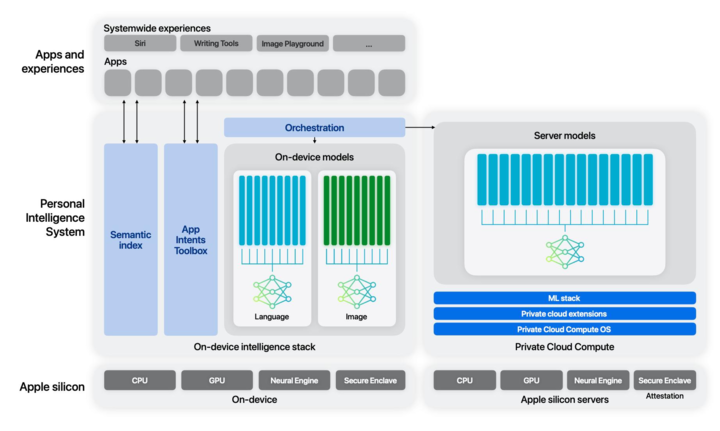
But by 2026, as Siri began moving toward a true Agent experience, Apple's reliance on this architecture has also shifted. The most direct manifestation is that Apple even launched a dedicated AFM 3 Cloud Pro, responsible for handling more complex Agent tool calls and reasoning tasks.
If it can't run locally, the cloud has to burn money—behind every round of inference are server electricity and compute costs. From this accounting, Apple starting to charge is entirely foreseeable.
The only thing is, rather than launching a separate high-priced "AI membership" to directly provoke users, tucking compute quotas naturally into iCloud+ subscriptions is undoubtedly a more covert way of commercializing.
How do AI phones charge?
Apple's calculation is actually a mirror of the entire phone industry at the end of 2026—major domestic manufacturers have also begun charging for AI compute in various ways, such as points and usage-count quotas.
Hearing that built-in AI features on phones are starting to have limits and fees, many people's first reaction is probably that they're about to be "harvested" again. But we think this isn't actually a bad thing—you could even say that when manufacturers decide to put pricing on the table, we actually feel more at ease using it.
From the "first year of AI phones" rallying cry in 2024 to the first half of 2026, everyone was essentially using "all free" to educate the market.
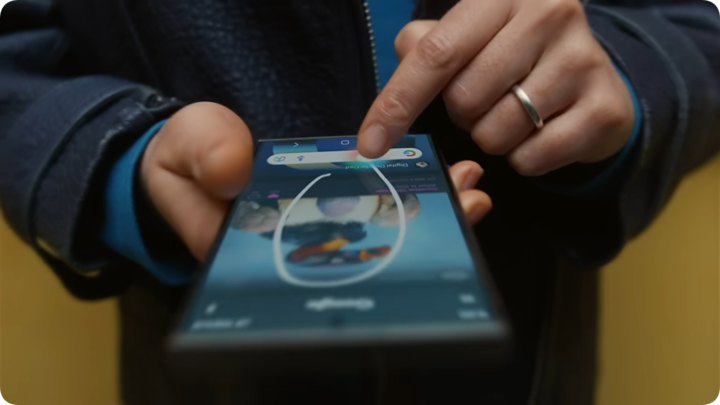
The reason for doing this is fundamentally that the industry is still in a land-grabbing promotion and subsidy period. Before the commercial loop is closed, every complex command a user issues and every cloud-expanded image they generate consumes real server and electricity costs.
But free doesn't mean the expense vanishes into thin air—it's just temporarily covered by the manufacturer.
To control the ever-inflating compute bill, manufacturers inevitably have to make trade-offs in service supply: limiting daily call counts, shortening context length, or scheduling models of different specifications based on task complexity. These moves are essentially about finding a balance between experience and cost within a limited budget.
In other words, the free model hasn't solved AI's cost problem—it has just hidden the bill behind the product experience. The "free AI" users get is always a service constrained by cost.
By the end of 2026, the market's level of understanding of AI has changed. After two years of high-frequency popularization, ordinary users may still harbor reservations about "paying a subscription fee after buying the hardware," but at least they've moved past the traditional internet mindset of "software has zero marginal cost."
Whether repeatedly reminded by the early "deep thinking quotas" of various companies, or having grown accustomed over the years to manufacturers' explanations of on-device and cloud compute, the fact that "smarter reasoning burns servers and electricity behind the scenes" has gradually shifted from insider common knowledge to public expectation.
Of course, understanding the cost doesn't equal willingness to pay. The real change is that the industry has finally returned the choice to the market: for everyday light needs, the free version is basically enough; once it comes to complex tasks, higher quotas, or more stable output, paying has a reasonable justification.
As AI evolves from a novelty feature into a high-frequency necessity, the unlimited subsidy model is clearly unsustainable; and users' awareness of compute costs has finally given "charging" a basis to be seriously discussed on the table.
Ultimately, AI is essentially a business of "paying for results."
Rather than enduring a "basic version" whose hands are tied by compute under seemingly free rules for a long time, it's better to cross this threshold and pay a reasonable fee in exchange for a stable, reliable delivered result—for both manufacturers and users, this may be a healthier commercial cycle.
Although "charging money" has become a consensus, how to bill on mobile is still at the stage where everyone is feeling their way across the river.
If we first look at the more mature PC side, AI's pricing models are already basically clear:
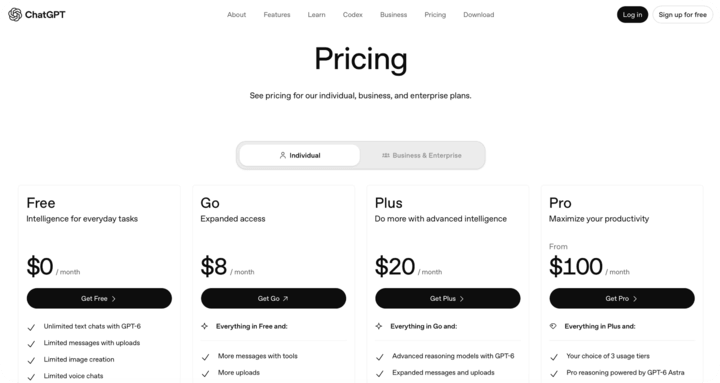
The first is the most common "ChatGPT-style" monthly subscription—pay monthly, get a full usage quota within a fixed period, and once you hit the cap, either pay more to upgrade or wait patiently for a reset.
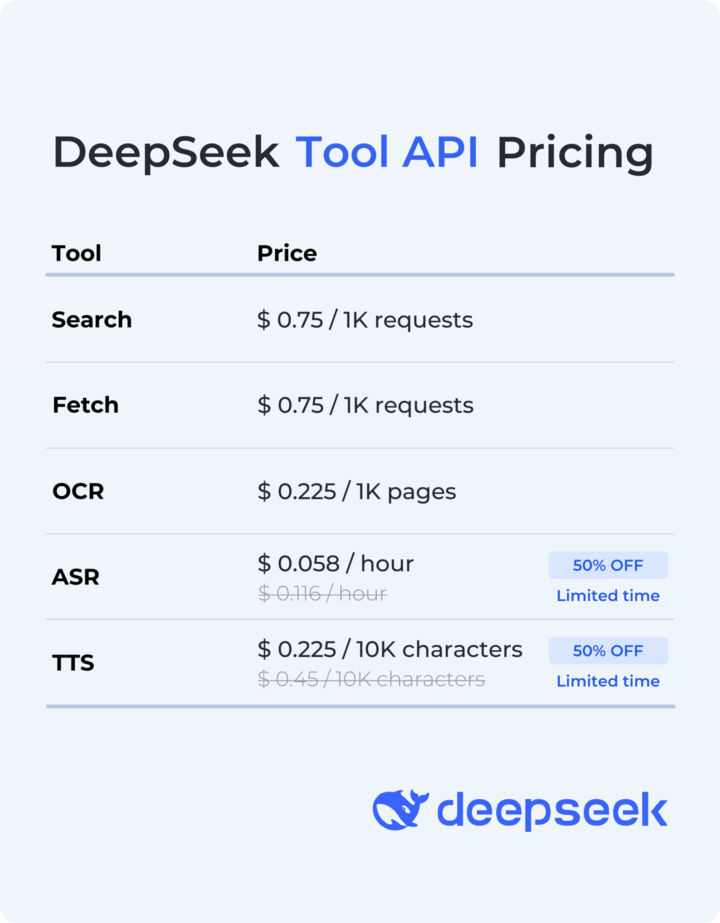
The second is "buying tokens," more familiar to developers and heavy users—priced by the actual compute consumed for input and output, pay for what you use, with bills precise to the smallest unit.
The third is rather special—the "points system" used by WorkBuddy. Its logic is to let users first top up and convert to points, and then each time AI executes a task, the backend deducts the corresponding number of points based on the actual compute called—put simply, it packages abstract underlying compute into more intuitive "points."
Interestingly, if we look back at the various AI payment plans currently rolled out by phone manufacturers, we'll find that many manufacturers' approaches are actually exactly the same as WorkBuddy's.
For example, Huawei's newly launched Xiaoyi AI membership: beyond basic capabilities, Huawei has turned advanced AI capabilities into a points system, offered as a subscription alongside cloud storage. Users get 200 free points per month to try advanced features, and paid plans start at 49 yuan/month (1000 points), up to 499 yuan/month for 15000 points and 2TB of cloud storage.

In Xiaomi's Super Xiaoai 2.0, Quick Mode is free and doesn't consume points; only when switching to Expert Mode, executing complex tasks and content generation, are points consumed.
Xiaomi provides 1000 free points per account per month, and paid plans use tiered pricing, with continuous monthly discount prices of 19 yuan, 39 yuan, and 99 yuan, corresponding to 4000, 10000, and 34000 points.
Even looking at manufacturers that haven't yet officially launched paid subscriptions, whether it's basic call frequency or specific AI features like image generation and editing—such as Xiaomi's Legendary Moment or OPPO's AI Retoucher—each has more or less daily count or usage limits in the backend.
Judging by this trend, moving from "free with limits" to "paid expansion" is only a matter of time for every manufacturer.
Right now, it's still hard to say which billing model is better, but if we compare these plans side by side, we'll find a rather interesting observation:
Article title: The "Trial Period" Is Over—Apple Is Now Charging for AI | AG&I
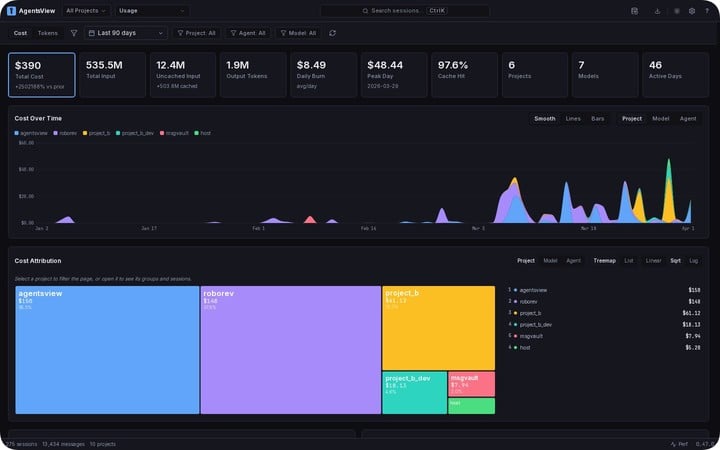
Body: Compared with the more "fussy" calculation methods on PC, phone makers are uniformly and deliberately avoiding specific Token numbers, instead adopting credits, usage counts, or even—like Apple—simply hiding the counts in a quota pool.
There is a concept in consumer behavior research called the Taxi-meter Effect—when users have to account for every single use, they are more likely to perceive the cost of each individual consumption, thereby suppressing their willingness to use it and dragging down the experience.
Displaying specific Token consumption makes people unable to resist fixating on the computational cost of every operation; whereas switching to credits or a quota pool shifts users' attention to "how much usable resource do I have left," imperceptibly changing the way people perceive the cost of AI.
Compared with deep work sessions at a computer that often last tens of minutes, many AI needs on a phone are scattered and fragmented—perhaps just casually erasing a passerby from a photo, or asking a voice assistant to summarize a few unread messages.
If every time such a lightweight operation is triggered, "this use consumed 3,200 Tokens" pops up precisely in the corner of the screen like a taxi meter, it would instead make users unconsciously start calculating the cost before every tap.
From this perspective, packaging underlying compute into credits or a quota pool actually weakens the psychological friction users feel during scattered daily use—this moderate ambiguity may well be exactly the right solution for phone AI.
Will phones get better once AI is charged for?
Ultimately, the reason AI phones are wavering on "how to charge" is that the industry itself has yet to reach a consensus on the question of "what is an AI phone."
As mainstream manufacturers are currently doing, the core idea is still "AI + phone." In this mode, AI remains a tool that people must actively wake up: retouching a photo, making a summary, or occasionally looking up a piece of information across apps.
As long as interaction remains at the low-frequency stage of "people seeking out tools," per-device compute consumption is predictable and capped. Since costs are controllable, hardware remains the absolute core of the business, and traditional giants will naturally package AI like the "advanced driver-assistance option package" of new energy vehicles, using software subscriptions to drive sustained payments from existing users.
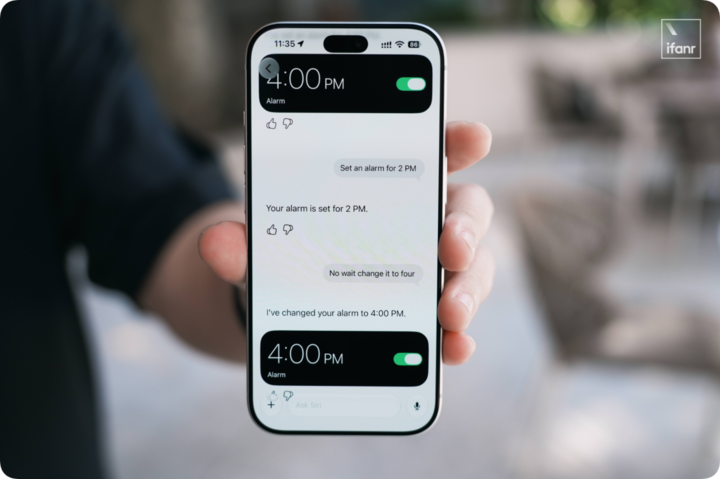
By contrast, players that come from a model background, such as Doubao and StepFun, are far more aggressive. They carry none of the hardware and ecosystem baggage of traditional phone makers, and instead go straight for the new form factor of the "AI-native phone." This is exactly the approach of StepFun's STEPX Neo, which bundles on the device side a "12-month STEPX Token Plan, with a monthly quota of 10 billion Tokens."
The seemingly exaggerated quota is in fact a reserve of compute prepared in advance for future high-frequency background tasks.
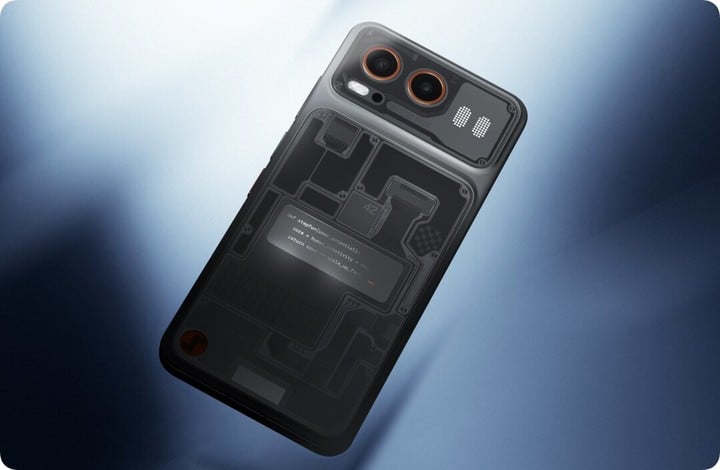
After all, once agents begin breaking down workflows around the clock in the background, performing multiple rounds of self-reasoning and cross-app interaction, the Token consumption of a single device will no longer be at today's scattered conversation scale, but will see an order-of-magnitude surge.
Micron once did the math in a 2026 white paper: taking a 25-round long conversation as an example, a single cloud inference costs about $0.34. Assuming a user triggers two such high-load interactions per day, the cumulative inference cost over just two years already approaches $500, enough to be comparable to the hardware BOM (bill of materials) cost of a high-end iPhone.
When compute cost overtakes hardware cost, the business logic that smartphones have followed for nearly two decades will be completely reversed, replicating the old script of telecom operators' "get a phone free with a phone plan."
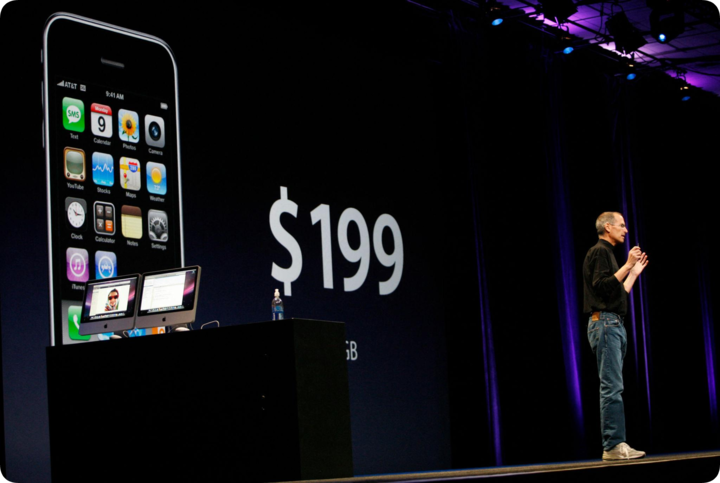
When the first-generation iPhone launched in 2007, Jobs tried to break the telecom operators' grip on phones; but just one year later, with the iPhone 3G, Apple fully embraced AT&T's "two-year contract subsidy model"—$199 to take the phone home, plus a high monthly data plan fee.
Back then, it was because 3G cellular data had become the new core consumable, and contract subsidies were needed to lower the entry barrier for users; today, Tokens are becoming the new generation's "cellular data." The only difference is that back then the ones collecting the pipeline fees behind the scenes were AT&T and China Mobile, whereas today, the ones wanting a seat at the "new operator" table are the tech giants holding large models and cloud computing clusters.
When that day comes, what users truly pay for annually is the underlying model capability and the Token pipeline, while the precise piece of hardware in their hands will only become a carrier relegated to a low price or even a free giveaway.
Put plainly, all of today's seemingly awkward credit systems and quota pools are essentially the industry testing the waters on the road to the endgame. And whether the phone of the future will be "hardware with AI" or "a Token terminal wearing a phone shell," no one has a standard answer.
But in any case, with the two-year "free trial period" officially over, Siri and the major assistants have all put their payment QR codes on the table.
In the free era, when AI occasionally acted foolish, everyone could still laugh it off; once monthly charges begin, manufacturers must deliver genuinely convincing capabilities, otherwise this billing scheme will ultimately struggle to win people over.
As for whether AI phones this time are a real necessity or a false proposition, next, it will be up to consumers' wallets to vote.