 AIFeed
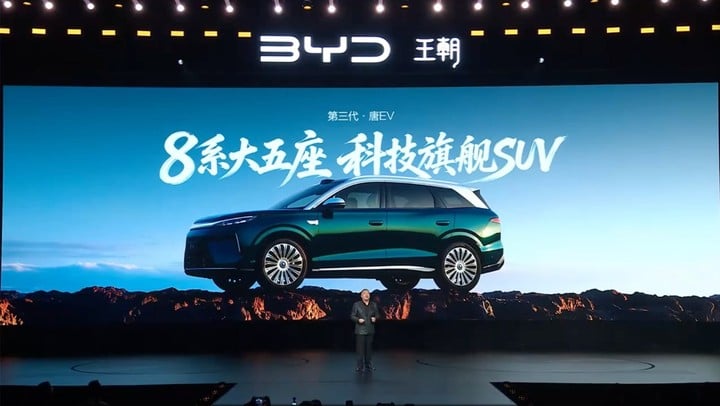
Starting at 187,900 yuan! BYD Tang EV officially launched, dropping the seven-seat layout for 850km of range, plus a steer-by-wire chassis
2026-11-24 21:36
When people mention the BYD Tang, the first thing that comes to most minds is still a family SUV built around DM-i and seven seats.
Although the Tang series gradually branched out into multiple models later on, this entrenched impression has followed the Tang and never changed.
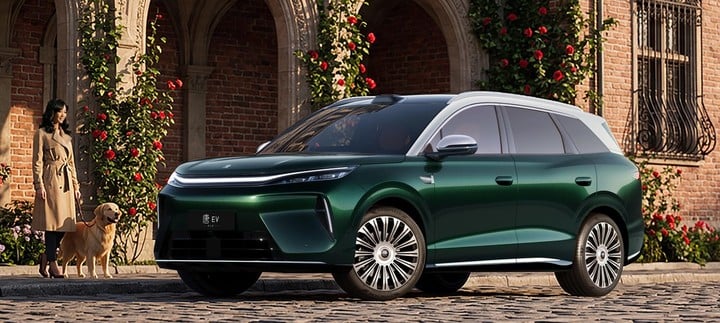
But on the BYD third-generation Tang EV officially launched on the evening of November 24, BYD did a thorough round of subtraction: not only did it release only a pure electric version, it also removed the third-row seats and the signature rotating central control screen.
The new car is positioned as a large five-seat tech flagship SUV. On top of the two 850km versions offered in presale, it adds a 730km entry version, for a total of 3 configuration models, with official guide prices of 187,900–219,900 yuan. The top trim can also add a 20,000-yuan "Four-Wheel-Drive Steer-by-Wire Option Package":
- 730KM Rear-Wheel-Drive Prestige: 187,900 yuan
- 850KM Rear-Wheel-Drive Laser Premium: 207,900 yuan
- 850KM Rear-Wheel-Drive Laser Flagship: 219,900 yuan, with a 20,000-yuan optional Four-Wheel-Drive Steer-by-Wire Option Package
The large five-seat trend has finally reached the Tang.
An all-new design language, an all-new large five-seat layout
The third-generation Tang's physique is actually already large enough to fit three rows of seats. The new car measures 5045/1980/1760mm in length, width and height, with a wheelbase of 2950mm, noticeably larger than the second-generation Tang.
In fact, in the 409th batch of MIIT filing public notices in July this year, it did register both five-seat and seven-seat layouts. But by the time of the actual launch, BYD kept only the large five-seat layout.
For the vast majority of three- or four-person families, the third row crammed into a 5-meter-long car is often folded down year-round gathering dust, while instead squeezing the second row's knee room and the trunk's depth. After giving this space back to the first two rows, the third-generation Tang delivers a more relaxed everyday seating position.
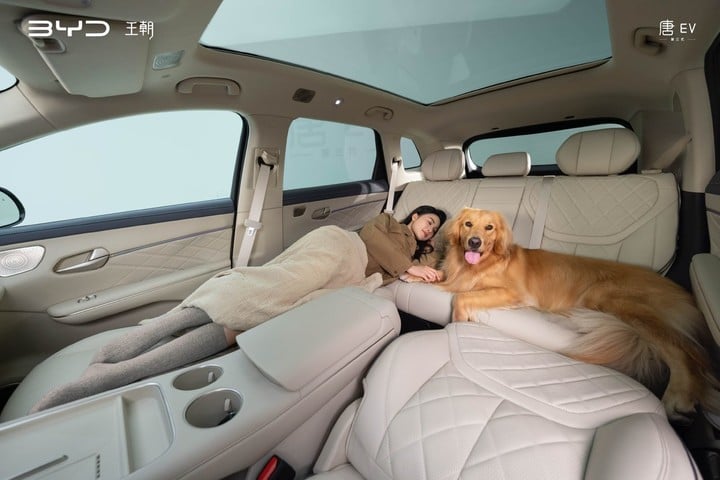
According to figures published by BYD, the Tang's second-row legroom reaches 1003mm, and the rear seatbacks support a maximum recline angle of 130°.
On the passenger side, the third-generation Tang brings a zero-gravity seat, and the driver and passenger seats as well as the second-row left and right seats all support ventilation, heating and 10-point independent massage.
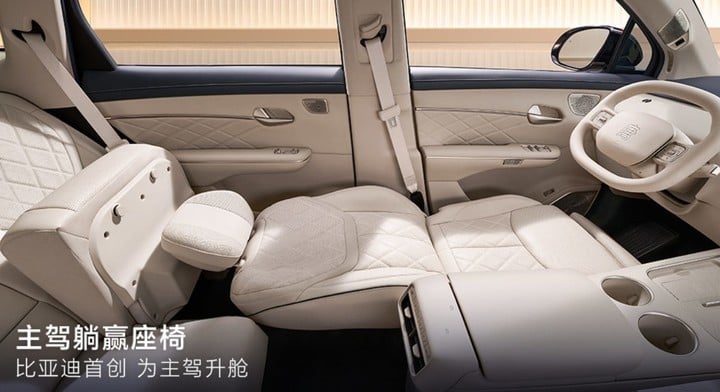
So that the person who often holds the steering wheel isn't left out, the third-generation Tang also adds a driver's "Lie Back and Win mode" to the top trim's Four-Wheel-Drive Steer-by-Wire Option Package. When you need a lunch break or a nap at a service area, there's no need to remove the headrest or switch seats: the second-row seat cushion automatically flips up to make way, the driver's seat cushion rises in sync to support the lower back, and the driver's seat reclines flat to 173° with one touch.
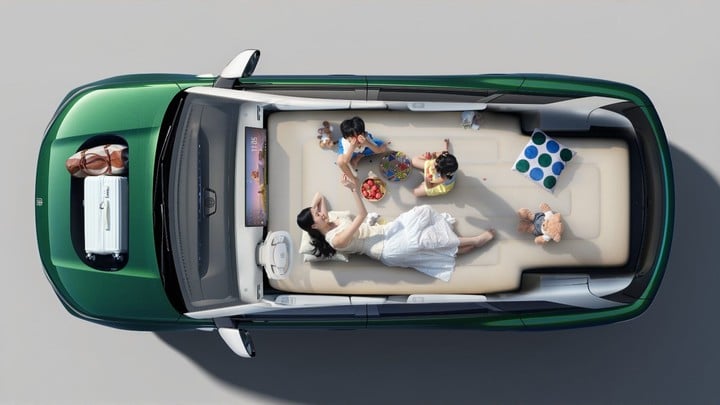
Around family and outdoor scenarios, the new car offers more than 12 space modes. Besides the front-and-rear-folding big bed mode, when pet mode is activated the second-row seats can fold upward, specifically leaving a pet activity area, a water bowl spot and a dedicated storage box under the second-row seats.
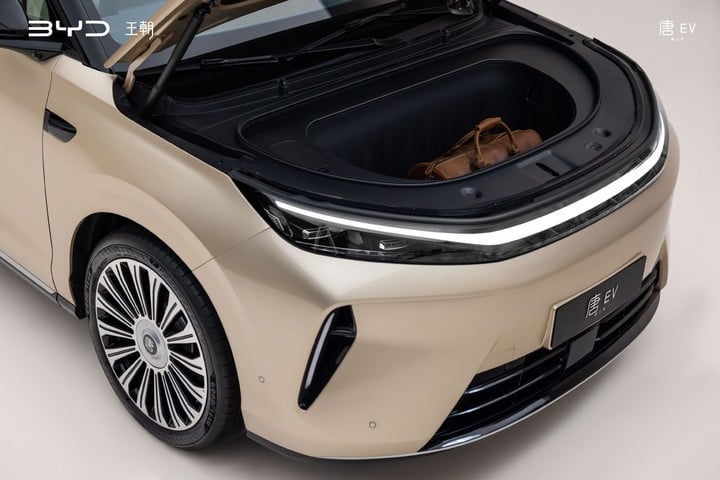
The whole car also has more than 47 storage spaces, a super-large front trunk of over 200 liters, and a suit hanger rod in the trunk, a rear dual-cup-holder small table and a magnetic trash bag.
At the same time, like most large five-seat models, the Tang also brings a 6.8L in-car hot-and-cold fridge and a 22-speaker Devialet audio system, further upgrading the cabin's comfort features.
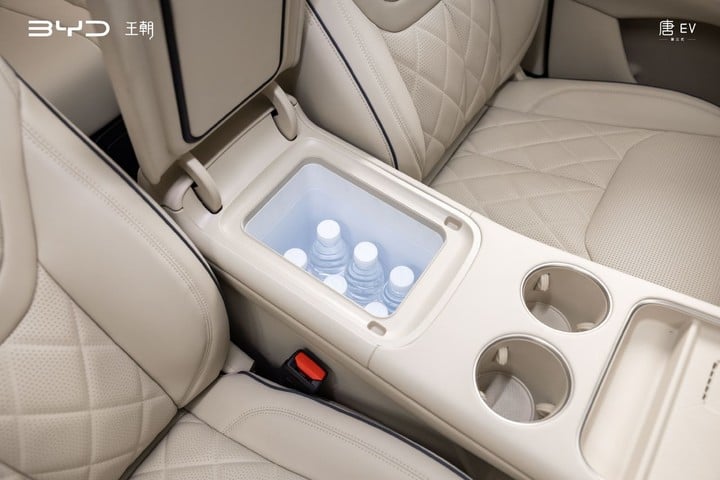
If dropping the third row was to make the second row more spacious, then the most eye-catching change inside the cabin is that BYD touched its own cockpit design that had been maintained for years.
The third-generation Tang bids farewell to the signature rotatable central control screen of the past, and instead fits the front row with a "Stellar Dual-Screen" layout, composed of a 35.4-inch integrated long-range star-ring screen and a 30-inch integrated panoramic giant screen. In addition, the steering wheel has been changed to a somewhat rectangular, atypically shaped steering wheel.
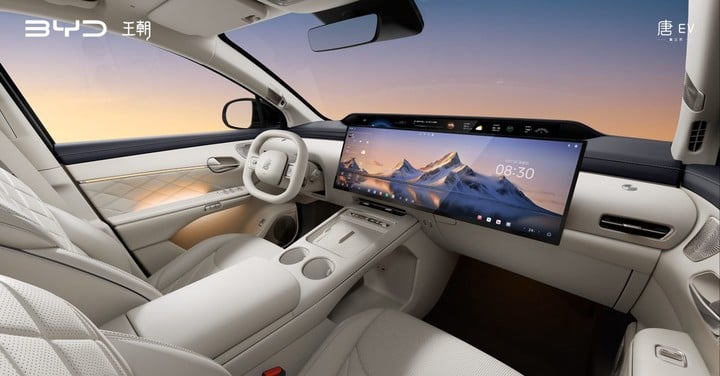
The 30-inch panoramic giant screen, with a visible peak brightness of 1100 nits and dual low-blue-light eye protection certifications from TÜV Rheinland and CATARC, is fitted starting from the 207,900-yuan 850KM Rear-Wheel-Drive Laser Premium, and supports full-screen pass-through or split control between the driver and passenger sides.
The 35.4-inch integrated long-range star-ring screen, which eliminates the traditional standalone instrument cluster and sits at the lower edge of the windshield, is included in the top trim's 20,000-yuan Four-Wheel-Drive Steer-by-Wire Option Package; the Flagship without that package is equipped with a HUD head-up display.
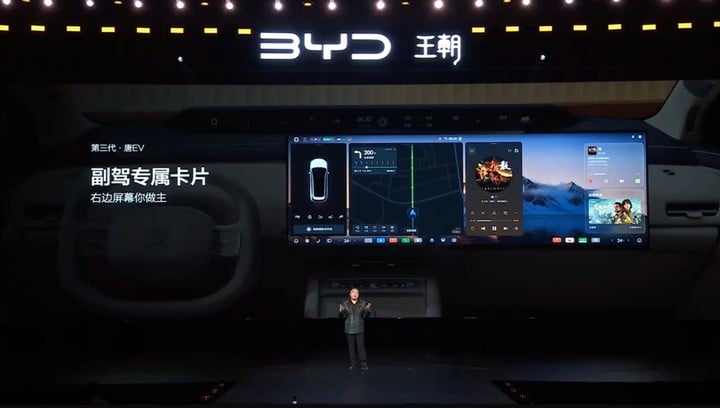
Whether placed in today's pure electric large five-seat market or within BYD's own product lineup, this dual-screen arrangement that eliminates the traditional instrument cluster appearing on the Tang and even on the Dynasty network's mass-production mainstay models is a first.
The cockpit software has been refreshed as well. The new car carries the DiLink Max smart cockpit and an all-new native UI with a liquid glass texture, supports screen projection from dual-fold and tri-fold phones, introduces the AI pet desktop "Little Bread," and is equipped with the "Didi Shrimp" AI super agent that supports dialects and whole-cabin voiceprint recognition and adds an AI-generated custom control card feature.
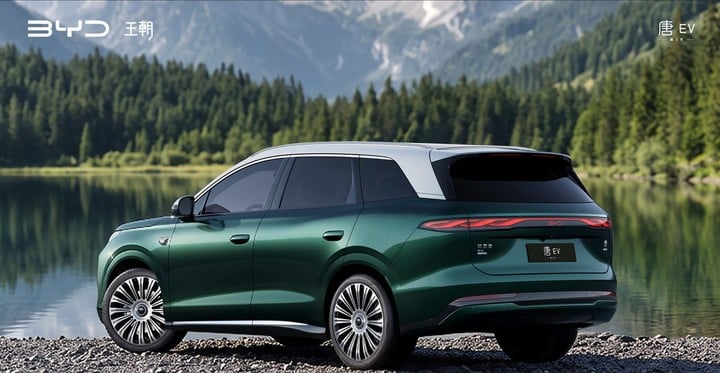
On the exterior, the third-generation Tang also retires the second-generation design silhouette that served for eight years. The front face adopts a 2.5-meter integrated full-width flying-eave light-feather headlight, and offers 8 body colors in total: 3 two-tone colors and 5 solid colors.
From outside to inside, this car is washing away the conservative feel of the past as a pure "household tool vehicle." In the 200,000–250,000-yuan large five-seat pure electric market, consumers have long been used to the cockpit aesthetic threshold set by new-force brands like Li Auto and Xiaomi, and on this third-generation Tang, BYD has also given us a refreshing feeling.
850km of range + 9-minute flash charging
The large five-seat layout determines the cabin environment, and as an SUV, the foundation for long journeys remains the battery, charging and chassis.
The third-generation Tang is equipped across the lineup with BYD's second-generation Blade Battery and megawatt-level flash charging technology. According to figures published by BYD, at room temperature the vehicle takes only 9 minutes to charge from 10% SOC to 97% SOC, and even in an extreme cold environment of -30°C, it takes only 12 minutes to fully charge.
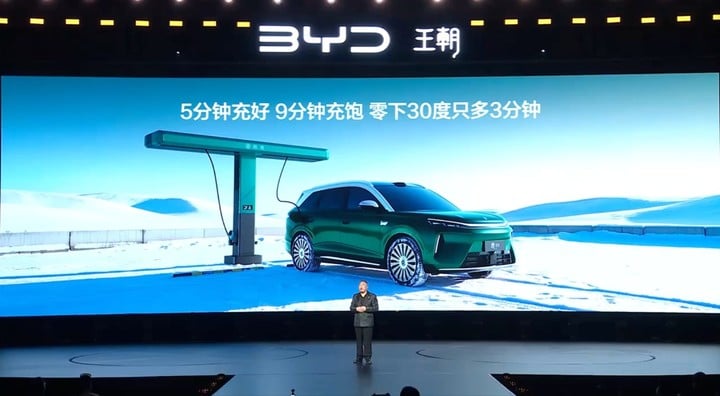
Compared with the common fast-charging figures that only cite 10%–80% or 30%–80%, counting the end-stage trickle charging after 80% into the 9-minute window means users can truly enjoy "departing with a full charge" in a short time.
In terms of power, the 187,900-yuan entry version is equipped with an 88.682kWh battery pack and 730km of CLTC pure electric range; the 850KM rear-wheel-drive version is equipped with a drive motor with a maximum power of 300kW, matched with a 105.792kWh battery pack, for 850km of CLTC pure electric range.
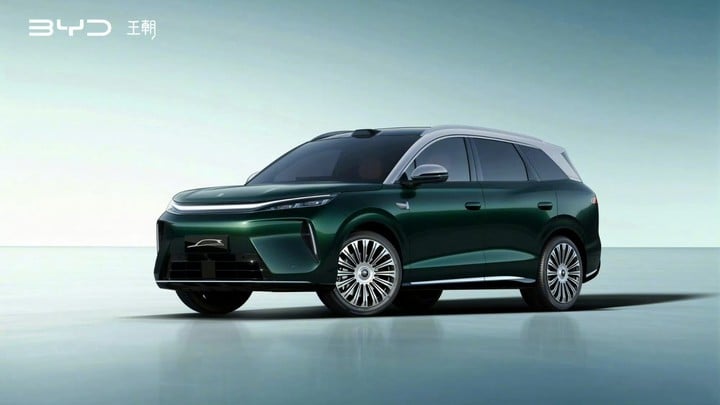
The four-wheel-drive option package adds a 215kW front-axle motor on top of the 300kW rear-axle motor, raising the system's combined power to 515kW, about 700 horsepower, with a 0–100km/h acceleration of 4.3 seconds.
At the same time, the entire lineup is equipped with iTAC 2.0 intelligent torque control, and debuts the "Stuck Assistant" feature on BYD brand models. When stuck in mud or a water crossing, turning it on with one touch automatically distributes left and right wheel torque to "nudge" the car out and free it; the roof can also be fitted with a detachable drone dock controllable via the car system and the rear-seat Pad.
The 850km long range plus 9-minute flash charging is already enough to cover the pure electric radius for the vast majority of families who don't charge on weekdays and make cross-city round trips on weekends.
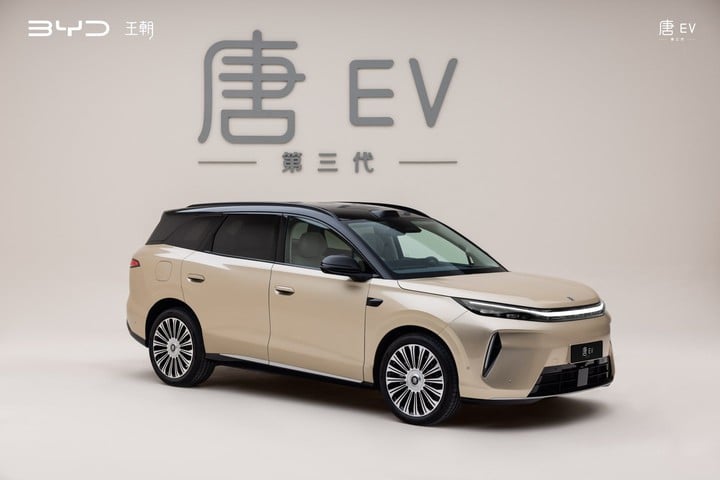
Starting from the 207,900-yuan 850KM Rear-Wheel-Drive Laser Premium, the third-generation Tang comes standard with 1 lidar and God's Eye B assisted driving laser edition, supporting urban navigation, highway/fast-road navigation and smart parking features; the 187,900-yuan Prestige does not have lidar.
In terms of passive safety, the new car comes standard across the lineup with 11 airbags, including an L-shaped passenger airbag that deploys in a stepped manner specifically to avoid the central control giant screen, as well as an upgraded TBC high-speed tire blowout stability system.
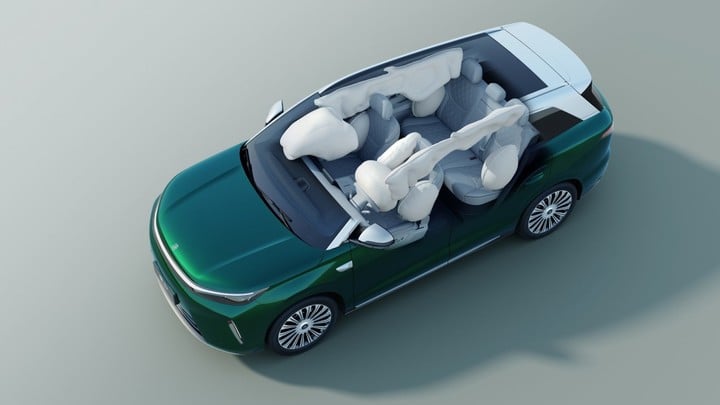
At the launch event, BYD played a video demonstrating two tests completed with a rear-wheel-drive production car: a single-wheel blowout on the outer side of a corner at 160km/h, and simultaneous blowouts of two wheels on the same side in a straight line at 165km/h.
Differences between versions also appear in the chassis. The Tang comes standard across the lineup with front double wishbone and rear five-link independent suspension and agile steering.
Among them, the 187,900-yuan Prestige and the 207,900-yuan Premium are equipped with the DiSus-C intelligent damping body control system, while the 219,900-yuan Flagship upgrades to the DiSus-A dual-chamber air suspension with intelligent road preview.
The headline: Starting at 187,900 yuan! The BYD Tang EV is officially launched, dropping the seven-seat layout in exchange for 850 km of range, plus a steer-by-wire chassis.
In this round of Tang's optional configurations, the "Four-Wheel-Drive Steer-by-Wire Option Pack," available on the top-trim flagship model for an extra 20,000 yuan, is a major highlight. First, it brings BYD's new-generation steer-by-wire digital chassis into the 239,900 yuan range.
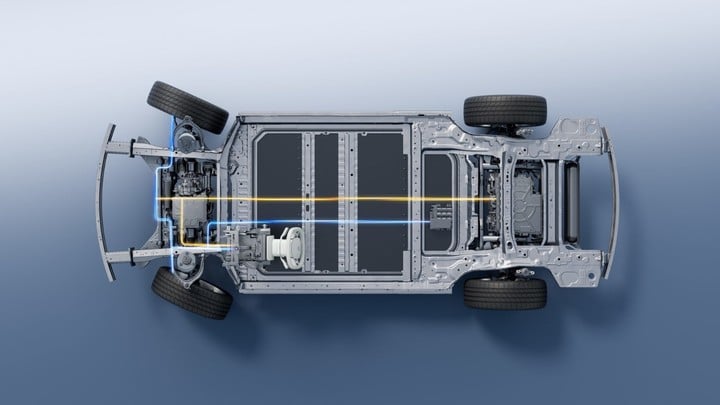
This steer-by-wire digital chassis consists of two parts: steer-by-wire and brake-by-wire.
Because steer-by-wire eliminates the traditional mechanical hard connection between the steering wheel and the wheels, instead transmitting driving intent via electrical signals and flexibly adjusting the steering ratio according to vehicle speed, this large vehicle over 5 meters long needs only a little over a quarter turn of the steering wheel to complete a large steering maneuver when making a low-speed U-turn, while restoring a steady feel at high-speed cruising.
After parking, the steering wheel can also completely disconnect from the wheels, directly serving as a controller for in-car racing games together with the 30-inch giant screen.
And according to BYD, brake-by-wire increases the braking system's response speed by more than 25%.
Making the steer-by-wire-related functions optional is a fairly prudent decision. For users willing to try new things, considering what the option pack includes, 20,000 yuan is not too expensive; and for users who do not want steer-by-wire functions, they do not need to give up this large five-seat SUV because of it.
The Tang universe
Having finished discussing the product strength of the individual model, let us pull back to the entire BYD Dynasty network. The positioning change of the third-generation Tang this time actually solves a long-standing problem that has troubled the lineup for a long time.
Over the past decade, Tang has consistently been the name best able to carry the family-use banner in the BYD family. From the first generation's "542" performance路线, to 2018's second generation introducing Dragon Face and, relying on DM-i and seven seats,长期稳居 the front ranks of the 200,000 yuan-class family SUV rankings, Tang secured its position by "one car meeting the travel needs of a whole multi-member family."
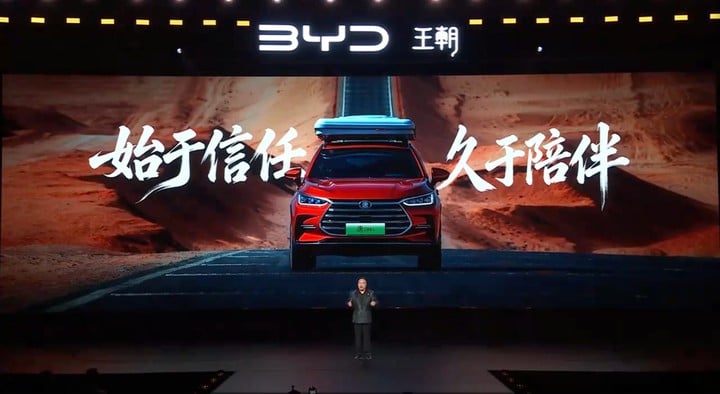
But in the past two years, the Dynasty network's high-end product line一度 became very crowded. In addition to the old Tang family still on sale, last year saw the launch of the Tang L, featuring the Super e-Platform and megawatt flash charging, and this June saw the launch of the full-size flagship Grand Tang EV, 5263 mm long with a 3130 mm wheelbase.
With "Tang," "Tang L," and "Grand Tang" appearing at the same time, the cost for consumers to understand them is truly too high, not to mention that these models actually overlap somewhat in positioning.
Now that the third-generation Tang is officially launched tonight, we can be somewhat clearer: Grand Tang holds the seven-seat territory, the new Tang fights for five seats.
The 5.26-meter Grand Tang EV has already taken over the three-row task for multi-child families and three-generation households with its 2+2+3 seven-seat layout, and the L series is also gradually completing its phased transition and exit.
After shedding the burden of "having to fit seven seats," the 5.04-meter third-generation Tang can travel light, betting all its body proportions and three-electric budget on the higher-volume pure-electric large five-seat segment.
Ten years ago, BYD opened the door to the large family SUV market with a seven-seat Tang eligible for green plates. Ten years later, as the seven-seat flagship baton passes to Grand Tang, the third-generation Tang—lightened up, switched to a large five-seat layout, all-electric across the lineup, and equipped with LiDAR—no longer has to play the "all-purpose" role for family travel, but for the first time faces off head-on against the new-force mainstays in the 250,000 yuan-class market as a pure electric flagship.