 AIFeed
Article title: In a society that has long believed exams can change destinies, AI has begun to shake people's trust in test scores
Body:
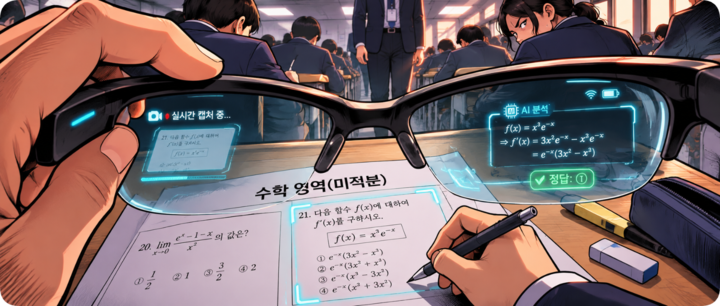
In a society that has long believed exams can change destinies, AI has begun to shake people's trust in test scores
2026-11-24 17:09
The technological equalization brought by AI has even lowered the barrier to cheating.
In April 2026, 34-year-old Korean test-taker Han Won-suk sat for a national tax accountant qualification exam.
The exam had 160 questions and a maximum score of 400. Han Won-suk scored 397.5, getting only one question wrong. In the hardest subject, Introduction to Tax Law, the average score among 16,856 test-takers was just 30.18, and more than 70 percent did not even reach the minimum passing line—yet he scored full marks.
Three months later, he scored 663 in the second-round essay exam, becoming that year's top scorer in the Korean tax accountant qualification exam.
After the results were announced, some suspected he had used AI smart glasses. Han Won-suk initially denied the speculation, explaining that he had merely used the process of elimination to solve unfamiliar questions.
Until November 15, when he appeared on a lawyer's YouTube channel and admitted that he had indeed cheated.
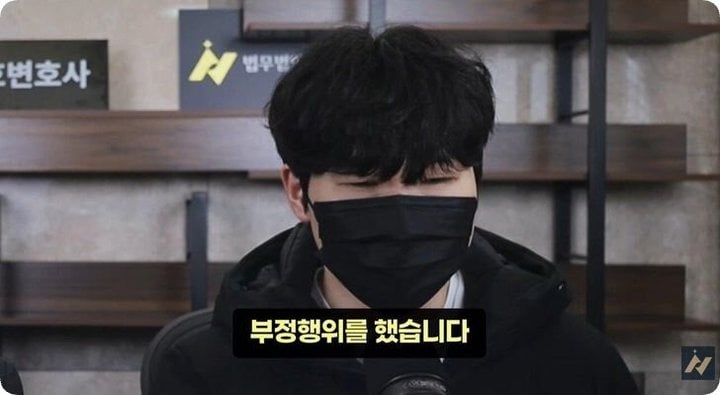
The equipment he used included a miniature camera, a smartphone, and generative AI. During the exam, the camera captured the questions, the AI generated answers, and he viewed the results through the phone. He used a similar method in both the first and second rounds, and even in the certified public accountant exam he had taken earlier.
Surprisingly, Han Won-suk sat in the second row and then the first row near the podium during the two rounds. There were two invigilators in the exam room, yet no one ever noticed anything unusual.
What made it worse was that the timing of the scandal's exposure could hardly have been more inappropriate. It was only days before South Korea's national college entrance exam. Education Minister Choi Kyo-jin was pressed during a parliamentary hearing on whether he could guarantee 100 percent detection of AI-assisted cheating. His answer was: "I'm afraid I can't, after all, given my age."
The remark quickly ignited public opinion, and the opposition party promptly proposed impeachment.
On November 24, according to the Financial Times, Choi Kyo-jin had formally resigned. The South Korean president subsequently proposed a reward of 100 million won for reporting AI exam cheating and called for a review of exam procedures and relevant laws.
The spread of generative AI has drastically lowered the barrier to obtaining professional answers to exam questions, and multimodal models have further simplified the process of recognizing test questions, understanding their meaning, and generating answers.
Data later disclosed by South Korea's Human Resources Development Service showed that since 2024, at least eight cheating cases involving AI have been found in national qualification exams, covering fields such as gas engineering, real estate brokerage, and industrial safety, with tools used including ChatGPT and Gemini.
In a society that has long believed exams can change destinies, AI has begun to shake people's trust in test scores.
To prevent AI cheating, test-takers put on aprons
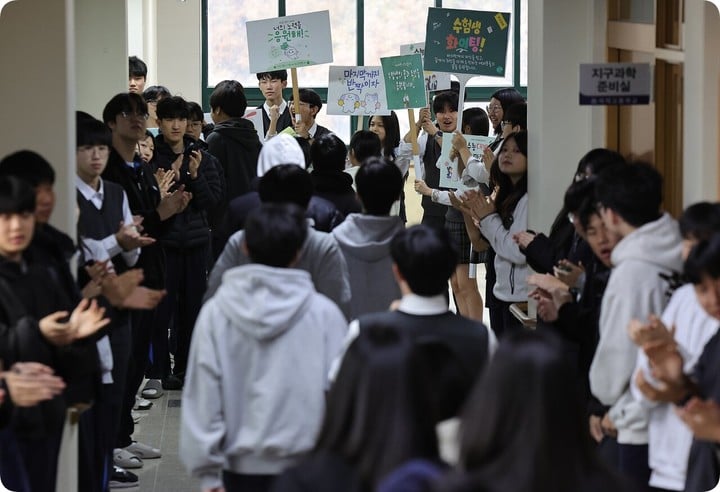
On November 19, South Korea held its annual College Scholastic Ability Test (equivalent to South Korea's college entrance exam).
Two days before the exam, the South Korean government urgently announced that it would deploy about 8,400 additional inspectors, focusing on checking whether test-takers carried smart glasses, miniature cameras, and other devices. Invigilators needed to check collars, buttons, and glasses, place opaque stickers over buttons that might conceal cameras, and require test-takers' personal belongings to be left outside the exam room.
Some stationery that had previously been allowed was also restricted. The government required exam rooms to shut down public Wi-Fi and discussed extending the ban on cheaters from one year to ten years.
Before test-takers entered the exam rooms, invigilators had to learn how to identify a pair of glasses, which clothing buttons were suspicious, and how to determine whether an ordinary-looking everyday item concealed electronic equipment.
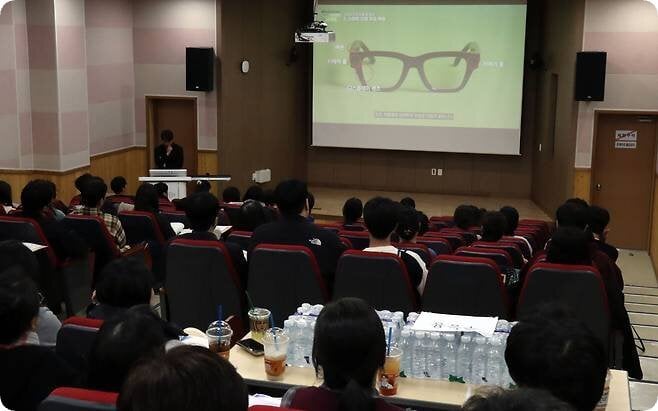
Smart glasses are becoming more and more like ordinary glasses. South Korea's education authorities had assigned dedicated personnel to identify such devices, but at the time radio detection equipment capable of reliably identifying smart glasses was not widely deployed. Prior simulation tests by relevant South Korean institutions also found that some radio detection methods could not effectively identify cheating devices.
Until the exam actually began, much of the inspection work still relied on invigilators' eyes and experience.
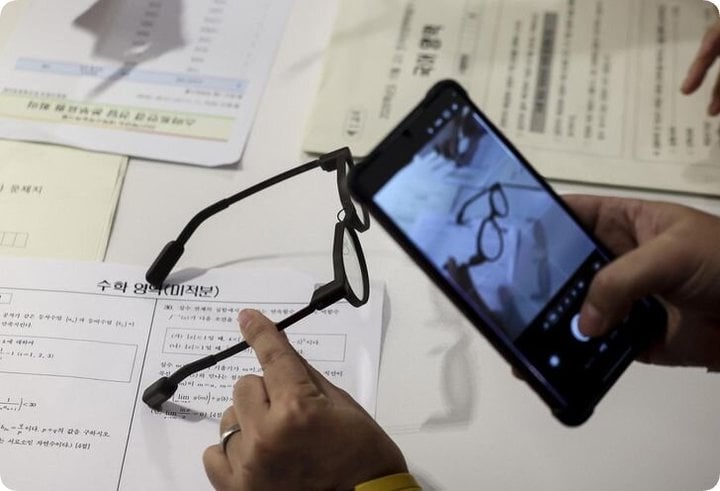
During the exam, the government also sent emergency public service text messages three times nationwide across South Korea. Phones that should have been handed in, if still kept on or near test-takers, could be exposed by notification sounds.
When the exam ended on November 19, South Korea's Ministry of Education preliminarily announced 98 test-takers in violation involving electronic devices, of which 49 were discovered because of phone notification sounds. The final tally updated the next day raised the number to 111, and the number of test-takers exposed by alarms rose to 54.
Five of the cases involved actual use of smart devices during the exam, including smart glasses, miniature cameras and wireless earbuds, as well as using phones to photograph test papers.
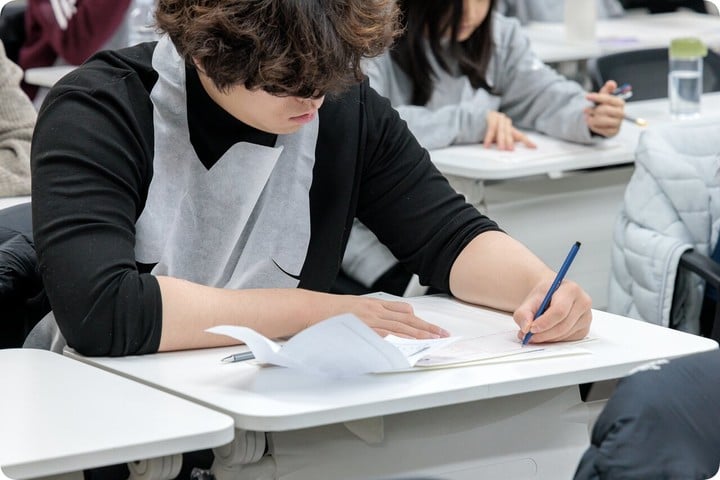
Kyung Hee University distributed disposable aprons to test-takers during its admissions exam to prevent hidden cameras from photographing test papers.
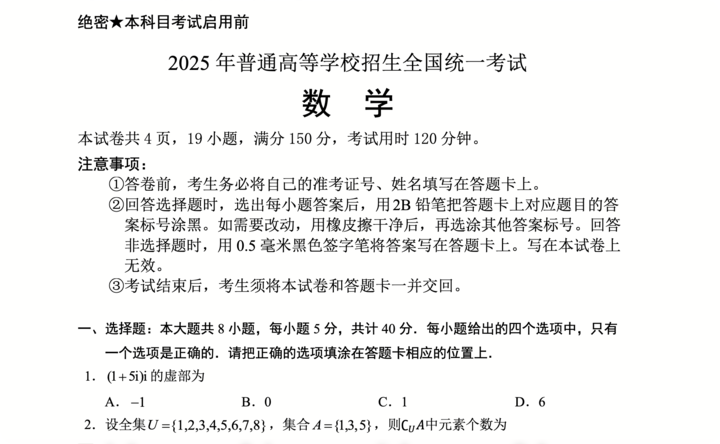
During last year's college entrance exam in China, AI products such as Tencent Yuanbao, DeepSeek, Kimi, and Doubao imposed varying degrees of restrictions on photo-based question search, image recognition, and test paper analysis functions during exam periods. Some exam sites also introduced AI smart patrol systems to help identify abnormal behavior in exam rooms.
The anti-cheating defense line is expanding from exam rooms to AI service providers, and tech companies have in fact become new participants in exam fairness.
The South Korean government also proposed that tech companies assist in investigating whether test questions had ever been uploaded to AI applications.
Why do we need exams?
Standardized exams establish a relatively clear set of rules, allowing people from different families to be evaluated under similar conditions. We learn early to measure ourselves by scores, and we are accustomed to knowing others through their grades.
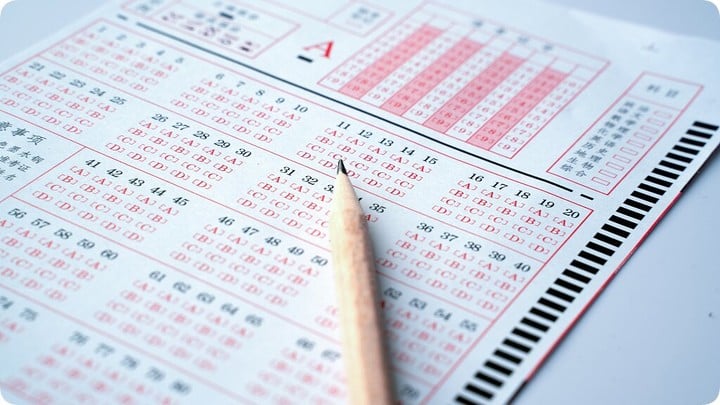
For young people lacking other social resources, exams remain one of the few paths through which they can strive for opportunities through individual effort.
Therefore, there are ample reasons to prohibit AI from entering exam rooms in violation of rules.
What is worth considering is that the rationality of high-stakes exams lies in individual differences in knowledge reserves and on-site thinking; performance in answering questions in the exam room can broadly reflect a test-taker's actual ability in the position. But the emergence of generative AI has fundamentally shaken this premise.
If exam content is mainly based on memorizing knowledge points and standardized problem-solving, AI already far surpasses the vast majority of people in such tasks, and cheating merely "brings" this ability into what was originally a closed field. What cheaters expose is not only personal moral flaws, but also a certain fragility in the exam format itself.
It will be difficult for the college entrance exam to stop being a high-stakes exam entirely in the short term, but its "degree of high stakes" is already slowly declining.
The employment prospects and social recognition of vocational undergraduate and applied undergraduate programs have noticeably improved, and the pressure of "having to rely on raw scores in the regular college entrance exam to get into a top university" has eased somewhat. If the vocational education college entrance exam system can create stable expectations for skilled talent in terms of income, promotion, and social status, anxiety over streaming will decline.
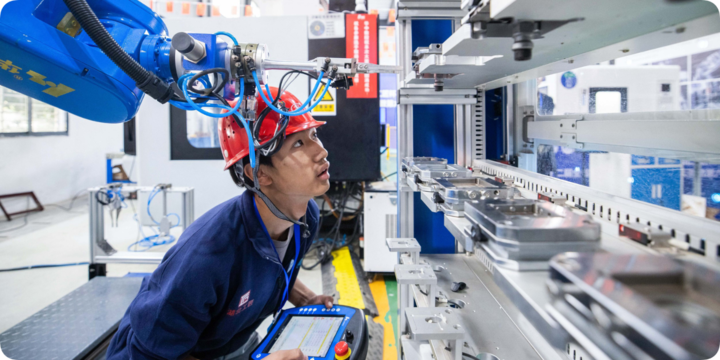
At present, most comprehensive evaluations and strong foundation programs still set the weight of college entrance exam scores at 60%–85%, with school tests and comprehensive quality materials playing only a supplementary role. If universities in the future generally raise the weight of process-based evaluation, interviews, practical projects, and subject specialties enough to change the final ranking, while these evaluations themselves have credibility and are not easy to game for utilitarian score-boosting, college entrance exam scores will shift from "decisive" to "threshold."
In addition, companies are paying increasing attention to real skills, project experience, and problem-solving ability in recruitment. AI-related positions in particular have begun to replace academic screening with skills tests, portfolios, and probation performance, and the rigid demand to "attend a certain type of university" has loosened somewhat. This has already been confirmed in some internet, manufacturing, and emerging industries.
Within the ivory tower, the collapse of the old order is more drastic than imagined.
A recent article titled "The Model Generation" sparked heated discussion, and AI anxiety has gradually formed a tacit sense of weightlessness on university campuses: "Apart from the cafeteria and dormitories, exams, papers, classes, lectures, teachers, students... all these elements that make up a university are slipping from their original positions."
A doctoral student's assignment, assembled in a day with AI, was highly praised by an advisor who suggested publication; while a comparative literature student who insisted on handcrafting work without AI instead became, in the eyes of peers, a kind of performance-art-like "reverse action."
Assignments and exams, as tools to "guarantee students' abilities," are rapidly failing. Online tests centered on recalling knowledge points are, in the current environment, almost actively inviting cheating.
Under such trends, the resources that academic credentials can exchange for are also continuously shrinking.

extrapolating from the current ultra-low fertility trend, births in the mid-to-late 2030s may further fall to the 6–7 million range, and the likelihood of a further decline in the 2040s is very high.
This means that 18 years later, the corresponding college-exam-age population will go through a process from hovering at a high level to clearly contracting. If university enrollment scales do not shrink substantially in response, the difficulty of admission to regular undergraduate programs, especially local universities, will decline noticeably, and some schools may even shift from "selecting students" to "pleading for students."
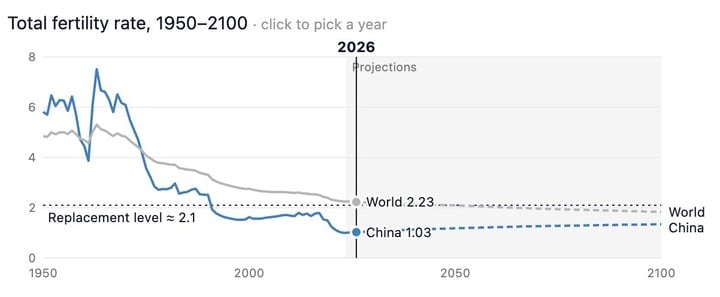
A sharp decline in the school-age population and a relative abundance of university degrees will further ease the tension of "one exam decides your fate," and diverse assessment and vocational education pathways will become easier to accept.
At present, as generative AI begins to challenge the credibility of standardized exams, policy may be forced to increase the weight of process-based assessment, multiple exam sittings, and practical skills testing.
Of course, as long as the number of applicants exceeds the number of admissions slots, problems will arise. Once the differentiating function of diplomas is diluted, will other screening criteria be fairer, more transparent, and less dependent on family background? Can the expectation of fairness carried by exams find support in a new evaluation system?
What happens to universities when the number of applicants is smaller than the number of admissions slots?
Will young people who no longer need to fight to the death for scores use this to become "whole persons" who question meaning and empathize with others, or will they comfortably outsource their thinking to AI and, in a hothouse fed by algorithms, become a gentle yet hollow generation of digital nomads?
This real final exam has no invigilator, and no cheat codes can be found.