 AIFeed
Article title: Huawei Launches a Large Foldable Phone and a Small Foldable Computer, but 100 Million HarmonyOS Devices Are the Biggest Highlight
Body:
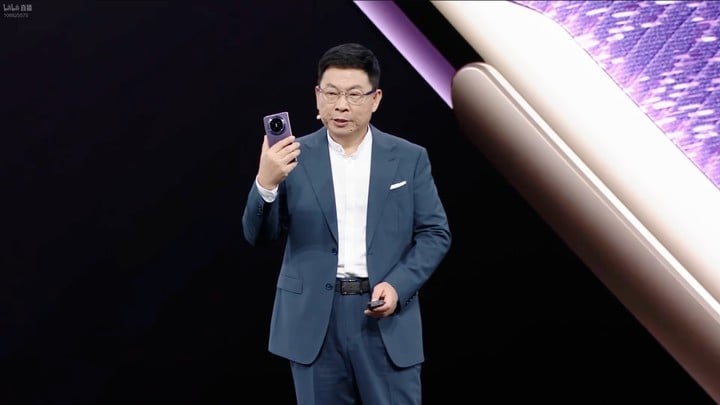
Huawei Launches a Large Foldable Phone and a Small Foldable Computer, but 100 Million HarmonyOS Devices Are the Biggest Highlight
2026-11-24 18:30
This year, Huawei seems to have no intention of stopping its exploration of product forms.
From the Mate XT 2 with an all-new folding structure to the Pura X View, a wide bar phone with a 16:9.5 screen ratio, Huawei has successively launched several products that are quite different from traditional phones. Market feedback also shows that these attempts have indeed found consumers willing to pay.
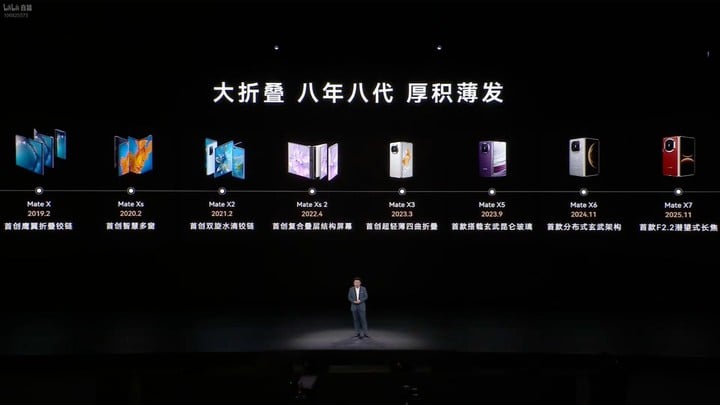
Huawei has clearly tasted the sweetness of new forms as well. After the tri-fold, the wide fold, and the wide bar phone, Huawei has now set its sights on products beyond phones.
Just now, Huawei officially launched its new-generation large foldable phone Mate X8, the thin-and-light-focused Mate 90 Air and WATCH Air, and even brought the small foldable form to computers with the first HarmonyOS small foldable computer, the MateBook Fold S.
Huawei Mate X8: Bigger Screen, Thinner Body
Among them, as one of the headline products of this launch event, the Mate X8 has further changes in screen ratio, body thickness, and crease control.
iFanr also got its hands on the Mate X8 in the Qingyun Brocade colorway right away.
Picking up the Mate X8, the most obvious impression is that it increasingly feels like an ordinary bar flagship. The outer screen is much wider than the previous generation, and combined with the thinner and lighter body, when folded it basically requires no change to your usual bar-phone habits for browsing Xiaohongshu or replying to WeChat messages.
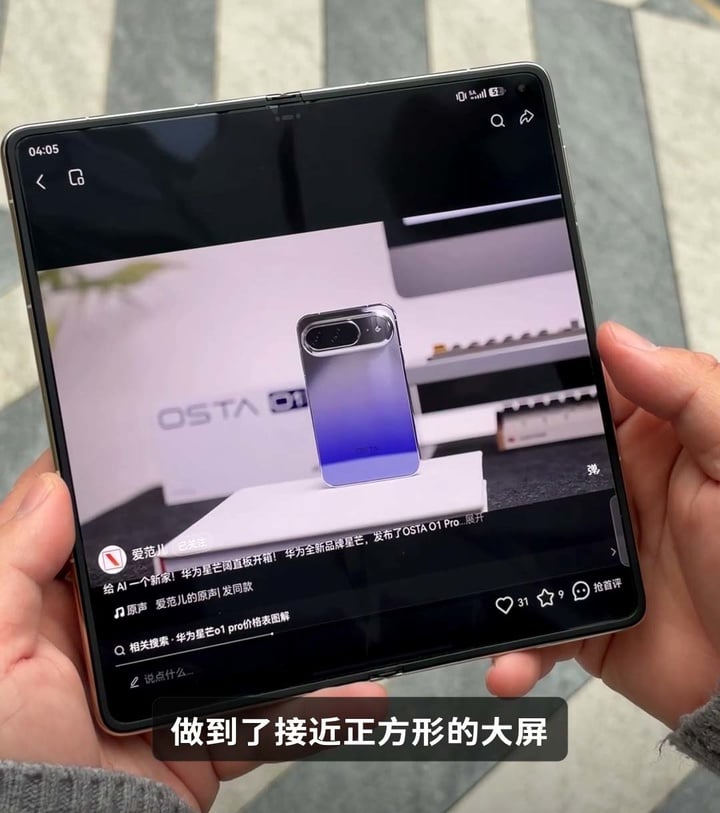
After unfolding, the crease this time is also very shallow. We deliberately observed it from several angles, and during normal use with the screen on, it is already hard to notice. The anti-reflection performance of both the inner and outer screens is also good; when browsing web pages or viewing photos outdoors, the picture remains clear and transparent.
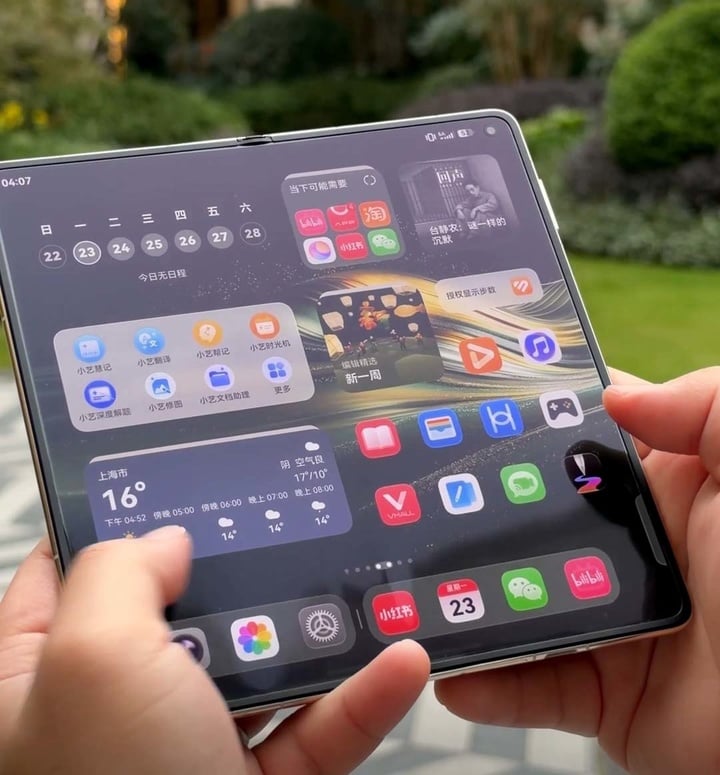
For more hands-on impressions of the Mate X8, stay tuned for iFanr's detailed review to follow.
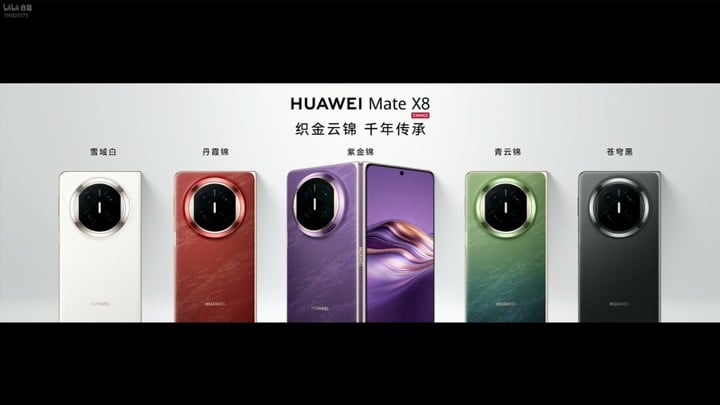
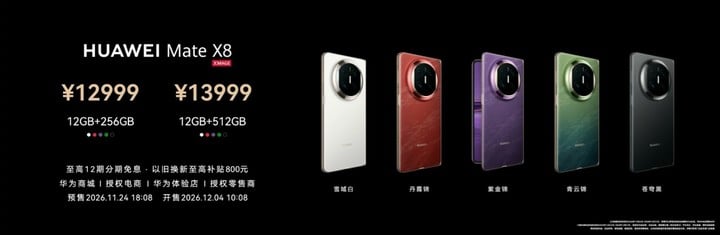
The Mate X8 comes in five colorways: Zijin Brocade, Qingyun Brocade, Danxia Brocade, Sky Black, and Snow White. The camera module continues the Mate X series' signature Cosmic Star Ring design.
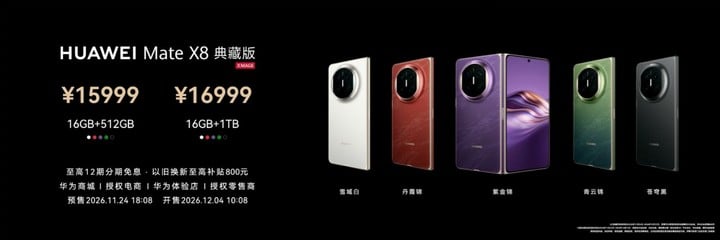
Among them, the three colorways with "Brocade" in their names use a woven-gold cloud brocade craft, with 14 layers of processes stacked on the entire back panel, yet the thickness is less than 0.4mm. The Collector's Edition also features the same yttrium crystal gemstone camera ring as the Mate XT series.
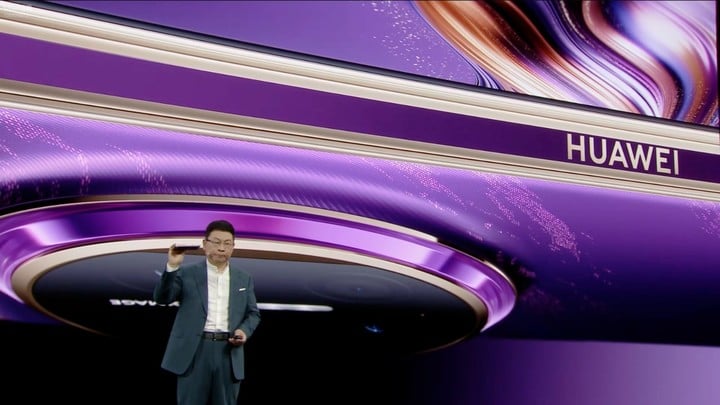
In addition to the back design, the two screens on the front of the Mate X8 have also seen quite a few changes.
According to data disclosed by Huawei, about 80% of large foldable phone users' usage time occurs on the outer screen. Therefore, whether it can be as usable as an ordinary phone when folded is actually quite important for large foldables.
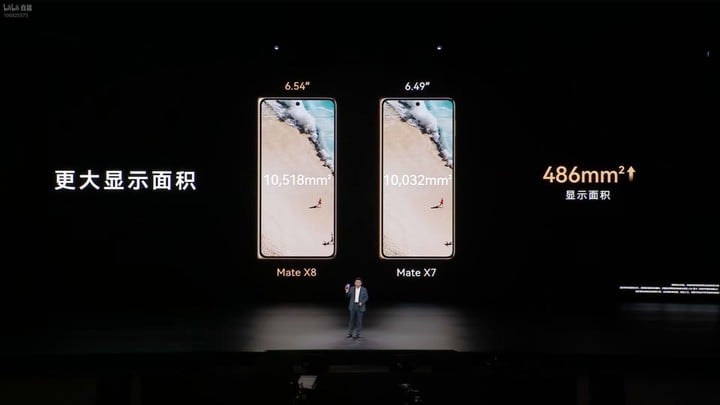
The previous generation Mate X7's outer screen ratio was about 20.4:9, more elongated than an ordinary bar flagship. This time, Huawei widened the Mate X8's outer screen ratio to 19.4:9, and when unfolded it becomes an 8.2-inch inner screen with a ratio close to 1:1.
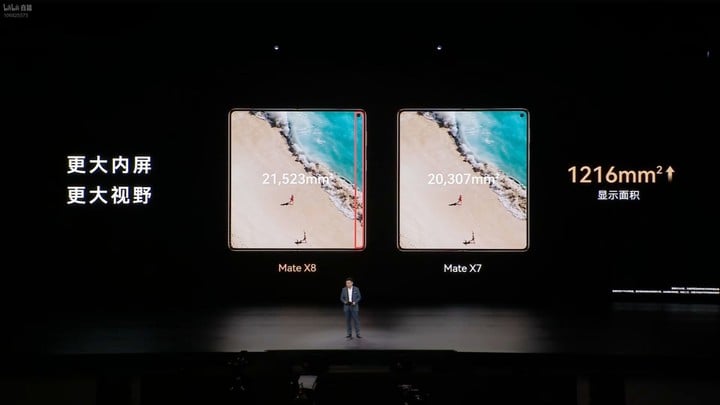
While making the screen bigger, the Mate X8's folded thickness has also dropped from 9.5mm on the previous generation to 8.95mm, and the weight has come down to 239g, on par with bar flagships.
The outer screen uses the same second-generation Linglong Screen as the Mate 90 Pro series, with a local peak brightness of 12,000 nits. The inner screen uses a new generation of ultra-high-brightness luminescent material, with a local peak brightness of 8,000 nits.
In addition, Huawei has added a nine-layer flexible anti-reflection coating to the inner screen. According to official data, anti-reflection capability is improved by 70% compared with the previous generation.
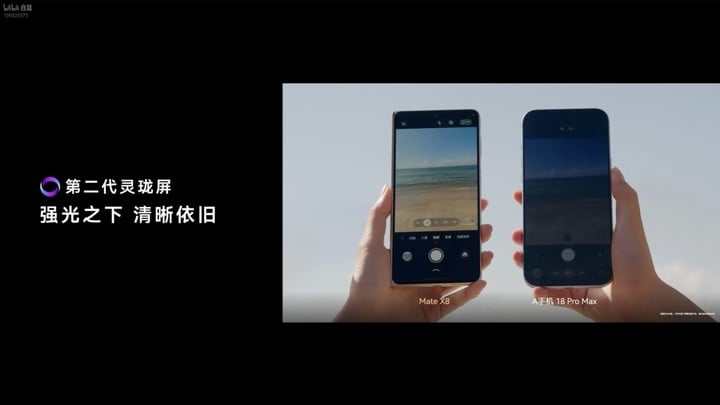
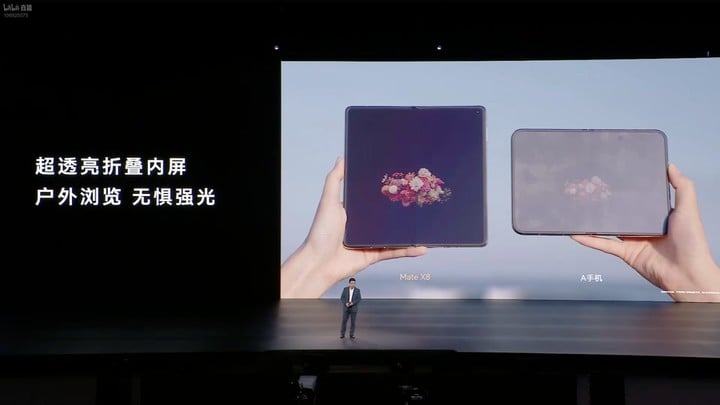
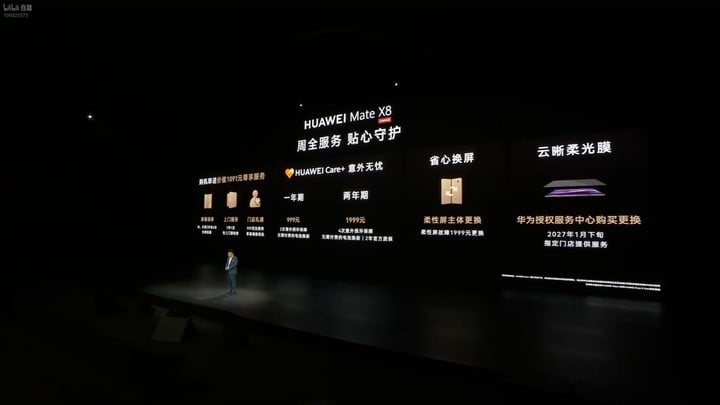
If you prefer the more matte look of the iPhone Duo's nano-texture surface, Huawei officially also offers a "Yunxi Soft Light Film" option for the Mate X8. Starting in late January 2027, you can go to designated Huawei authorized service centers to purchase and have it replaced.
To address the long-standing crease issue of foldable screens, Huawei this time brings "magnetic flattening technology," using magnetic force to pull the screen flat.
In addition to the depression in the middle, the crease on a foldable screen also has a certain degree of bulging on both sides. The Mate X8 adds a three-segment high-strength steel support structure beneath the folding area, while also adding a piece of magnetic composite material only 0.1mm thick to each of the two door panels of the middle frame.
When the phone is unfolded, the support structure pushes up the depression in the center of the screen, while the magnetic force pulls the bulging screen on both sides downward.
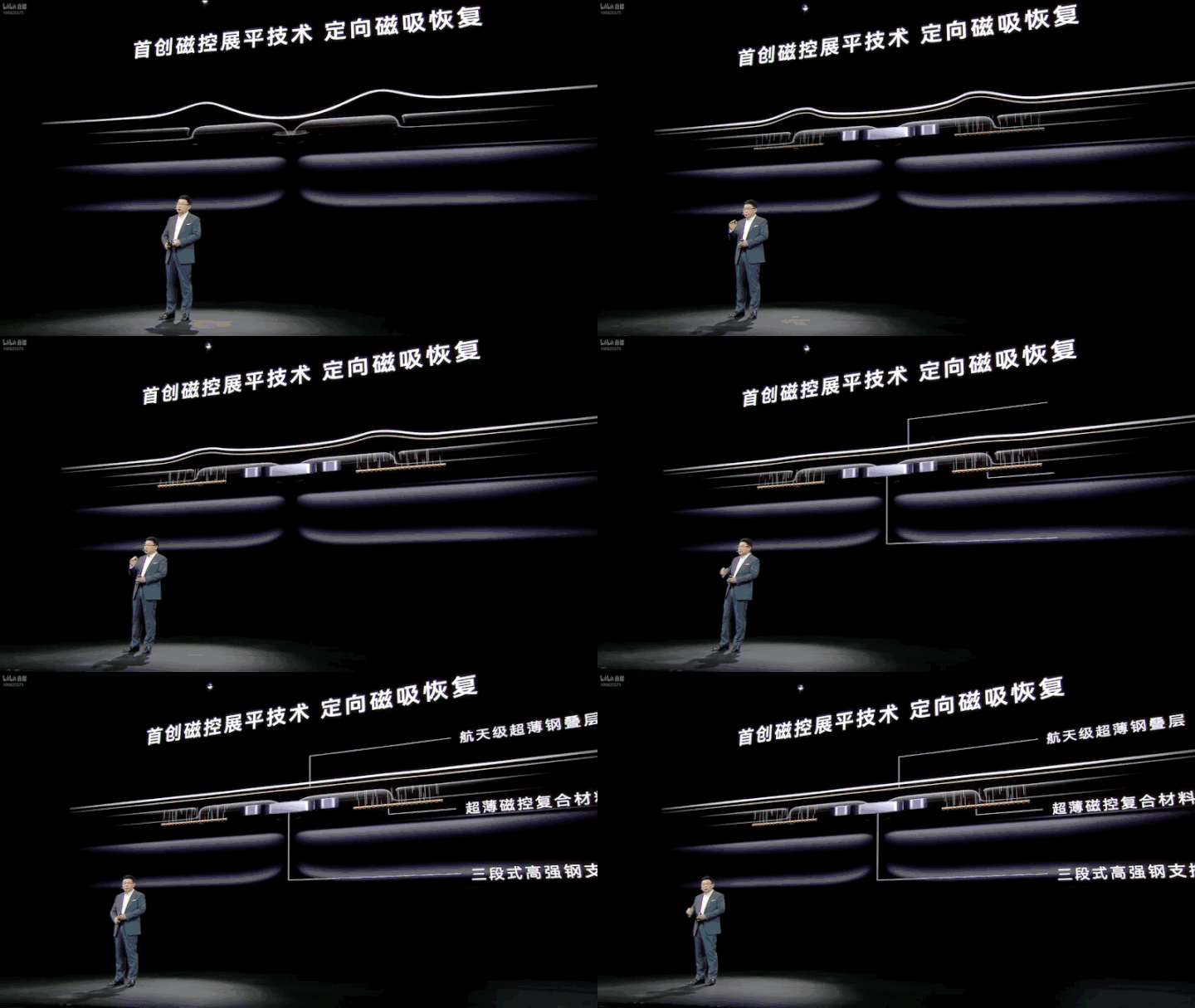
According to data released by Huawei, the Mate X8's inner screen flatness is improved by 90% compared with the previous generation, with the peak-to-valley height difference as low as 15μm.
The new phone also adopts a new generation gearless Tiangong hinge, and the thickness of the UTG ultra-thin flexible glass has also increased to 45μm to improve the impact resistance of the screen and hinge.
In terms of performance, the Mate X8 series is equipped with the Kirin 9050 Pro processor and runs HarmonyOS 7.
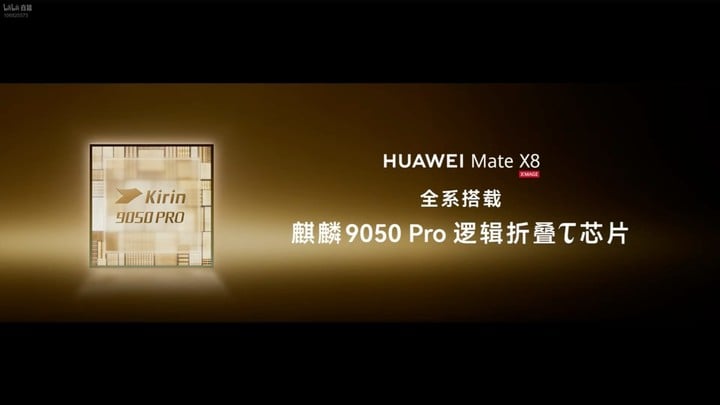
This chip also uses "logic folding" technology, distributing logic modules across upper and lower dies, increasing the transistor count by 30%.
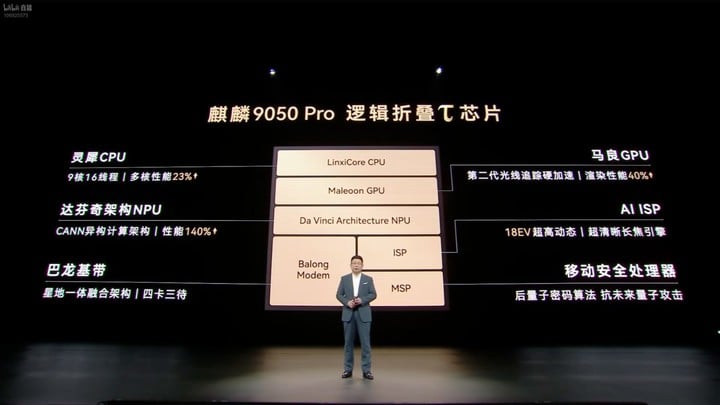
In terms of specific specs, the CPU uses a 9-core 16-thread design. According to data released by Huawei, CPU multi-core performance is improved by 23%, GPU performance by 40%, NPU performance by 140%, and overall device performance by 31% compared with the previous generation.
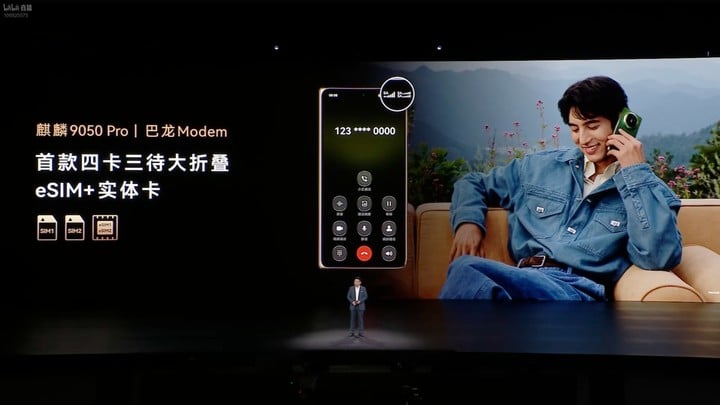
In terms of communications, the Mate X8 supports combined use of physical SIM cards and eSIM, achieving four cards and three standby. Battery capacity has also increased by 600mAh over the previous generation, reaching 6200mAh.
In terms of imaging, both the Mate X8 standard edition and the Collector's Edition are equipped with a 50-megapixel main camera supporting continuous variable aperture. The standard edition uses a 1/1.56-inch sensor with an aperture range of F1.4–F4.0; the Collector's Edition uses a larger 1/1.28-inch sensor with an aperture range of F1.49–F4.0.
Both models are also equipped with a 50-megapixel periscope telephoto camera supporting 3.5x optical zoom and an F2.2 aperture, as well as a 40-megapixel ultra-wide-angle camera and a third-generation Red Maple original-color camera.
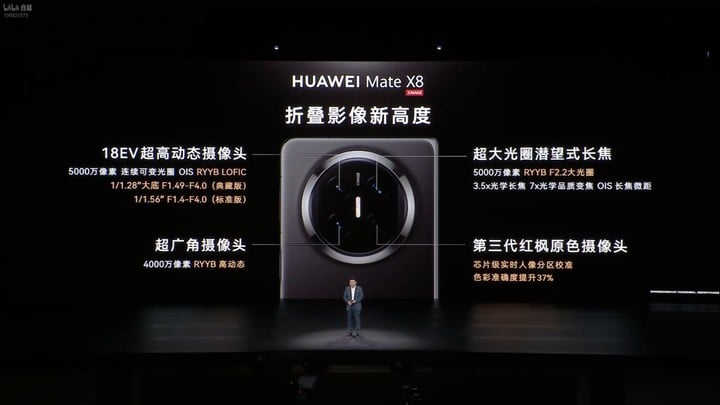
This time, Huawei has added chip-level real-time portrait zone calibration technology for portrait shooting, which can process skin tones and environmental colors separately, and works for both photo capture and video recording.
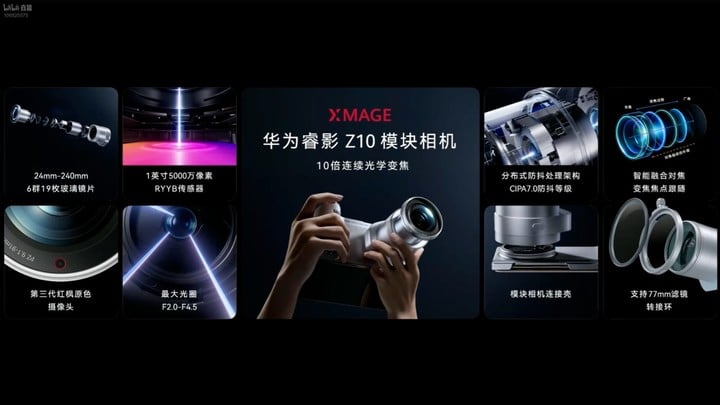
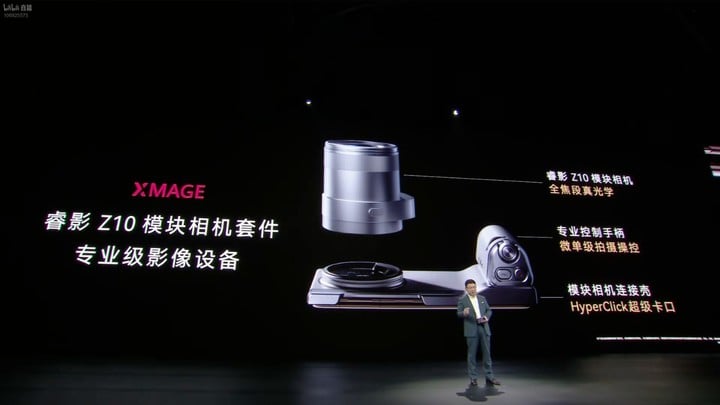
The Mate X8 series supports the "Ruiying Z10" modular camera previously unveiled alongside the Mate 90 series, connecting to the phone via a dedicated attachment case with the HyperClick super mount and a USB-C port. Now, foldable phones can also deliver a "mirrorless"-style shooting experience.
Thanks to the foldable form, the Mate X8 also offers more flexible framing methods when shooting. For low-angle shots, you can use the lower half of the phone for waist-level framing; for high-angle shots, you can switch to the upper half to check the frame.
With the professional photography app "Wonder Camera" on HarmonyOS, users can also use exposure aids such as histograms, zebra stripes, and false color, as well as professional shooting features such as custom LUTs, RAW, and Log.
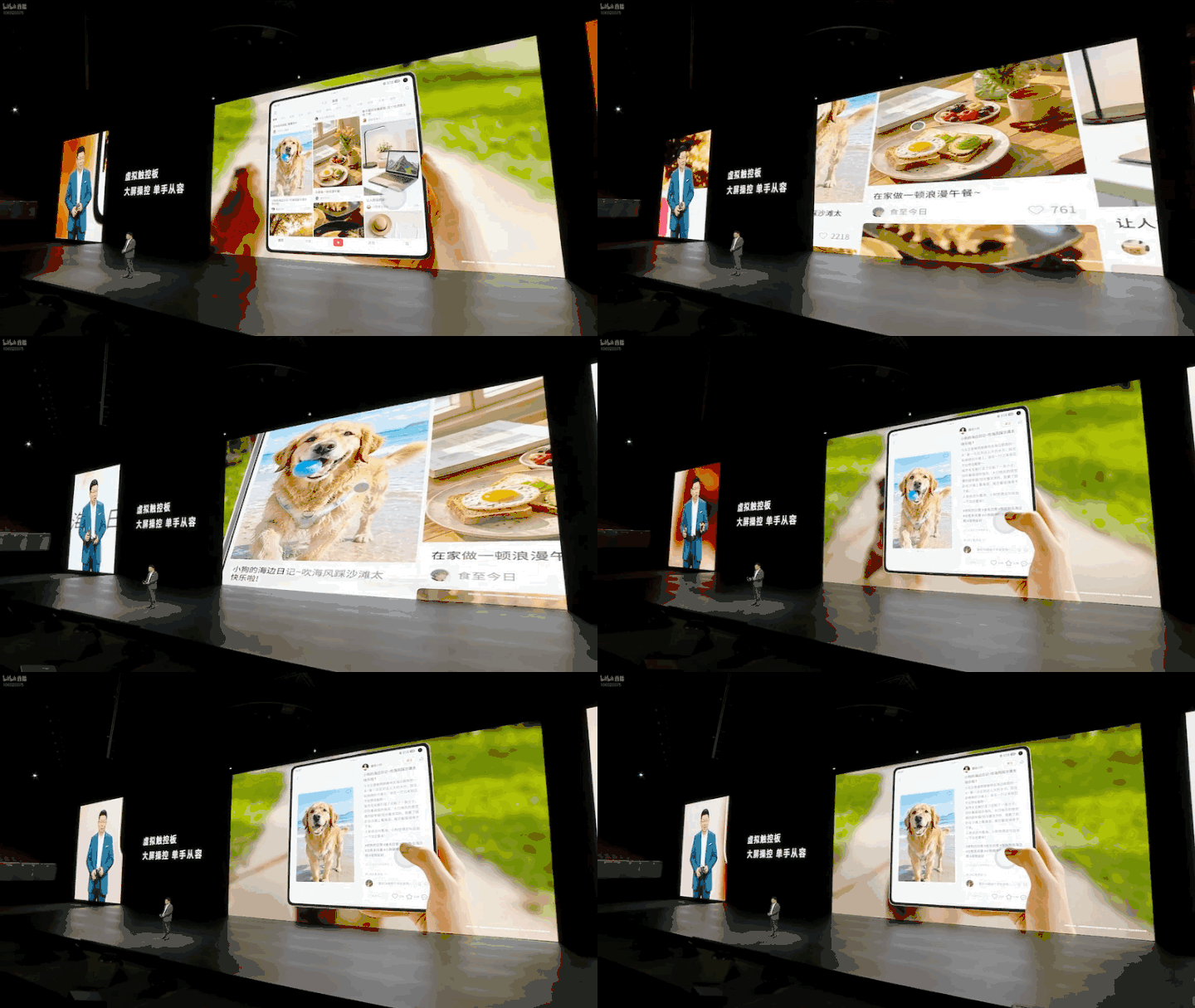
On the software side, the Huawei Mate X8 adds a virtual trackpad feature this time, making it easier to operate the unfolded large screen with one hand.
For example, on the subway, with one hand holding the handrail and the other holding the unfolded foldable phone, it's rather inconvenient to tap content on the other side of the screen.
The Mate X8 adds a trackpad-like area below the screen, so you can use your thumb to move the cursor, tap content on the screen, and also drag to scroll pages or switch images. When not in use, the trackpad can be tucked away to the side of the screen.
Xiaoyi Hui Ji has also reached version 2.0. With the four-microphone array built into the body, the Mate X8 can distinguish different speakers talking at the same time during meeting recordings and transcribe them separately. For colleagues who often attend meetings together, after labeling their names for the first time, they can be automatically recognized at the next meeting.
Xiaoyi's ambient AI can remember information users have browsed in different apps. For example, if you see a restaurant you're interested in on Xiaohongshu, then open Dianping or Amap, the shop you just browsed can appear directly in the search suggestions.
According to Huawei, the storage, indexing, and processing of this information are all done locally on the device.
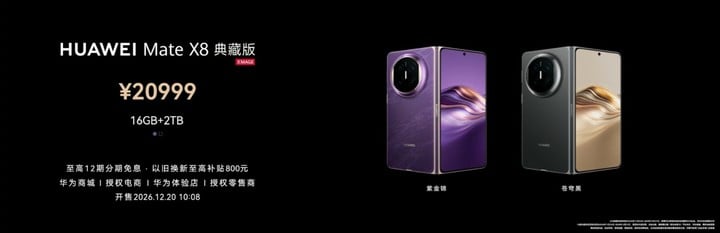
Pricing for the Huawei Mate X8 versions is as follows:
- 12GB + 256GB, 12999 yuan
- 12GB + 512GB, 13999 yuan
- Collector's Edition 16GB + 512GB, 15999 yuan
- Collector's Edition 16GB + 1TB, 16999 yuan
- Collector's Edition 16GB + 2TB, 20999 yuan
The standard edition and the Collector's Edition 512GB and 1TB versions open pre-orders on November 24 at 18:08 and go on official sale on December 4 at 10:08. The Collector's Edition 2TB version will go on official sale on December 20 at 10:08.
Mate 90 Air: A thin and light large-screen bar phone
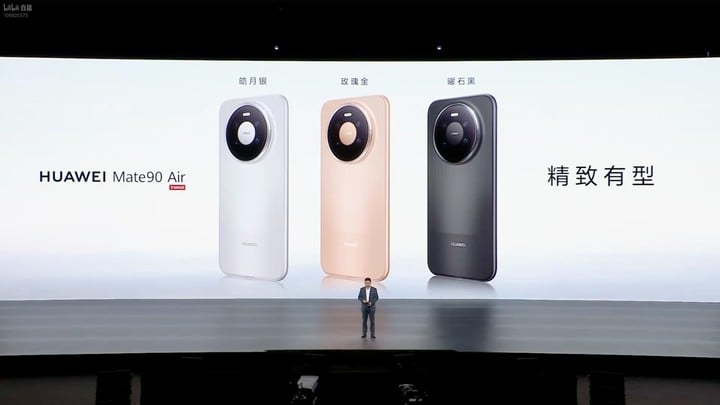
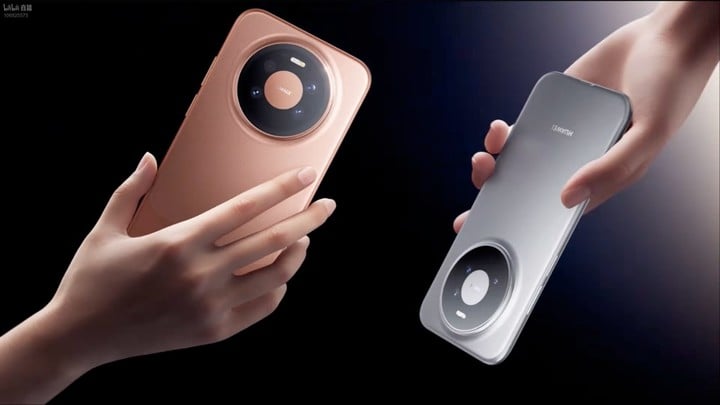
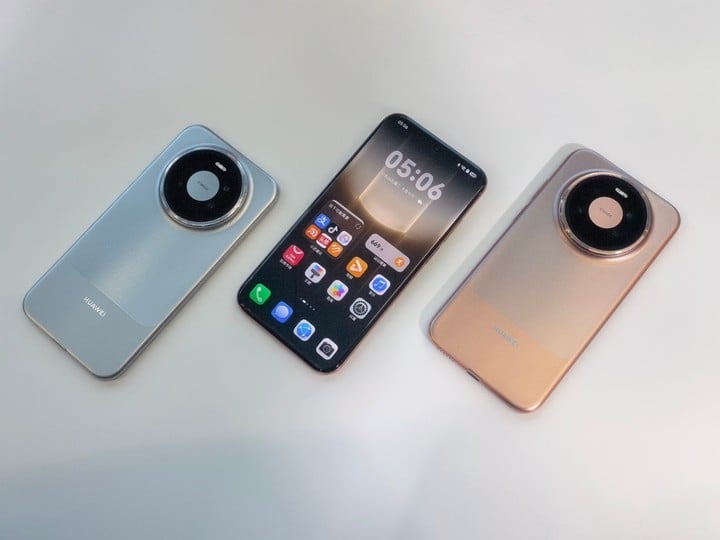
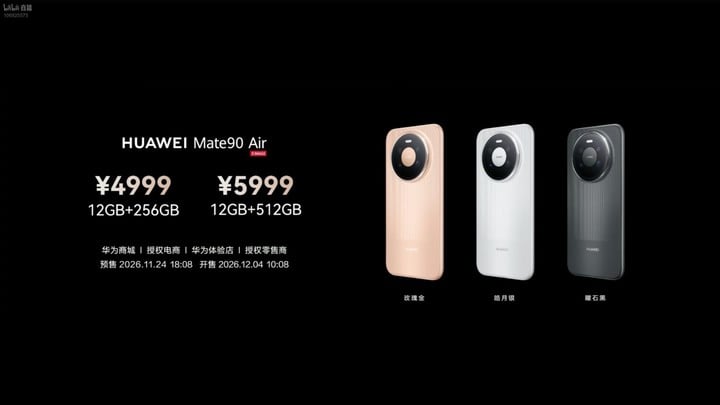
The Mate 90 Air continues the large-screen, thin-and-light approach of the previous Mate 70 Air, adopting a dual-sided quad-micro-curve design, with a body as thin as 6.58mm, a midframe as thin as 3.7mm, and a weight of 208g, offered in three colors: Rose Gold, Moon Silver, and Obsidian Black.
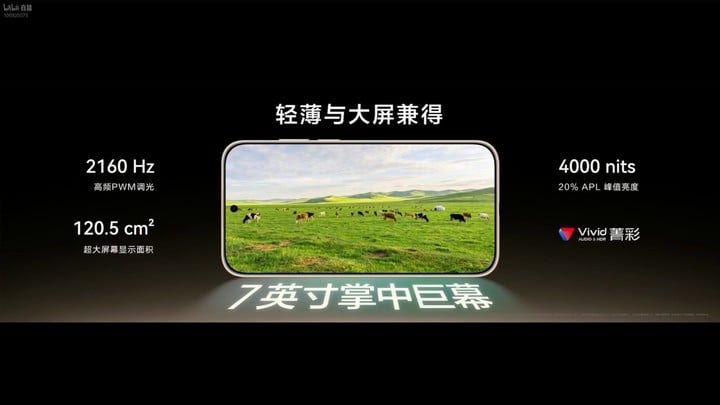
The front is a 7-inch screen supporting 2160Hz high-frequency PWM dimming and HDR Vivid, with a peak brightness of 4000 nits at 20% APL.
Compared with the previous generation's 6.6mm body thickness, the Mate 90 Air is a bit thinner again, while battery capacity remains at 6500mAh. This time the upgrades are mainly focused on performance and imaging.
The Mate 90 Air is powered by the Kirin 9020 processor and runs HarmonyOS 7. According to figures released by Huawei, overall device performance is up 35% over the previous generation, CPU single-core and multi-core performance are up 9% and 36% respectively, and GPU performance is up 18%.
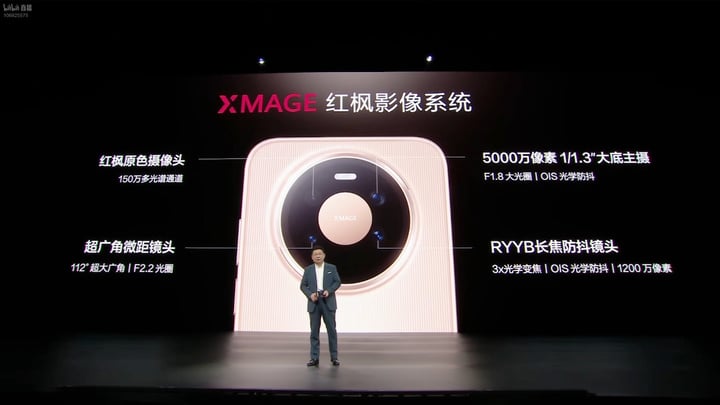
In terms of imaging, the Mate 90 Air features a 1/1.3-inch, F1.8 aperture 50-megapixel main camera, plus a 12-megapixel RYYB telephoto supporting 3x optical zoom, with both cameras supporting OIS optical stabilization. There is also a 112° ultra-wide camera supporting macro shooting and a Red Maple original color camera.
Pricing for the Mate 90 Air versions is as follows:
- 12GB + 256GB, 4999 yuan
- 12GB + 512GB, 5999 yuan
Pre-orders open on November 24 at 18:08, and official sales begin on December 4 at 10:08.
MateBook Fold S: The small foldable of the computer world
Foldable phones today are mainly large folds and wide folds. Laptops/tablets, meanwhile, not only have foldable forms but are also becoming more segmented starting this year.
Last year, Huawei launched the MateBook Fold Ultimate Design, which has an 18-inch screen when unfolded, able to fold a screen close to the size of a desktop monitor and fit it into an ordinary laptop bag.
This year, Huawei has made a smaller foldable computer, the MateBook Fold S.
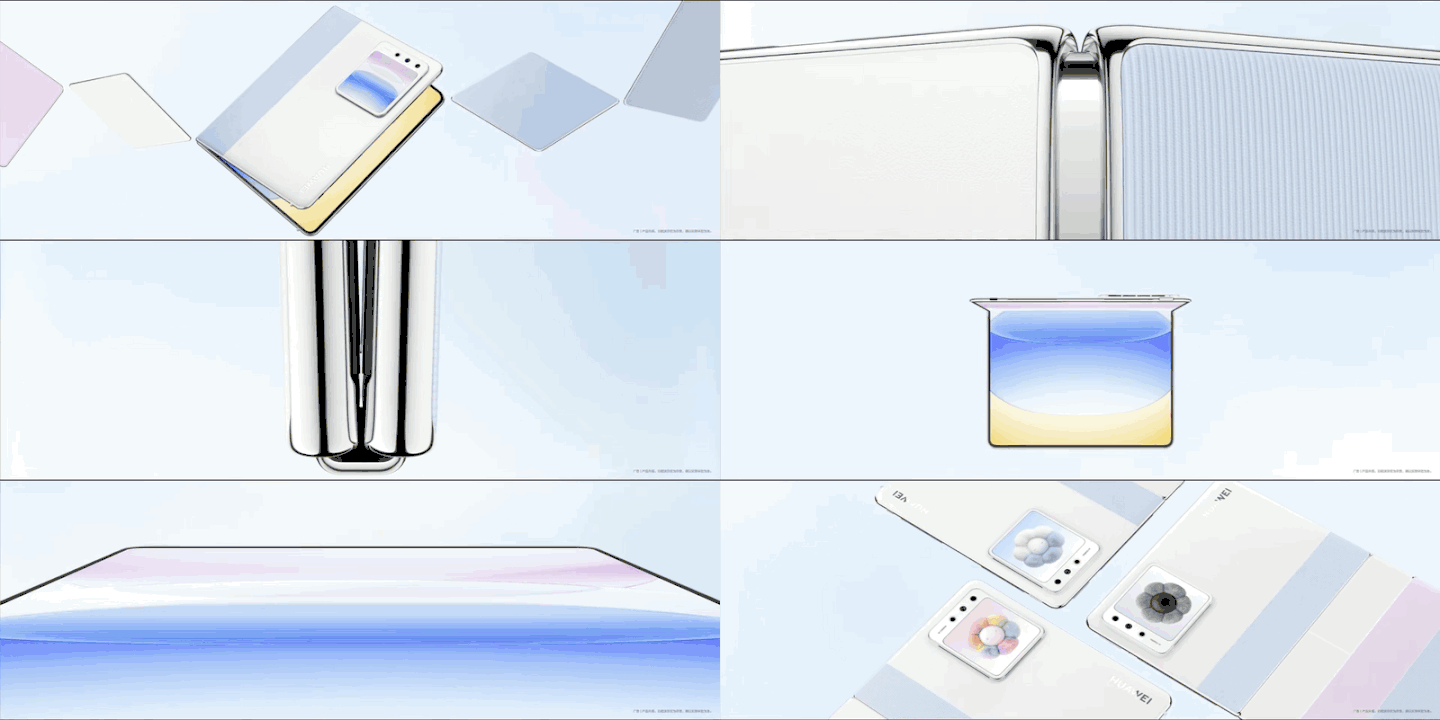
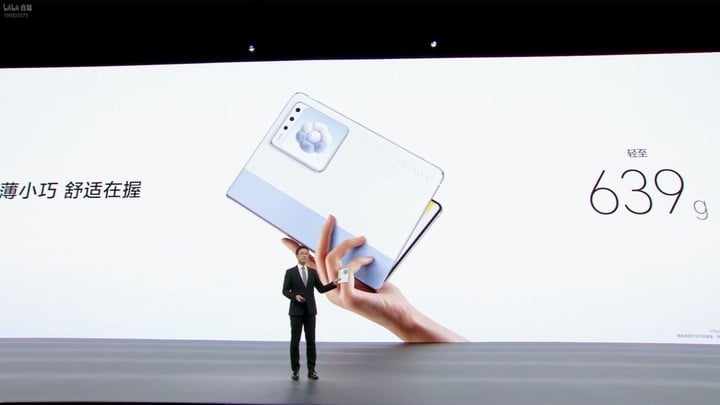
When unfolded, the MateBook Fold S is a 14.7-inch flexible screen; when folded, it measures about 10.2 inches, with a body thickness of 6.49mm and a weight of about 639g, comparable to many large tablets.
Once folded, it can even fit into some small bags normally used for phones and wallets—that's its biggest selling point. In particular, many women and consumers who value portability have a major concern when buying a computer: "can it fit in my bag?" Now that hesitation can largely be dispelled.
Moreover, like the small foldable phones we're familiar with, this computer also has an outer screen, which Huawei calls the Live small square screen.
For personalized design, the MateBook Fold S offers themes such as cute pets and vinyl records, and adds interactive effects linking the inner and outer screens. For example, a cute pet can move its gaze following the user's operations, and will actively cover its eyes when a password is entered.
Without opening the computer, you can also directly check messages on the outer screen, launch Xiaoyi Hui Ji, or lightly touch the outer screen in the off state with a stylus to jot down some information.
After the lid is closed, ongoing meeting recordings, online meetings, file downloads, and AI tasks can also continue running.
On the system side, Huawei has added a tablet mode to the MateBook Fold S this time.
In PC mode, it, like other HarmonyOS computers, has a complete desktop, window, and file management system, and can run professional office software and development tools.
By swiping horizontally with four fingers, or tapping the switch entry on the taskbar, you can enter tablet mode. The desktop, app market, and interaction methods all switch accordingly, and users can also run tablet apps such as "Honor of Kings" and "Peacekeeper Elite" on this computer.
Switching between the two modes requires no reboot, and originally running tasks can be preserved.
At the launch event, Huawei also demonstrated playing FPS mobile games directly on the MateBook Fold S, with the game reaching 120 frames at high-definition quality. However, tablet mode will not officially launch until a system update in January 2027.
For portability, Huawei has this time even made the keyboard foldable, with 1.5mm of key travel when unfolded, and support for connecting to multiple devices.
When going out without a physical keyboard, you can also type directly on the lower half of the computer's screen. This time Huawei has hidden the virtual trackpad inside the virtual keyboard; when you need to move the cursor, just slide your finger on the keyboard area to bring it up.
Some apps have also adapted to the top-and-bottom split-screen usage. For example, during a video conference, the upper half displays the meeting picture while the lower half can be used for handwritten notes; when gaming, the lower half can display control buttons.
In terms of hardware, the MateBook Fold S is powered by the Kirin XE90 chip, with performance release reaching over 22W.
The inner screen uses a 3:2 ratio OLED panel with a resolution of 3240 × 2160, supporting LTPO 2.0, 1–120Hz adaptive refresh rate, P3 wide color gamut, and HDR Vivid, with a contrast ratio of 2,000,000:1, a peak brightness of 1600 nits, and a three-layer composite UTG structure. The outer screen's peak brightness is 2500 nits.
Unlike most laptops, the MateBook Fold S is also equipped with a 50-megapixel rear camera, while the front is a 12-megapixel camera supporting infrared face recognition.
On the AI side, the MateBook Fold S also supports the previously launched "Xiaoyi Work."
In addition to remotely assigning tasks to Xiaoyi on the computer via phone, users can also have Xiaoyi read messages and documents in apps such as Feishu and DingTalk through connectors.
Xiaoyi also supports browser automation and scheduled tasks, such as automatically visiting several specified websites every morning, collecting information, and compiling it into a morning briefing.
The MateBook Fold S comes in three colors: Phantom Night Black, Skyline White, and Cloud Sea Blue, and goes on official sale on November 27 at 10:08. Pricing for the versions is as follows:
- 16GB + 256GB, 14999 yuan
- 16GB + 512GB, 16999 yuan
Article title: Huawei Releases Large Foldable Phone and Small Foldable Computer, but 100 Million HarmonyOS Devices Are the Biggest Highlight
Body:
- 24GB + 512GB, 18999 yuan
- 32GB + 1TB, 22999 yuan
- "Shangxia" co-branded limited edition set (32GB + 1TB), 24999 yuan
All four regular versions come with a keyboard and a sleeve, and the 32GB + 1TB version also includes a stylus. The "Shangxia" co-branded limited edition set additionally includes a co-branded computer bag, and will open for pre-order on November 24 at 18:08.
The Huawei Xingyue foldable keyboard can also be purchased separately, priced at 1299 yuan, on sale December 18 at 10:08.
Huawei WATCH Air: The Thinnest Huawei Smartwatch
This time, Huawei has also brought Air to smartwatches.
The WATCH Air has a body thickness of only 6.9mm and weighs 27g, featuring a sapphire glass crystal and a titanium alloy unibody design.
The front is a 1.92-inch LTPO AMOLED screen with LIPO packaging, bezels of 1.4mm on all four sides, an 86% screen-to-body ratio, and a peak brightness of 3500 nits.
For people who are used to wearing a watch while sleeping, or who often wear long-sleeved shirts, this thickness and weight should be quite comfortable.
In terms of features, the WATCH Air supports sleep analysis, ECG analysis, and one-tap micro health check. It can be paired with HarmonyOS, iOS, and Android phones, and the officially announced battery life for regular use is 5 days.
The WATCH Air comes in three versions depending on the strap:
- Fluoroelastomer strap version, 2499 yuan
- Vegan leather woven composite strap version, 2699 yuan
- Milanese strap version, 2999 yuan
Pre-orders open on November 24 at 16:08, and official sales start on December 4 at 10:08.
In addition, Huawei also announced the new-generation HarmonyOS Smart Home "Boundless Interaction" at this launch event.
The smart switch "Turin," which Huawei teased before the event, adopts a three-stage design, and the small screen in the middle can display lighting themes. Also unveiled at the event was the Huawei Weigan G1 continuous glucose monitoring system.
Looking back at several of Huawei's launch events this year, changes in product form have run through almost the entire year. From tri-fold and wide bar phones to today's small foldable computer and two Air products, Huawei is gradually bringing this product approach beyond phones.
While continuing to advance upgrades in performance, imaging, communications, and other technologies, Huawei is also trying to meet more segmented usage needs through different product forms.
For example, making a large foldable phone feel closer to a regular bar phone when folded, making a smartwatch lighter to wear while sleeping, or making a computer with a full desktop system fit into the small bag you carry when going out. These changes also give consumers more reasons to choose a product.
And just before this launch event, the HarmonyOS team also published an open letter announcing that the number of phones, tablets, and computers equipped with HarmonyOS 5, 6, and 7 has officially exceeded 100 million units.
As the HarmonyOS ecosystem gradually matures, applications and experiences across different devices have also begun to share more in common, and cross-device ecosystem integration has become more seamless.
From today's MateBook Fold S, we can also see some of the new changes brought by Huawei's efforts to build the HarmonyOS ecosystem over the past few years: when computers and tablets can share a single application ecosystem, hardware design no longer has to be limited to traditional product forms.
Over the past few years, Huawei has invested considerable effort in chips and operating systems, and the new products launched one after another this year also show us another possibility for how this technological accumulation can be reflected in product design.