 AIFeed
Article title: Hands-on with Xiaodou: Behind Proactive Task Handling, AI Is Reaching Everyone
Body:

Hands-on with Xiaodou: Behind Proactive Task Handling, AI Is Reaching Everyone
2026-11-24 19:04
Over the past two months, Personal Agents have been emerging as a new battleground for the global AI industry.
In September this year, Meta launched its personal agent Muse. According to Sensor Tower statistics, just 40 days after launch, Muse's downloads in the United States surpassed 10 million, exceeding ChatGPT's performance in the U.S. over the same period after its launch.
And just today, Doubao also joined this competition with its personal agent product "Xiaodou." Currently, Xiaodou is available on an invitation-only basis, and it is reported that the related capabilities will gradually be rolled out on the main Doubao app in the future.

Similar to Muse, Xiaodou focuses on proactive service and continuous task handling, while relying on Douyin's content, e-commerce, and life services as well as the Feishu office ecosystem to further extend AI's task-handling capabilities into the daily lives of domestic users.
After actually trying it out, I found that compared with the Doubao of the past that answered every question, Xiaodou is better at proactively identifying needs and worrying on the user's behalf. If the ambition of large models is to understand the entire world, then Xiaodou's ambition is to proactively step into everyone's life, take care of their daily necessities, and help a person live their own small life well.
Before Handling Tasks Proactively, Xiaodou First Learned to Proactively Understand You
Opening Xiaodou, you are still greeted by the familiar Doubao image, but the product structure of the entire app has changed noticeably. The four entries at the bottom correspond to Chat, "Guess What You Want," "Help You Follow Up," and "About You."
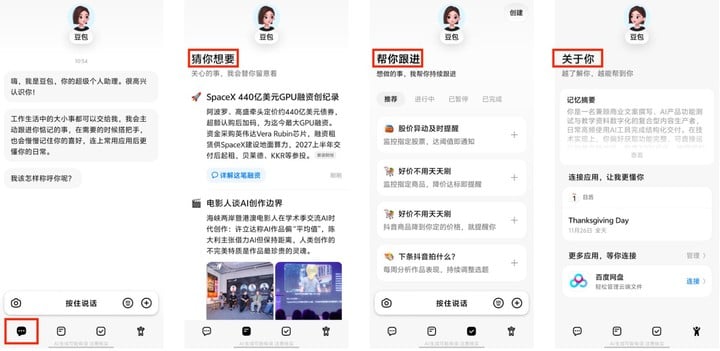
The first page I opened was "About You." After all, no matter how rich an AI's knowledge base is, it still has to figure out who it is serving.
When I opened the memory summary, I even had the illusion of reading my own professional profile. The reason is that I logged into my Doubao account on "Xiaodou," and once the data was connected, it naturally knew everything about me.
For example, Xiaodou knows that I usually write commercial copy and test AI product features, that I like to use AI to generate single-file code that can run directly, and it even recorded that I have recently been testing Verlet integration cloth simulation and retro UI motion effects.
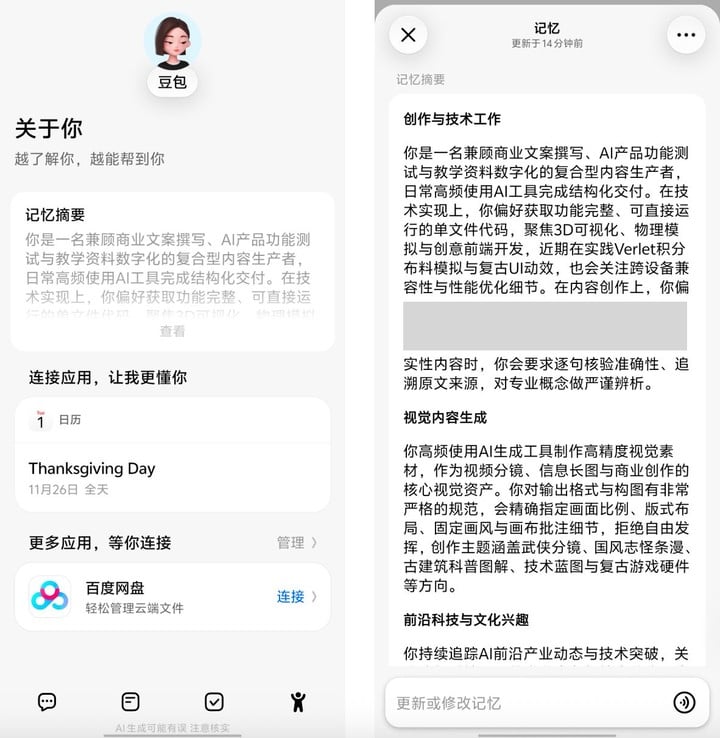
Even though some descriptions deviate somewhat from my actual professional identity, Xiaodou allows users to directly correct memories through natural language and can also proactively update personal preferences.
However, understanding a person solely through chat records always has limitations, because the vast majority of our work and life happens outside the AI chat window.
To this end, Xiaodou also provides app connection capabilities.
In the version I tested, contacts, call records, calendar, SMS, geographic information, Douyin, and Baidu Netdisk can all be connected. In addition, Xiaodou also supports connection scenarios such as Feishu and health, and the specific available capabilities depend on the device and authorization status.
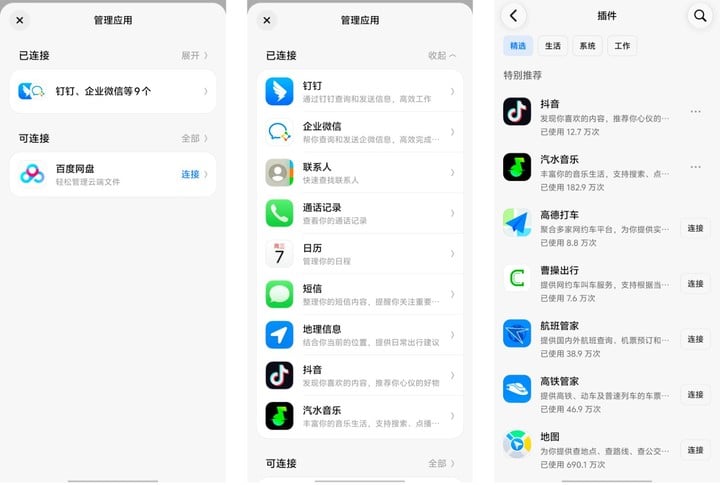
It is worth mentioning that Xiaodou's plugin ecosystem already covers multiple fields such as travel, consumption, office work, and finance. In addition to life services such as Amap Ride Hailing, Flight Manager, and High-Speed Rail Manager, it also includes third-party tools such as WeCom, DingTalk, Tencent Docs, Notion, GitHub, and Wind financial data.
Long-term memory lets Xiaodou know what relatively stable habits the user has, while app connections give it the opportunity to understand the user's current life state. Once the two are combined, the "Guess What You Want" page immediately comes to life.
In the recommendation list, in addition to industry news about Jensen Huang returning to Nvidia, Xiaodou also proactively served up discussions among filmmakers about the boundaries of AI creation, as well as a public course on Chinese architectural history taught by Tsinghua University teacher Wang Guixiang and others.
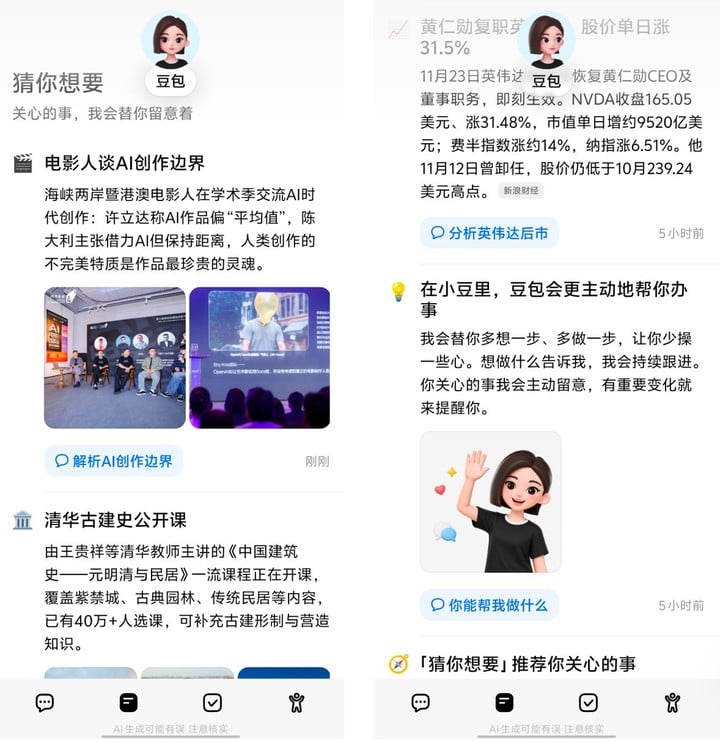
Considering that I also usually test AI video tools and study film and television storyboards, the creative perspective of filmmakers can precisely provide reference for my technical observations.
Of course, there is still room for improvement in the rhythm and content of Xiaodou's proactive push notifications, and how to strike the right balance in proactive service. When to remind, when to stay quiet, and which matters are worth continuously following up on may still require more time to work out with Xiaodou.
After all, an AI that truly understands how to handle tasks proactively must not only have the ability to worry on the user's behalf, but also understand how not to add trouble for the user.
A person's interests are inherently multidimensional, and a Personal Agent should not understand a person merely based on professional identity or a certain interest tag.
Xiaodou also prepares action entries below the recommendation cards: click "Analyze the Boundaries of AI Creation" to continue digging deeper along the topic; when you see a restaurant or weekend activity you are interested in, you can also ask it to compare options and arrange the time.

For Douyin creators, Xiaodou can also combine account performance and vertical category to analyze recent hot topics, organize comment section feedback, and provide topic inspiration for the next video.
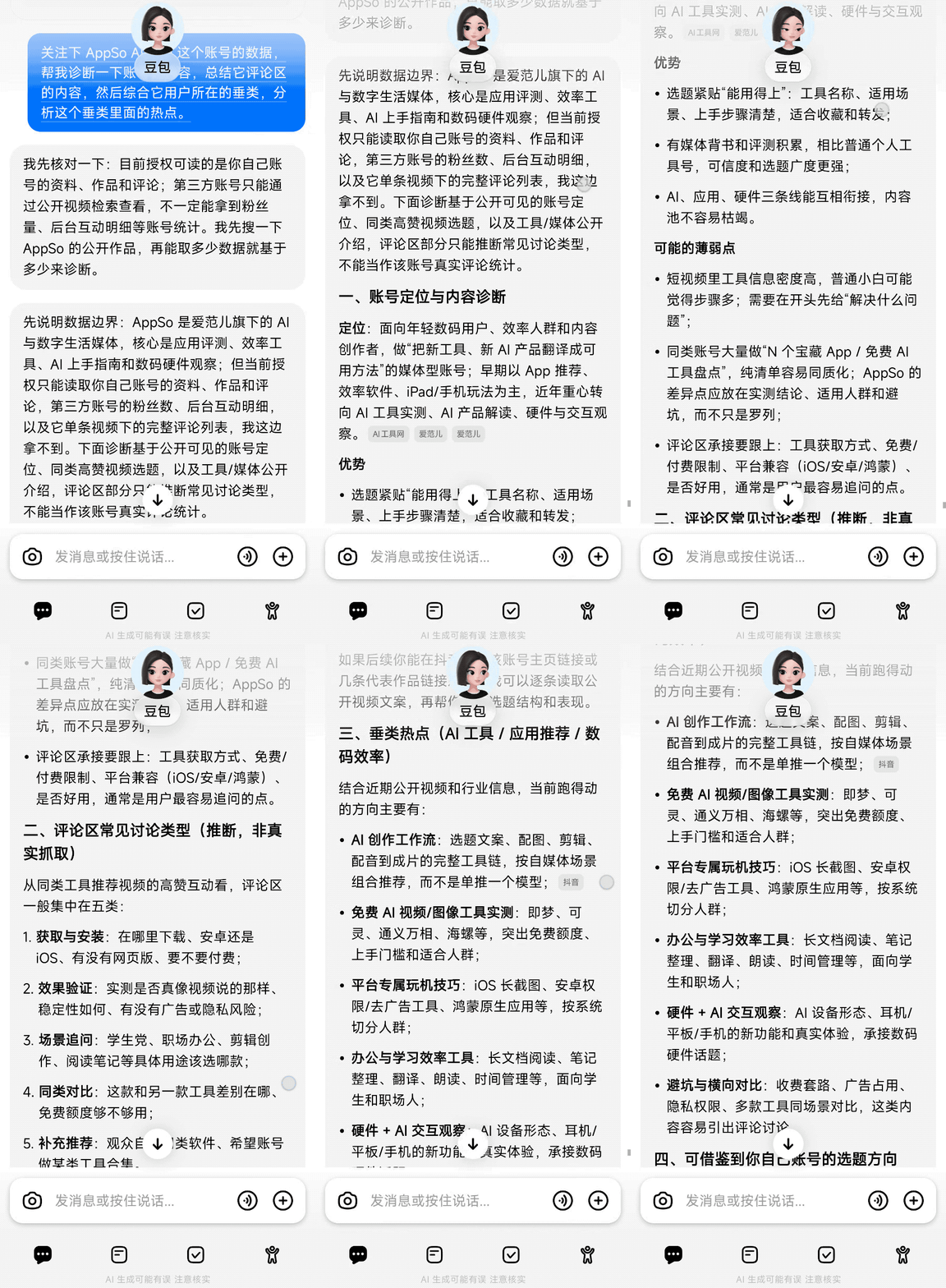
In the past, internet recommendation algorithms were already quite good at predicting what users like to watch, but a Personal Agent also needs to further understand why users need this information and what they plan to do after obtaining it.
The next step of personalized recommendation may be personalized service.
I Take Care of Living Well, Xiaodou Takes Care of Worrying for Me
As everyone knows, today's workers are best at making flags: for example, at two in the morning, drawing up a health plan requiring themselves to go to bed at eleven every night.
To save my own sleep schedule, I asked Xiaodou to create a long-term health management task. After confirming the requirements through several interactive multiple-choice questions, we made a three-part agreement: go to bed before 11:30 every night, get up around 7:30 in the morning, exercise at least three times a week, and generate a health report at 9 a.m. every Monday.
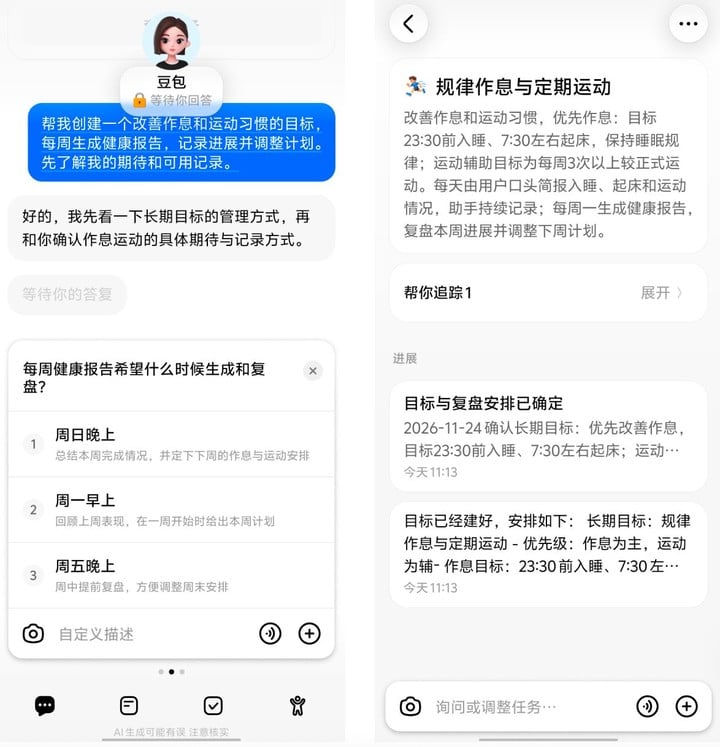
Because it is not yet connected to a health app or wristband, Xiaodou suggested that I record my sleep and exercise verbally every day; on devices that support Apple Health connection, it can also combine sleep and exercise data authorized by the user to stay informed.
After the task was created, an independent task card appeared on the "Help You Follow Up" page, recording the specific goals, execution arrangements, and latest progress, and the task can also be modified at any time through conversation later.
Another feature full of everyday life is product price tracking.
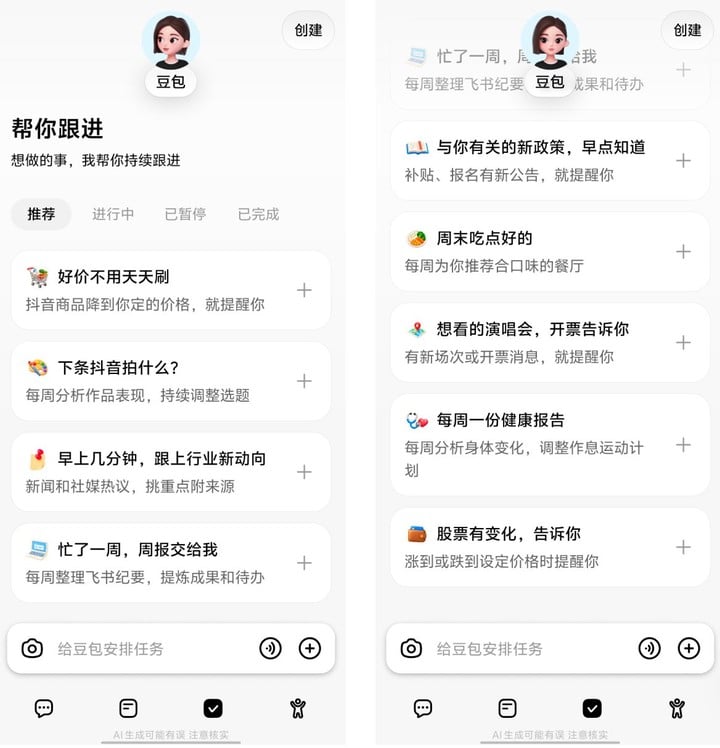
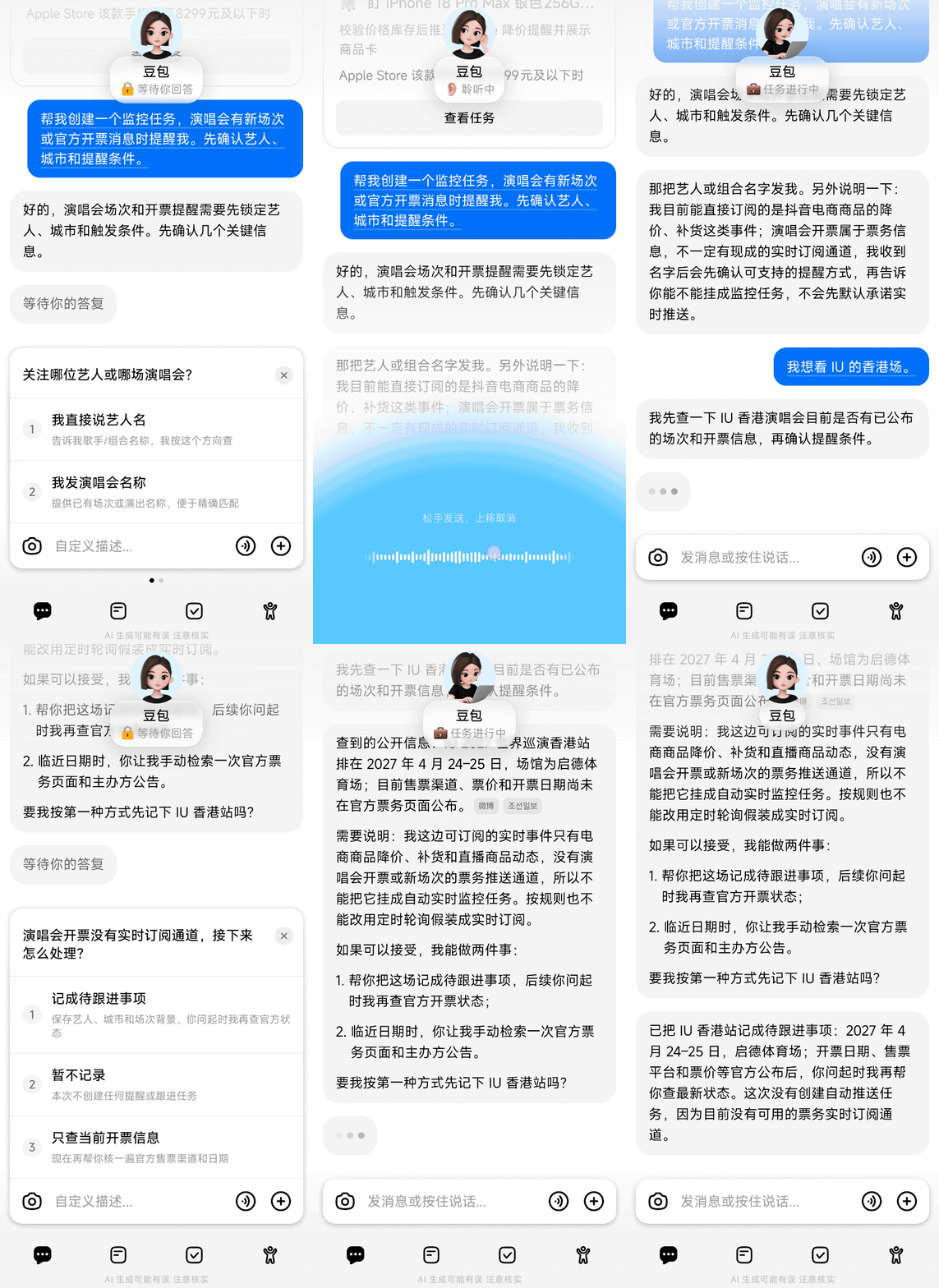
I tried creating a Douyin product price-drop monitoring task, and Xiaodou immediately pressed for details: confirming the product, specifications, and target price. Once the requirement was clear, it could keep a close eye on price changes and report back as soon as the condition was met.
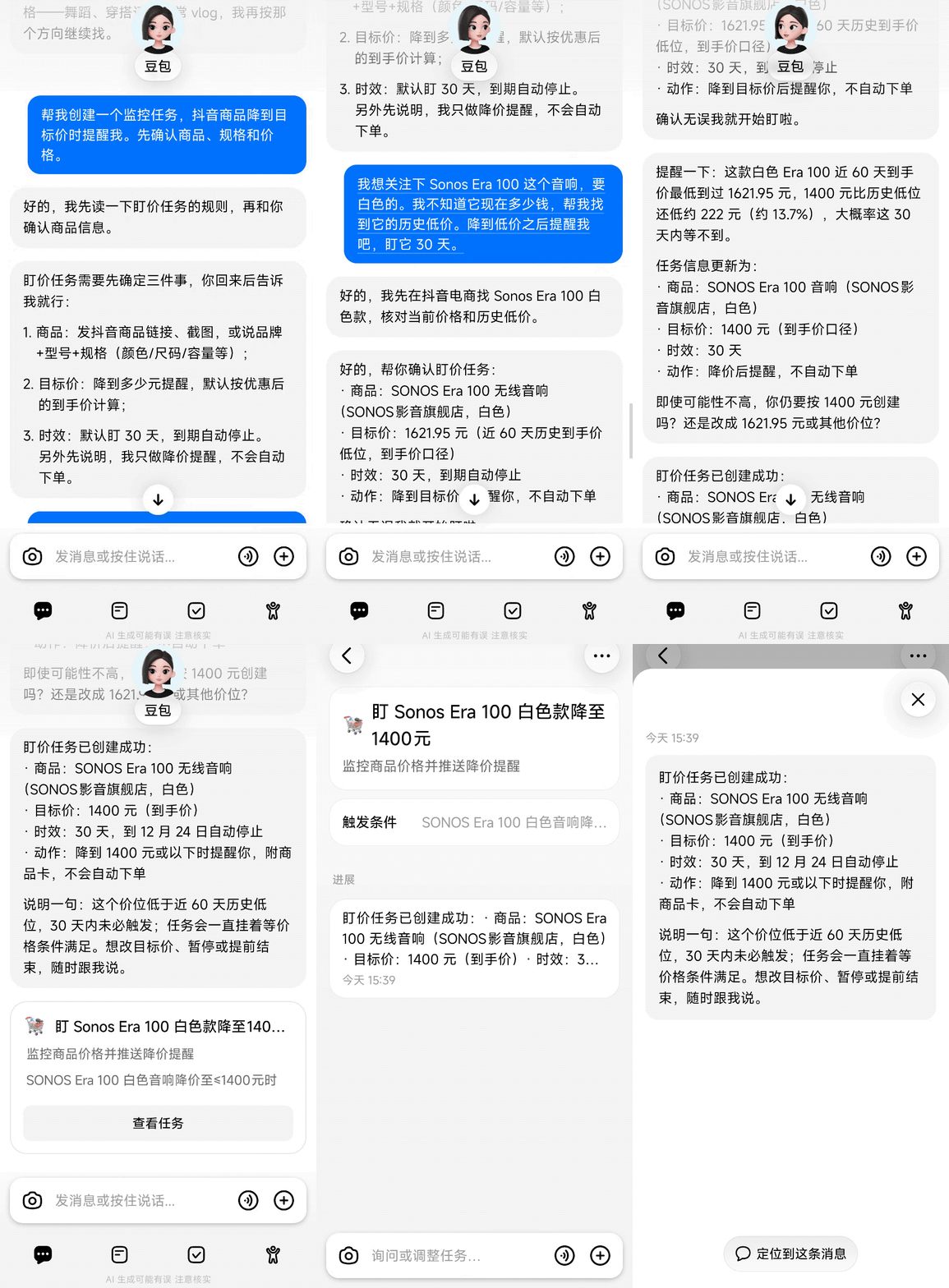
On the "Help You Follow Up" page, I also saw many ready-made task templates, including concert ticket sales reminders, policy announcement monitoring, industry briefings, stock price alerts, and Feishu weekly report organization.
Users can view ongoing, paused, and completed tasks, and can also modify the execution cycle and trigger conditions according to their needs.
Compared with ordinary scheduled reminders, a Personal Agent can also handle information queries and condition judgments. For example, an alarm clock can only remind me to pay attention to concert ticket sales, while Xiaodou can continuously follow relevant news and tell me when there is a new show or ticket sales announcement.
In psychology there is a concept called Prospective Memory, which refers to people remembering things that need to be completed at a certain future time or under a certain condition. Those unresolved matters in life that cannot be completely forgotten will keep occupying the brain's memory.
A personal agent is equivalent to installing an external add-on for prospective memory, allowing users to temporarily set these matters aside. An AI that knows how to live well should not only help people save money and time, but also help people worry a little less.
An AI That Can Handle Tasks Proactively Must Withstand the Test of Daily Necessities
Among Xiaodou's many features, making phone calls on behalf may be what made me feel the task-handling capability of a Personal Agent most.
In the past, asking AI to recommend restaurants usually only produced a list, and whether there were available seats or whether reservations were needed still required contacting the merchant yourself. To experience Xiaodou's task-handling capability, I asked it to call Guangfu Xiangxia Restaurant (Xingang East Road Branch) and ask whether a table for two to three people could be arranged at six that evening.
During the call of about 54 seconds, Xiaodou introduced itself, explained its AI identity and the recording situation, confirmed one by one the available seats, reserved table, and registration information, and finally learned that no reservation was needed and that we could just go to the store directly. The whole process was polite and proper.
The whole process demonstrated two important capabilities of a personal agent in real-world scenarios: adapting on the spot according to the other party's actual answers, and allowing users to trace the AI's execution process throughout.
However, at present Xiaodou's call-on-behalf feature is limited to life service scenarios such as restaurant reservations, courier pickup, repair and cleaning, and travel bookings. It does not yet support calling private numbers or directly entering a phone number to make a call. Users need to provide the merchant name or specific matter to be handled, and Xiaodou will verify it before making contact.
Article title: Hands-on with Xiaodou: Behind proactive task execution, AI is reaching everyone
Body: Integrated with Douyin Local Life, Xiaodou can help users compare options across restaurants—from filtering and group-buy price comparison to making calls on their behalf—and summarize the consultation results.
Despite years of internet development, many issues—such as hotel pet policies, store inventory, and airline services—still need to be resolved by phone. Making calls on behalf of users extends AI's task-execution capabilities to offline scenarios that have not yet been fully digitized, further broadening the service scope of personal agents.
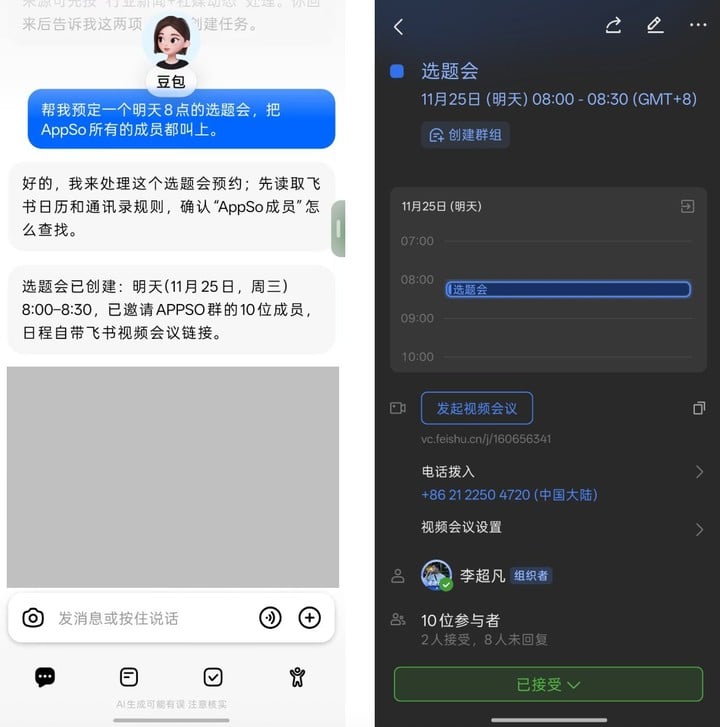
The same applies to office scenarios. After connecting to Feishu, Xiaodou can assist with meeting scheduling, to-do reminders, document organization, and message sending; time-consuming tasks can also run in parallel across multiple threads in the background, with users able to check progress at any time and make the final decision themselves when authorization is needed.
At the same time, the multimodal Q&A capabilities of the traditional Doubao have been retained. I casually took a photo of a cup printed with an anime character, and Xiaodou spotted it at a glance—instantly recognizing Sasuke Uchiha from Naruto.

Whether it is simple photo-based object recognition or complex tasks involving multiple applications and requiring interaction with the real world, Xiaodou retains natural language as the universal entry point. Technology can become increasingly complex, but the people who use it should rightly find it easier and easier.
The second half of Personal Agent is about proactive task execution
In The Dao of Heaven, a group of scientists are willing to hear the Dao in the morning and die in the evening, paying with their lives, in order to learn the ultimate secrets of the universe. The AI industry over the past few years has had a certain science-fiction romanticism reminiscent of Liu Cixin's writing.
From investing hundreds of billions of dollars in building computing infrastructure to tackling mathematical problems and exploring superintelligence, humanity keeps probing the limits of computation and intelligence. But once we possess increasingly powerful intelligence, what exactly do we want this intelligence to do for us?
Half a century ago, the computer industry faced a similar question.
In 1972, computer scientist Alan Kay proposed the concept of the Dynabook, hoping to create a personal computing device that would allow ordinary people and even children to use computers to learn, create, and explore the world.

At that time, computers mainly served research institutions, government departments, and commercial organizations. In the decades that followed, the spread of personal computers brought technology once used for scientific research, weather forecasting, and business computing into millions of households, giving rise to a vast consumer technology market.
From Computer to Personal Computer, humanity gained the right to freely command computing power. But in the half century since, whether with personal computers, the internet, or smartphones, the active-passive relationship between people and technology has never fundamentally changed.
No matter how powerful the tool, people still need to actively open, operate, and use it. Even in the era of large models, while people marvel at AI's omniscient capabilities, they are also learning how to write better prompts and studying how to make AI better understand their intentions.
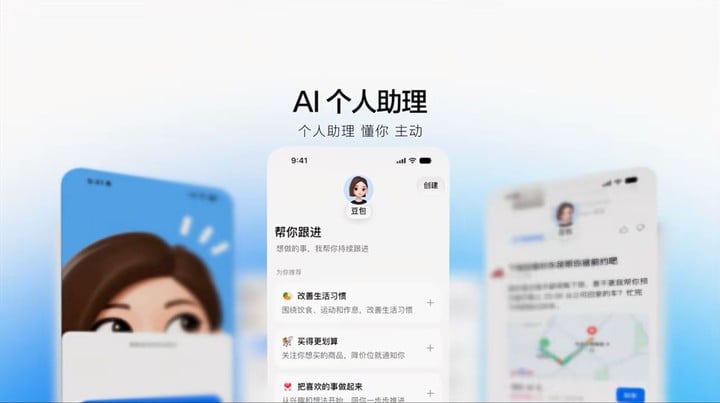
The emergence of Personal Agent may signal that this human-machine relationship is beginning to reverse.
The proactive recommendations, long-running tasks, and application connections that Xiaodou explores all point in the same direction: enabling AI to move from waiting for instructions to discovering needs, from responding to users to proactively serving them, and into the fine details of life.
Of course, Xiaodou still has some details that need polishing—for example, retrieving historical chat records is not convenient enough, task answers are too lengthy and not focused enough, and the breadth of application connections and depth of task execution still need further improvement.
For the vast majority of ordinary people, the day the intelligence revolution truly happens may not be when AI surpasses humans on some benchmark, but when, as we busily go about our own lives, AI already knows what it should do.
When humans no longer need to constantly worry about how to use AI, while AI begins to proactively care about human life, the era of personal intelligence will have truly arrived.
Authors: Li Chaofan, Mo Chongyu, Lin