 AIFeed
Article title: Just now, the new Gemini 4 model is here again, and finally available to everyone
Body:
Just now, the new Gemini 4 model is here again, and finally available to everyone
2026-11-13 07:11
Before anyone had recovered from the shock of 黄仁勋 resigning, Google released a brand-new model: Gemini 4 Hydrogen.
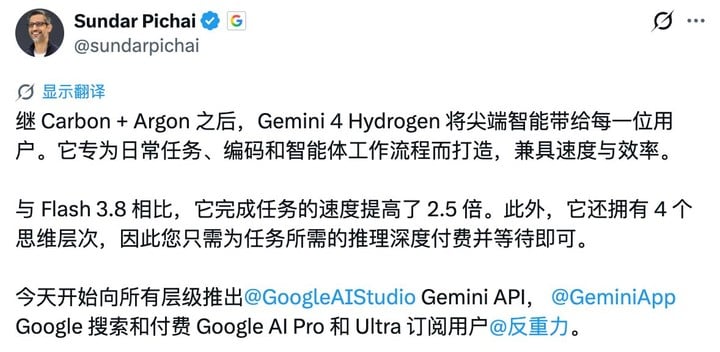
According to the official positioning, Carbon and Argon are mainly aimed at complex reasoning, long-term planning, and highly difficult software engineering.
Hydrogen, by contrast, focuses on faster response speeds, lower usage costs, and more efficient AI Agent execution capabilities, and is better at quickly writing code, calling tools, and handling everyday tasks that require continuous execution.
Performance surpasses Argon, speed up to 2.5 times faster
Although its positioning is different, Hydrogen's actual performance is quite formidable.
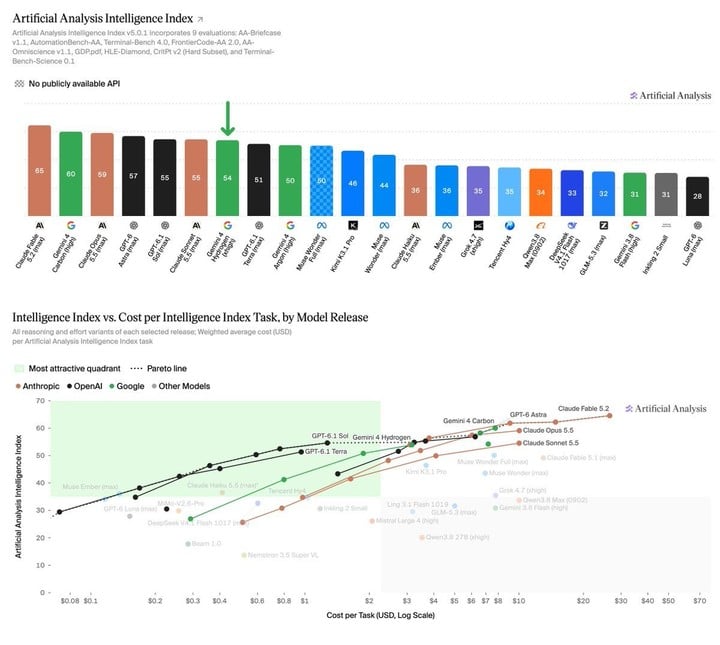
According to Artificial Analysis's evaluation, Hydrogen scores 51 in the default High reasoning tier, surpassing Gemini 4 Argon's 50; after enabling the new xhigh tier, its intelligence index further rises to 54.
This result is only 1 point lower than Claude Sonnet 5.5 and GPT-6.1 Sol at their highest reasoning tiers.
Hydrogen's API pricing is $1.5 per million input tokens and $7.5 per million output tokens, with a uniform price maintained across the full 1 million token context window.
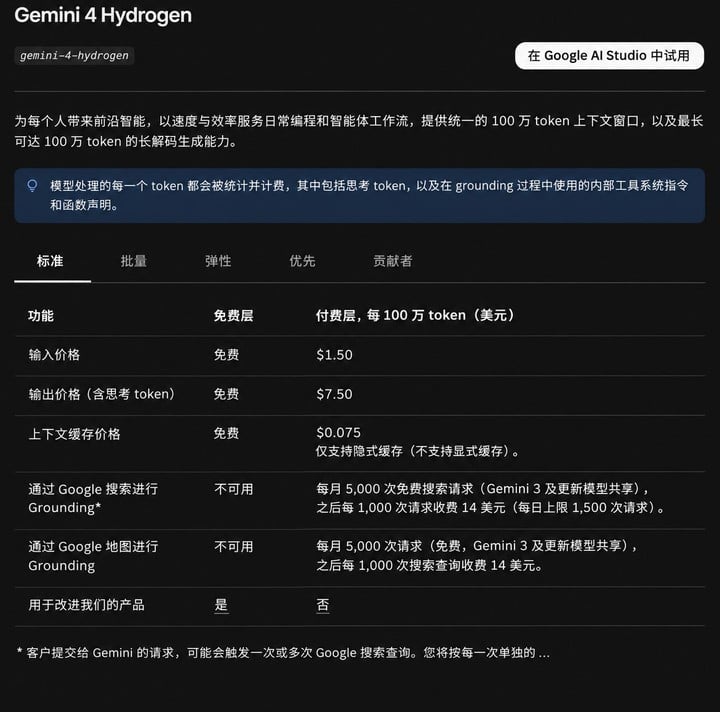
According to Artificial Analysis's estimates, Hydrogen's per-task cost in the xhigh tier is about 32% of Claude Sonnet 5.5's highest tier, though it still reaches about 2.5 times that of GPT-6.1 Sol.
The new model offers four reasoning intensity tiers: Low, Medium, High, and xhigh, allowing users to choose among intelligence level, speed, and cost according to actual needs.
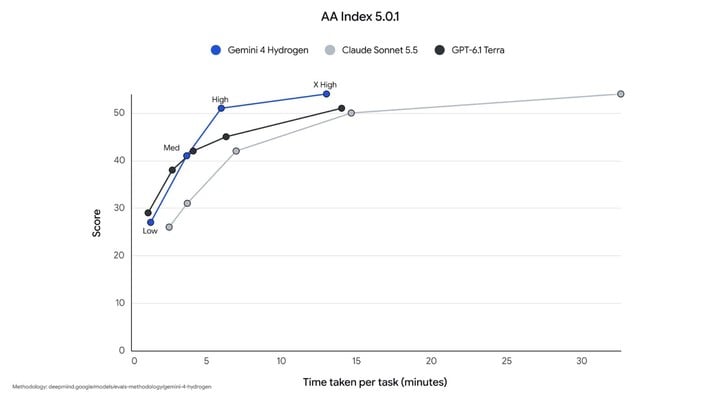
Among them, High is the default tier, while xhigh is the newly added highest reasoning level.
In third-party evaluations, Hydrogen's per-task cost in the xhigh tier is about $3.16, while in the High tier it drops to $1.87, with an intelligence index difference of only 3 points.
For most everyday tasks, the default tier may already be sufficient, and there is no need to use the highest reasoning intensity every time.
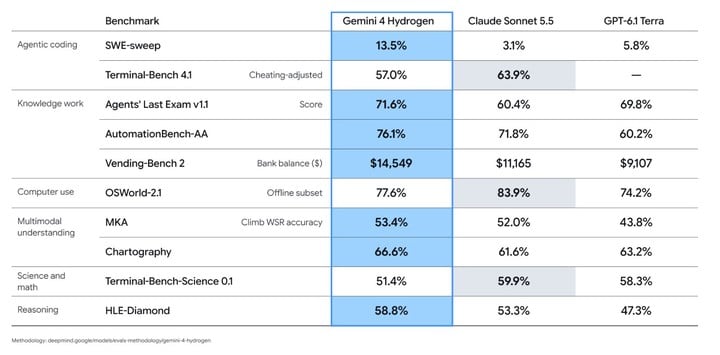
Besides cost, Hydrogen has also made clear progress in speed.
Data released by Google shows that, compared with Gemini 3.8 Flash, Hydrogen completes tasks up to 2.5 times faster in the default High tier.
In the Terminal-Bench 4.1 test, the score rose from 18.2% to 57%, and fabricated information decreased by more than 80%. Artificial Analysis also measured that Hydrogen's output speed is about 200 tokens per second, and in some reasoning tiers it is already on the Pareto frontier of intelligence level and task duration.
Of course, Hydrogen does not lead in every item.
In the Terminal-Bench 4.0 test, it scored 54%, lower than Claude Sonnet 5.5's 64% and GPT-6.1 Sol's 56%.
By comparison, Hydrogen performs more prominently in visual reasoning and reducing hallucinations. Artificial Analysis's AA-Omniscience test shows that its hallucination rate is only 8%, while Claude Sonnet 5.5 and GPT-6.1 Sol are 43% and 52%, respectively.
In addition, Hydrogen supports text, image, audio, and video input, has a 1 million token context window, and supports up to 1 million tokens of output, and can handle materials such as complex PDFs, spreadsheets, charts, and long videos.
With one prompt, Hydrogen can build a city
Benchmarks are one thing, and the actual experience is another. After the model's release, developers quickly began showcasing Hydrogen's generative capabilities, especially in 3D scenes and interactive web pages.
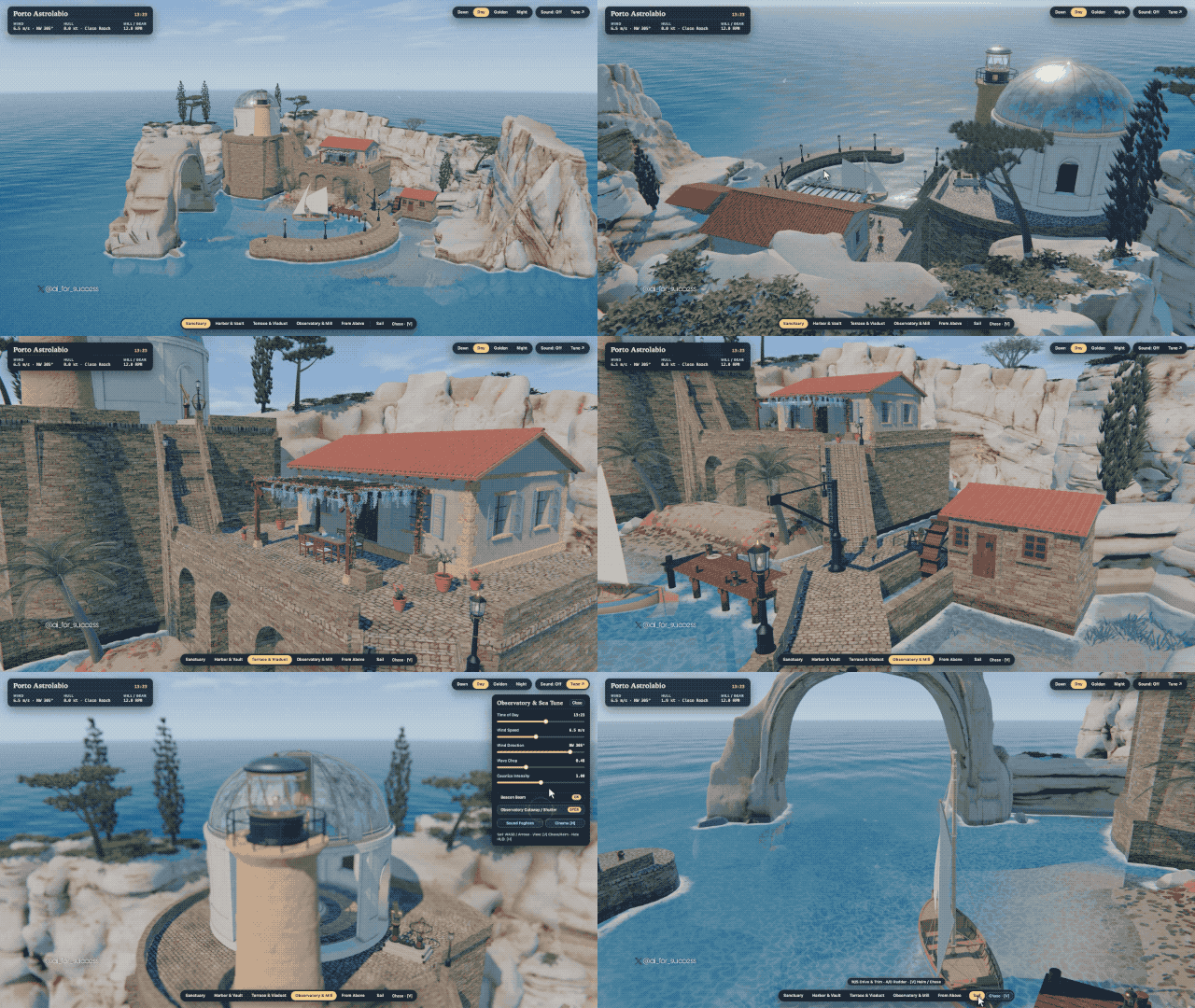
User @ai_for_success used Hydrogen with Swarm in Antigravity to create a 3D harbor called Porto Astrolabio. The demo work includes a complete sailing interface, can switch between day and night, and lets users freely explore the virtual port.
Another user, @LuminaBench, used the highest xhigh reasoning tier to create a 3D seaplane demo, and commented that Hydrogen's performance is already comparable to Argon, while being faster and cheaper.


User @kimmonismus's work is a Three.js futuristic city that can be freely explored in flight.
According to the author, he used the High tier and, after one follow-up prompt, generated procedural skyscrapers, rain effects, and traffic shuttling above the city.

Another user, @abhinavflac, showcased a 3D miniature building-block scene made by Hydrogen, which likewise demonstrated the model's ability to generate three-dimensional content.
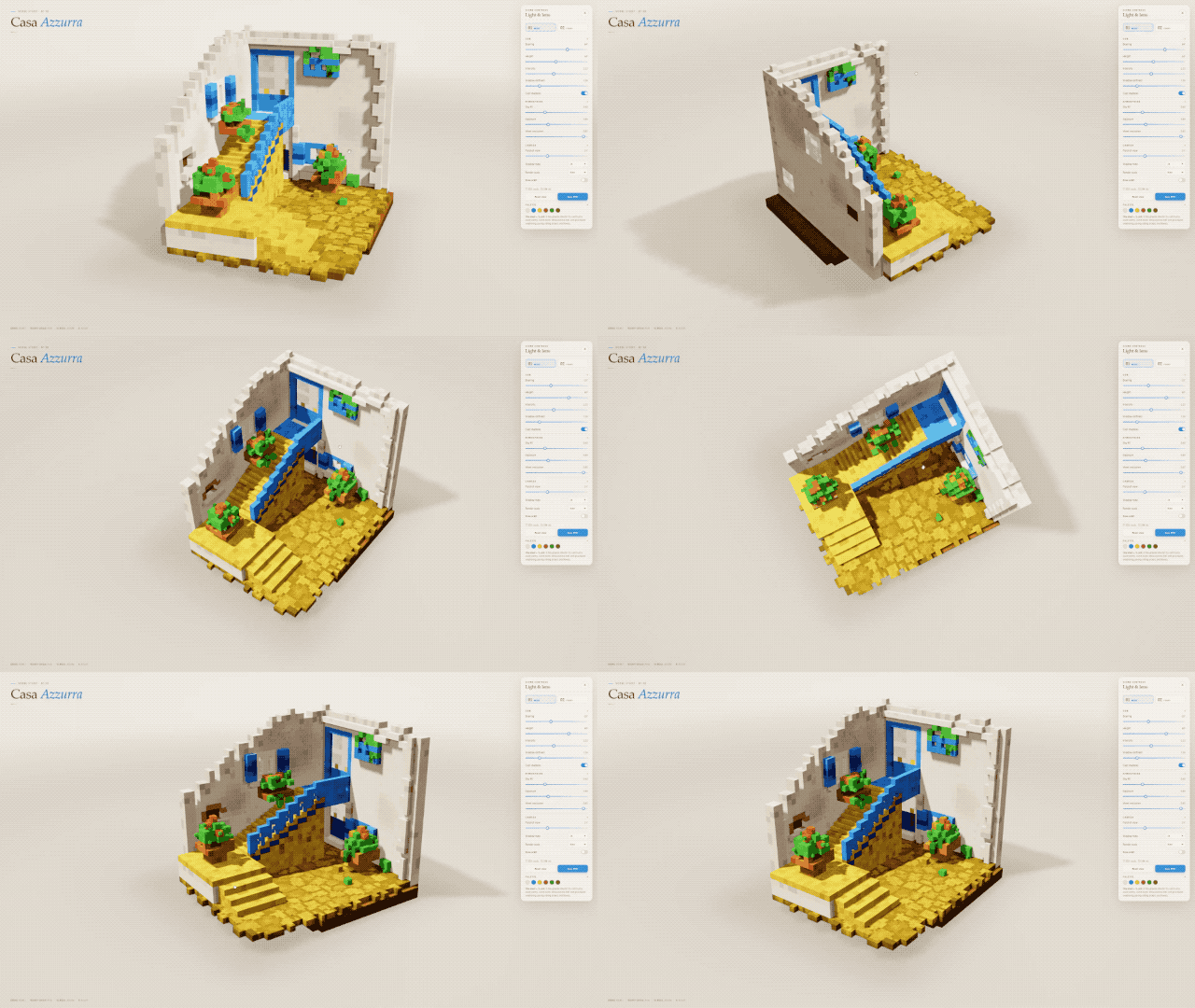
After seeing the works from users, I also prepared several sets of prompts to try using Hydrogen to tackle different types of interactive content.
I asked Hydrogen to make a little ghost adventure game on a late-autumn farm, requiring the character to be able to explore an abandoned cabin, investigate items, and interact with the surrounding environment.

Then I switched to an animated-style countryside cycling game, riding a bicycle full of fresh flowers through rice paddies, with the ability to freely switch between first-person and third-person perspectives.

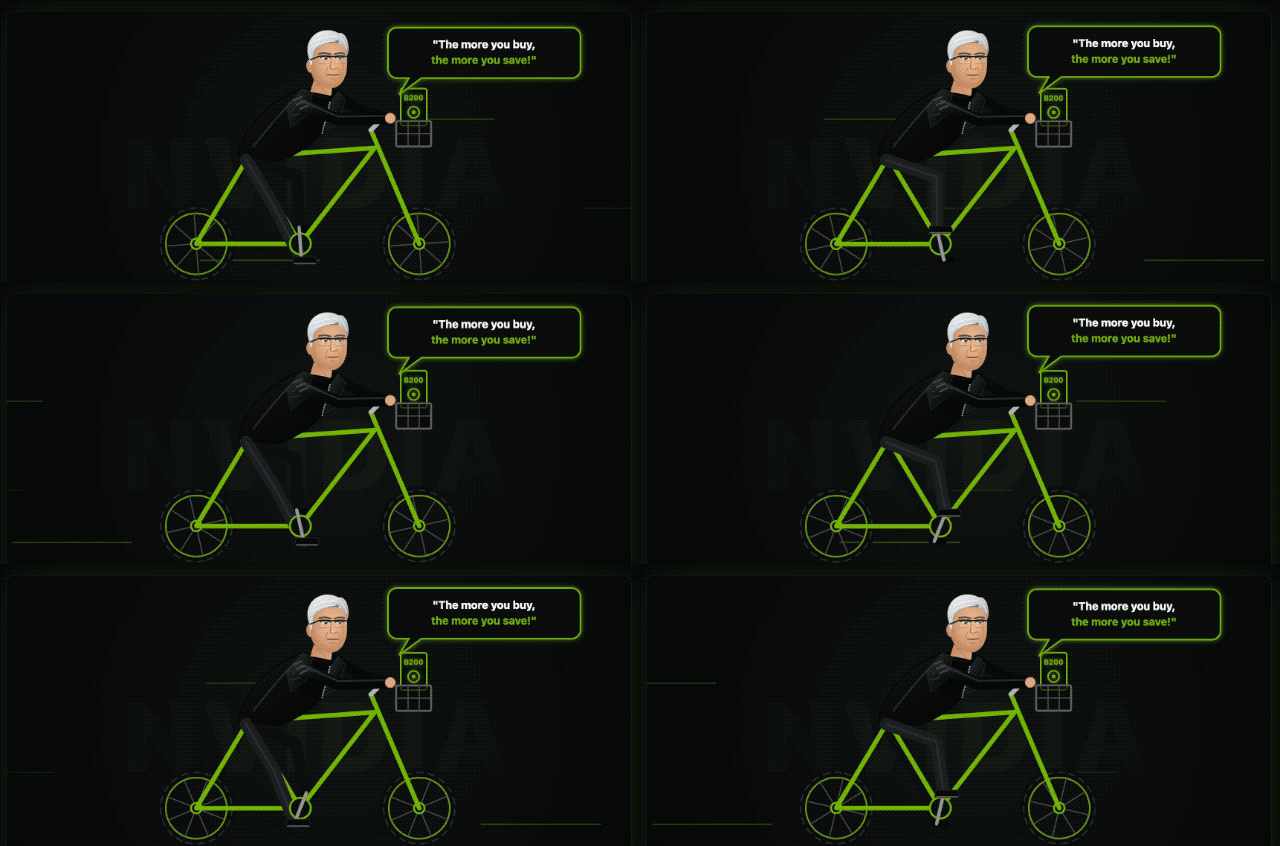
I even made a joke with 黄仁勋, asking Hydrogen to use HTML and SVG to create a 2D animation of 黄仁勋 riding a bicycle.
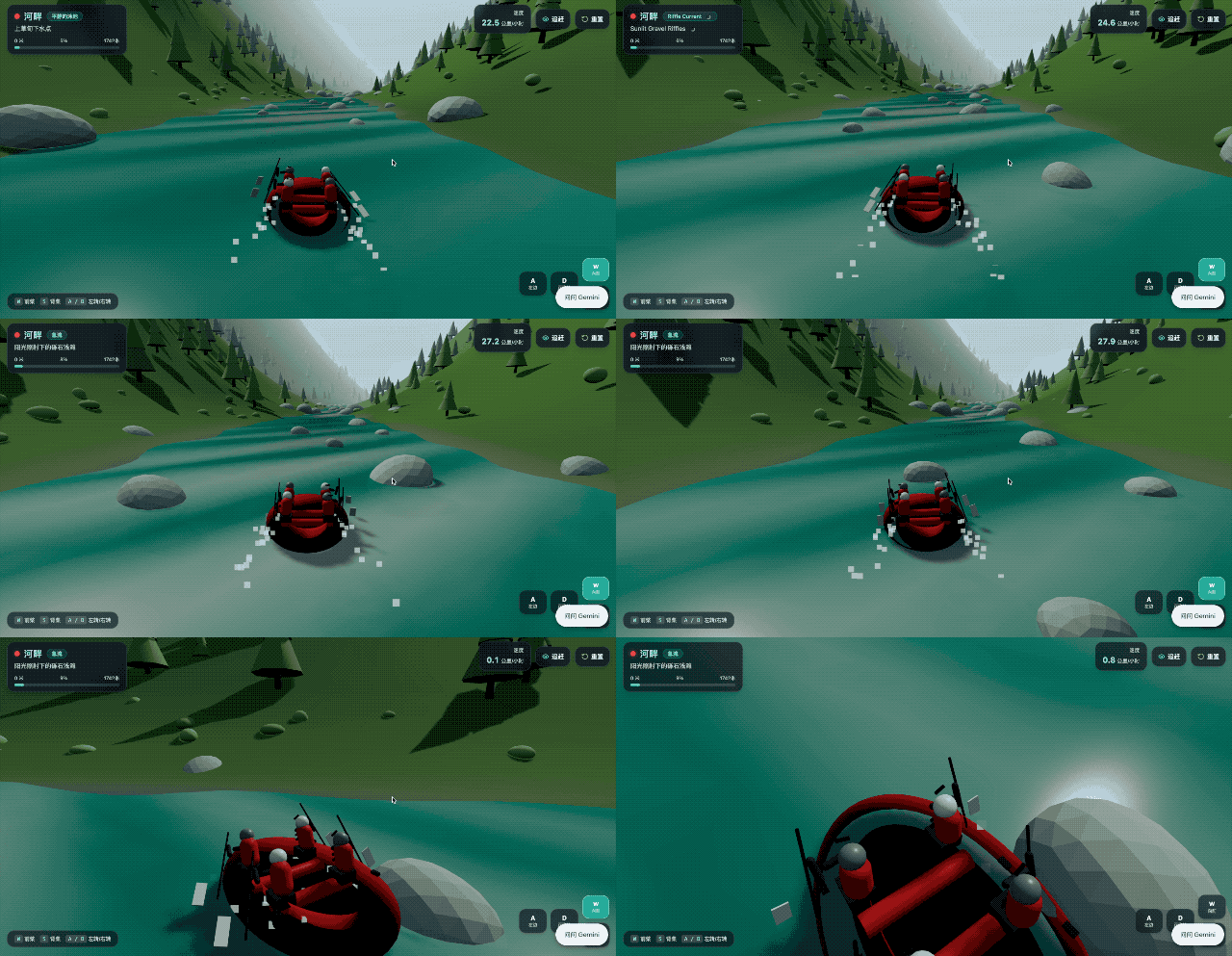
Finally, I tried a whitewater rafting game called Riverbound, in which four characters ride a red inflatable boat through valley rapids, testing water physics and collision interaction.
Google also prepared several interesting cases.
For example, in a project called Geminisland, users only need to input one natural-language prompt to generate buildings in real time on a shared voxel island and explore it in first-person view.
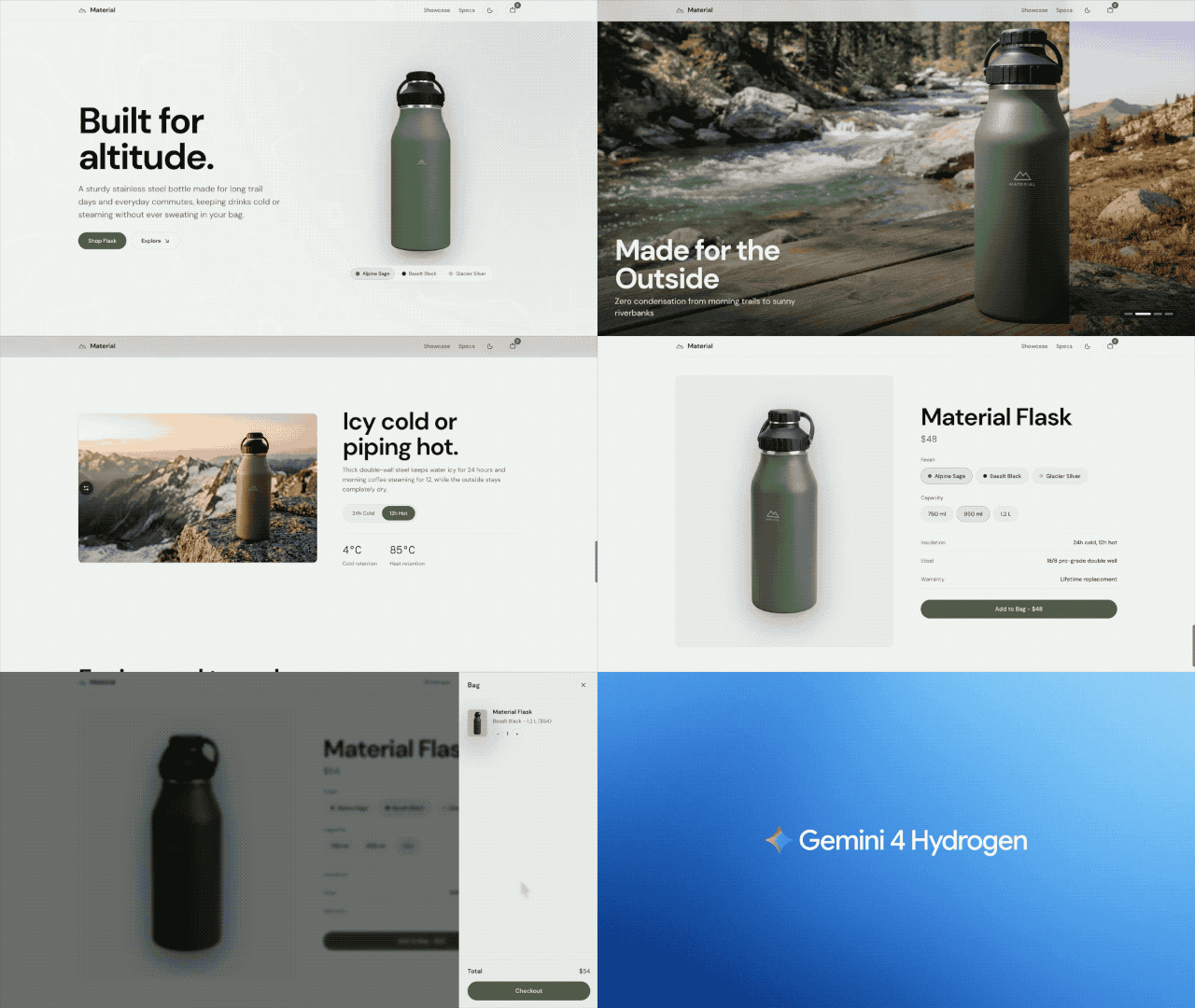
Another demo showed Hydrogen working with Antigravity's front-end design Skill to generate a complete e-commerce website in one go, including WebGL2 terrain shaders, scroll narrative, 3D product cards, and a real-time product configurator.
Values written like {{NAME_ab12cd34}} are placeholders for real values. Use them exactly as written, in replies and in tool calls alike: they are filled in with the real values before anything runs. Don't ask to verify them, and don't replace them with examples.
The article title: Just Now, the New Gemini 4 Model Is Here Again, Finally Available to Everyone
Body: Beyond web development, Hydrogen can also turn thousands of cells in Google Sheets into dynamic pixel art, or automatically create presentations in Google Slides based on YouTube talk videos and design templates.
Even more interesting is that after generating slides, the model also automatically checks for issues such as text overlap and layout anomalies, and attempts to correct them.
From these cases, it is clear that Hydrogen's advantages are gradually extending from single-shot generation to continuous execution, tool calling, and autonomous checking—capabilities that are exactly what AI Agents need in real work.
A New Way to Play with Gemini: Let Different AI Models Divide the Work Automatically
Alongside the release of Hydrogen, Google Antigravity also gained a new feature called Orchestrator.
In the past, many AI coding tools typically had a single model handle the entire task, from system architecture design and code writing to running tests and fixing issues—all of which it had to complete independently.
But different kinds of work have different requirements for models.
Complex system design requires a flagship model like Carbon that excels at deep reasoning, while large-scale code modification, testing, and validation work can be handed to the faster-responding, lower-cost Hydrogen.
Orchestrator can automatically switch between different models such as Carbon and Hydrogen within the same session based on the specific task, letting each take on the work it is best suited for.

For example, Carbon can be responsible for formulating the overall development plan, while multiple Hydrogen Agents are respectively responsible for writing code, running tests, and checking results, and can execute tasks in parallel in isolated workspaces.
According to the Terminal-Bench 4.0 test results published by Google, Orchestrator maintains a task success rate close to that of Carbon working alone, while reducing quota consumption by an average of 24% and increasing task completion speed by 19%.
For developers, in the future they will only need to state the task requirements, and the system will automatically select models based on the different stages of work, reducing costs and waiting time while ensuring completion quality.
And this automatic division of labor further explains why Google launched an efficient model like Hydrogen.
Free Users Can Also Use It, Google Search Gets a Major Upgrade
Beyond developer tools, another important change in this Hydrogen release is that the Gemini 4 series is beginning to enter consumer products at scale.
According to the rollout plan announced by Google, Hydrogen is being released to users worldwide, covering the Gemini App, Google Search, Google AI Studio, the Gemini API, and enterprise services.
Among these, all tiers of Google AI Studio users can use Hydrogen, and free Gemini App users can also gain access through the model selection feature. Hydrogen in Google Antigravity is available to paid Google AI Pro and Ultra subscribers.
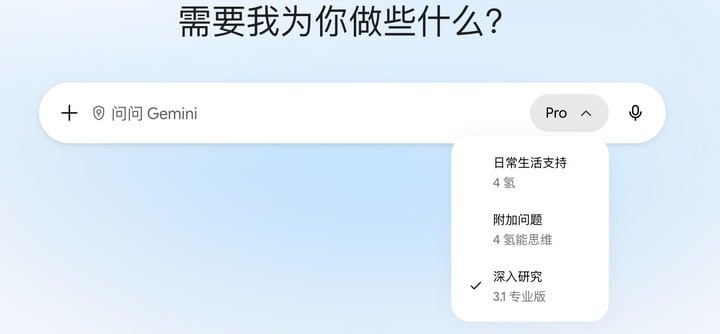
For ordinary users, Hydrogen focuses on improving complex instruction understanding, multi-turn conversation, and tool calling capabilities.
For example, users can ask Gemini to find emails in Gmail and then combine them with materials in Google Drive to generate a report. The model can select the appropriate tools based on task needs, reducing repeated explanations and manual operations.
Google has also strengthened the model's ability to follow writing tone, format, and specific rules, making content such as emails and research reports closer to users' actual requirements.
At the same time, Google Search has also received what Google officially calls its largest model upgrade to date.
Robby Stein, Vice President of Search products, said that Hydrogen can more accurately understand complex search intent, and can identify the information users truly need even when a question contains multiple conditions, spelling errors, or is phrased casually.
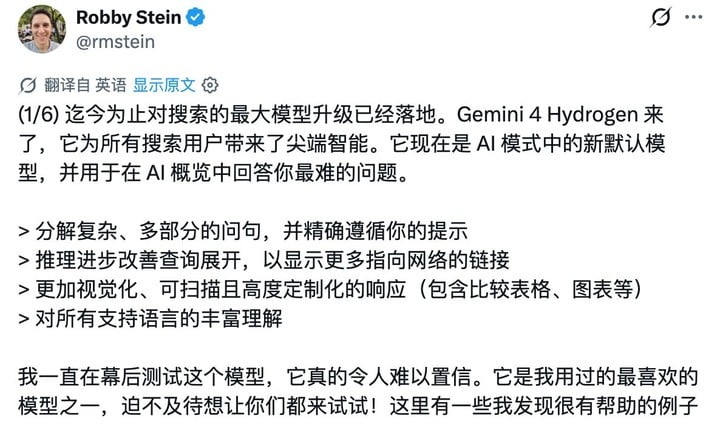
In addition, Google has upgraded the Query Fan-out technology, allowing the search system to simultaneously launch multiple related queries around a complex question and provide a broader range of reference websites. Search results are no longer limited to web links; they can also generate images, comparison tables, structured information, and even customized interactive tools based on the question.
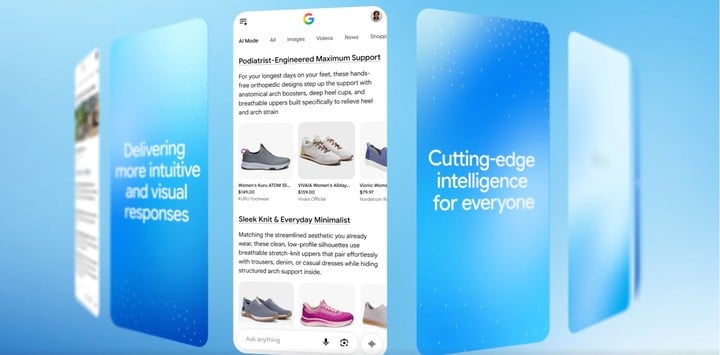
For ordinary users accustomed to using Google Search, these changes may be more intuitive than the scores on model leaderboards.
Within just six weeks, Google launched three Gemini 4 models in succession.
The emergence of Hydrogen also shows that when a cheaper, faster model has already surpassed Argon in some benchmarks, how much work remains irreplaceable for expensive flagship models?
What's more, Google also has a vast product ecosystem including Google Search, Gmail, and Google Drive, which can bring Hydrogen directly into ordinary users' daily work.
Perhaps Hydrogen is the most easily underestimated model in the Gemini 4 series. Flagship models constantly prove what AI can do, while Hydrogen has a better chance of determining how many people can actually use these capabilities, and at how low a cost.